
Everything Matters
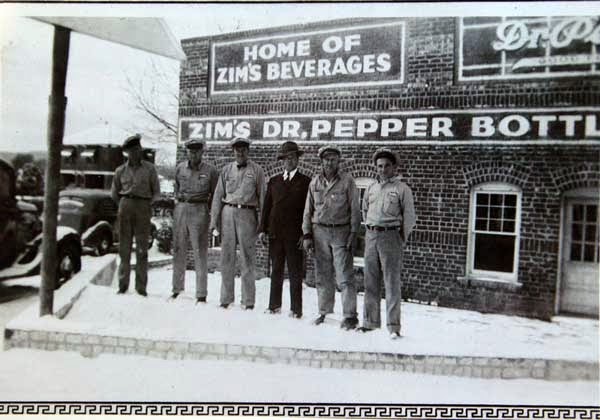
Zim's Bottling of Strawn
Showing posts with label Cemeteries. Show all posts
Showing posts with label Cemeteries. Show all posts
Saturday, January 24, 2015

Tuesday, January 20, 2015

Saturday, January 17, 2015


Tuesday, January 6, 2015


Tuesday, December 30, 2014

Wednesday, December 24, 2014

Monday, November 10, 2014
The Baby Died, Was Lost, Forgotten, Then Remembered, Taken Back By the Family…Loved, In Heaven and on Earth…You Gotta Read This Slowly, Like Walking, Remembering
We got there as quick as we could. Cold, rainy then windy, then a taste of light sleet coming in from the north.
We’re standing alone, five of us, in a pasture not-enough-miles away from Ranger Camp Valley, from Rattlesnake Mountain’s old wagon trail that led us here.
That ended here.
Forever.
Strangers or family or it doesn’t really matter stand together under a tall swaying sprawling regal pecan tree, bigger around than five full grown men where its trunk meets the too-cold Eastland County sanded black dirt. Leaves fall flutter float into the sad sand muted muddy soil.
The posted letter we received back east was scrawled but specific. That letter kept secret more than it told. “Little Luther’s sick, not good, not good at all. The doctor, he rode two days and one night, out from over near to the Stephensville road.” Doc Evans, or another. We don’t remember. Can’t remember. Not from here. Listen and wait but can’t call the man’s name, riding hard as his horse would travel across that far long ago.
God bless him, whoever he was.
“Please to come to our aid. Our neighbors’ children too sick for them to help. Church closed till whatever this is passes from our community. Fear lives here, sleeping in our cabins, though sleep escapes all but a few. Please to the Lord save our little baby, so sick, crying, come quick, sad we are, our little boy, nothing to do but pray, though Lord forgive me, that didn’t work for the Blackwell’s babe, one place south, one place west. They lost him just before dawn, yesterday morning.”
The letter trails off to nothing, but gets posted. It takes too long, a century till we’re all gathered around the place. Uncomfortable. After all that late frontier family must of gone through, riding down, circling round, trying to figure it all out, what else could we have done? Will they be there when we arrive?
The day before we rode out for Texas, a second scribbled note joined the first. One line, scratched hard into the tattered scrap of paper:
“Little Luther’s gone.”
No signature.
The longest letter I’ve ever read.
This Texas frontier’s scattered with hundreds maybe thousands of lost and forgotten graves. Stories that led into stories that birthed later tales that nurtured and struggled and survived and finally became people or places you yourself probably know about. But we that still walk these woods, pass these places every day, not knowing, not hearing the triumphs and tragedies that came before. Healing us, the silence, or God knows we couldn’t take much more.
Baby Luther Davenport was born then shortly died back in 1901, his family’s log cabin or box-framed home yards from a towering now-invisible native Texas pecan that shades where his family laid their baby to his final rest. One still-here man’s grandmother told Luther’s tale within this man’s hearing when he was a boy, decades ago, and that boy, now that man, never forgot. Though I guess it was Luther’s parents’ tale just as much, back then.
We five, more than five, did indeed go looking for Luther, found him, the family gone, he too quiet but still out there. We did get a posse rounded up and out there finally in person and in spirit, marked his grave, thought deeply of Luther, of the lives of our hard-wrought Texas ancestors lived. We left quietly a little richer, Luther having been born and died beneath this sprawling witness hard-shell pecan. His short story so powerful, so emblematic of where Texas came from.
Leonard and Florence had seven more kids, several of which made it to adulthood then parenthood then into lives out past that brave pecan and out beyond that hard rocky place in that family’s trail to their future. They left their shaking signature in Eastland County, beneath that lonely pecan tree. Then moved north. By the time we finally got to the pasture, they were gone, the old house was gone, the cistern or well or tank or however they got their water was gone. The wind blew, the pecan swayed. Only Luther’s story remained.
Winter clouds gathered.
Luther’s daddy was 33 when the baby died. Luther’s momma 26 when their boy succumbed to the Spanish influenza or smallpox or pneumonia or one from the hundred other diseased predators out running hunting through the woods back then. Leonard and Florence stayed together, but had to have left behind more than most can believe or retrieve from their own life’s story.
All we know for sure is that Luther’s gone. And we’re still here. Though that too is a mystery.
There’s beautiful new carved granite marking Luther’s story now, beneath his pecan, that carved rock the same rich red-pink color as gilds our Texan’s state capital farther south down Austin way. I hope he likes it.

We remember Luther. And hardship. And Texas. How we got here. Pray that we all get past it. This country is still hard. Pray and hope that our children will get to their Promised Land, someday, somehow, walking tall across this hallowed state and hard work and memory and whatever lies beyond.
That ended here.
Forever.
Strangers or family or it doesn’t really matter stand together under a tall swaying sprawling regal pecan tree, bigger around than five full grown men where its trunk meets the too-cold Eastland County sanded black dirt. Leaves fall flutter float into the sad sand muted muddy soil.
The posted letter we received back east was scrawled but specific. That letter kept secret more than it told. “Little Luther’s sick, not good, not good at all. The doctor, he rode two days and one night, out from over near to the Stephensville road.” Doc Evans, or another. We don’t remember. Can’t remember. Not from here. Listen and wait but can’t call the man’s name, riding hard as his horse would travel across that far long ago.
God bless him, whoever he was.
“Please to come to our aid. Our neighbors’ children too sick for them to help. Church closed till whatever this is passes from our community. Fear lives here, sleeping in our cabins, though sleep escapes all but a few. Please to the Lord save our little baby, so sick, crying, come quick, sad we are, our little boy, nothing to do but pray, though Lord forgive me, that didn’t work for the Blackwell’s babe, one place south, one place west. They lost him just before dawn, yesterday morning.”
The letter trails off to nothing, but gets posted. It takes too long, a century till we’re all gathered around the place. Uncomfortable. After all that late frontier family must of gone through, riding down, circling round, trying to figure it all out, what else could we have done? Will they be there when we arrive?
The day before we rode out for Texas, a second scribbled note joined the first. One line, scratched hard into the tattered scrap of paper:
“Little Luther’s gone.”
No signature.
The longest letter I’ve ever read.
This Texas frontier’s scattered with hundreds maybe thousands of lost and forgotten graves. Stories that led into stories that birthed later tales that nurtured and struggled and survived and finally became people or places you yourself probably know about. But we that still walk these woods, pass these places every day, not knowing, not hearing the triumphs and tragedies that came before. Healing us, the silence, or God knows we couldn’t take much more.
Baby Luther Davenport was born then shortly died back in 1901, his family’s log cabin or box-framed home yards from a towering now-invisible native Texas pecan that shades where his family laid their baby to his final rest. One still-here man’s grandmother told Luther’s tale within this man’s hearing when he was a boy, decades ago, and that boy, now that man, never forgot. Though I guess it was Luther’s parents’ tale just as much, back then.
We five, more than five, did indeed go looking for Luther, found him, the family gone, he too quiet but still out there. We did get a posse rounded up and out there finally in person and in spirit, marked his grave, thought deeply of Luther, of the lives of our hard-wrought Texas ancestors lived. We left quietly a little richer, Luther having been born and died beneath this sprawling witness hard-shell pecan. His short story so powerful, so emblematic of where Texas came from.
Leonard and Florence had seven more kids, several of which made it to adulthood then parenthood then into lives out past that brave pecan and out beyond that hard rocky place in that family’s trail to their future. They left their shaking signature in Eastland County, beneath that lonely pecan tree. Then moved north. By the time we finally got to the pasture, they were gone, the old house was gone, the cistern or well or tank or however they got their water was gone. The wind blew, the pecan swayed. Only Luther’s story remained.
Winter clouds gathered.
Luther’s daddy was 33 when the baby died. Luther’s momma 26 when their boy succumbed to the Spanish influenza or smallpox or pneumonia or one from the hundred other diseased predators out running hunting through the woods back then. Leonard and Florence stayed together, but had to have left behind more than most can believe or retrieve from their own life’s story.
All we know for sure is that Luther’s gone. And we’re still here. Though that too is a mystery.
There’s beautiful new carved granite marking Luther’s story now, beneath his pecan, that carved rock the same rich red-pink color as gilds our Texan’s state capital farther south down Austin way. I hope he likes it.

We remember Luther. And hardship. And Texas. How we got here. Pray that we all get past it. This country is still hard. Pray and hope that our children will get to their Promised Land, someday, somehow, walking tall across this hallowed state and hard work and memory and whatever lies beyond.
Luther Davenport
Eastland County, Texas
1901-1901
+
Tuesday, June 3, 2014
Thurber's Ghost
Thurber’s Ghost
By Leo S. Bielinski, Ph. D
Many
cities have some sort of a ghost story. Thurber was called a “Ghost Town” after
it was abandoned in the early 1930’s. But “Ghost Town” is a misnomer, for there
have always been several residents living in Thurber. Some of these residents added
to the legend of a ghost seen in this “Ghost Town.” While the later residents
speak of a lady ghost seen and heard in downtown Thurber, the Thurber Ghost
seems to have originated in the Thurber Cemetery back about 1920.
Frank
Tolbert of the Dallas Morning News resurrected the ghost story in a May 15, 1983
story. At that time, the owner of the restaurant in Thurber was irritated
because three of his employees had just quit because they claimed that Thurber
had ghosts “in residence…Two of the employees were a married pair of Cuban
refugees, and the other was a 65-year-old maintenance man.” These employees
lived in apartments above the restaurant. The restaurant was in the bottom
floor of the old two-storied Thurber Drug Store.
Tolbert
also related that he had first heard of the ghost story in 1955 from Mrs. Eliza
Whitehead, one of the “old-timers” who had seen and heard a singing ghost. “I
been here 40 years…I was just walkin’ in downtown one
night and here come this pretty woman singin’ in some
funny way. Then she just went away right in front of my eyes.”
Thurber
had an opera house and Thurber, with its large opera-loving Italian population,
was a regular stop for touring opera companies. And Albert Whitehead, Eliza’s
husband, corroborated Eliza’s story. “You don’t catch me passin’
through town after dark.” The Whiteheads remained in Thurber as caretakers of
the remaining houses and buildings, particularly the “Guest House” (W. K.
Gordon’s Home), where company “Big Shots” stayed when they came to Thurber for
hunting and fishing.
Walter
Kostiha and his brother Frank claimed to have seen
the ghost. This was about 1925 when Thurber was beginning to shut down. The Kostihas lived near the old jail house, which was just
north of downtown Thurber.
Walter:
“I don’t care whether you believe me or not. I know what I saw, even if I was
about five or six years old. I was with my brother Frank behind the old grocery
store just about dark. We saw this woman in a white gown and she was singing or
saying something out loud. We took off running.”
The
Fort Worth Star Telegram (Oct 26, 1997) in a weekend Halloween edition did not
help matters when they wrote “The Thurber Cemetery is one of the biggest Texas historical
cemeteries. It is also one of the scariest places to be on a dark night. The
trees bend over the graves as if in mourning for the 700 (sic) or more children
buried there. The epidemics of scarlet fever and whooping cough…definitely left
their mark on this Texas Ghost Town.”
Raymond
Bridier had a plausible explanation for the origin of the Thurber Ghost. When
Raymond was about ten years old (say, around 1920), on moonlit nights a bunch
of kids would meet at the ball park, which at this time was on top of Grave
Yard Hill next to the cemetery. They would smoke cedar bark, play games like
“kick the can” or just talk.
One
night as they were going home, they noticed a lady in a white gown sitting on
the top step of the sty (steps over the fence) in the southeast corner of the
cemetery. She was crying or praying loudly, perhaps for a loved one she had
recently buried in the cemetery. The kids thought this behavior odd but this quickened
their pace toward home.
The
following night the same scene, but this time they took off running; something
had spooked them. Now, they were afraid to play in the ball park after dark.
But several weeks later courage returned and they went back up the hill. Nobody there. They smoked, played their games, but as they
exited the ball park and headed for home, she was there! She stood up on the
steps and started toward them! They panicked and went tearing down the hill.
They never went back to the ball park, and shortly thereafter, the ball park
was moved to the east side of Thurber.
After the ball park episode, which seemed a plausible
happening, all the alleged sightings have been in downtown Thurber. Some have
said the singing is caused by the wind whistling through the old buildings. But
Eliza Whitehead or Walter Kostiha
would never believe that because they saw her with their own eyes and heard
her.
The Thurber Cemetery Thurber
Cemetery
Monday, April 28, 2014
The Winsett Springs Murder
Brutal Winsett Springs Murder
Chills History of Tranquil Place
By Jeff Clark
Travis
Winsett has gone missing.
The
backroads of Eastland
County
It isn’t
like him to take off like this.
Winsett Springs is located just east of Ranger on Hwy 571.
Horse drawn wagons stopped here, the spring’s pipe ending so close to
the trail one could almost catch water in cups, never leaving their buckboard
seat.
Winsett water was cold and pure.
Fill your containers. Let your horses drink. John
“Milton” Winsett came to Ranger in 1900, planning to continue to Arizona . He ran into Sam
Philipps in Ranger, who offered him a job and a room at his Colony Creek spread.
Milton later
married Philipps’ daughter Lucy, having two kids Veda and Travis during the
marriage.
Winsett Springs
helped save Ranger during the 1912 typhoid epidemic and the 1917 oil boom. Stagnant
cisterns invited typhoid – treated by lots of water and not eating. Men made livings
hauling water from Winsett Springs in wood barrels by mule-drawn wagons during
the oil boom. It sold for $1 a barrel.
Some thought Texas Rangers might
have used the springs as a camp. Caddo and Comanche may have called this place
home.
Ranger’s 1935 Cooper School Alameda
schoolmates visited during their 1940 senior trip.
Activity
at Winsett Springs had tapered off by 1970, however.
Travis
Winsett has always been an enigma to locals. He’s described differently,
depending on who you ask. Published accounts say he was well-respected. Anecdotal
words paint the picture of a loner, a nice man who tipped his hat to school
kids driving his mom to town.
Travis was arrested by the FBI for
draft evasion during WWII. Some said he traveled with pacifists, giving
speeches downtown on a portable loud speaker. Strange, as Travis might’ve been
exempt from the draft being a farmer. His best friend was a WWII airplane
gunner.
“His distance came about because he
kept to himself,” niece Lucie Olson told me. “He didn’t want to cause any
trouble or bother anybody. He was a very quiet, introspective artist/engineer
type. Not anti-social at all, but he didn’t go out looking for things to do
either. He had plenty with the gardening, farming and animal tending he did on
a daily basis.”
By 1970, his parents had passed
away. Townspeople noted the bachelor rarely spent money. Perhaps, some thought,
it was hoarded up in that old Winsett house somewhere.
“To me he was a kind, gentle
person,” Lucie remembered. “He took flies outside, without killing them. The
only thing I ever saw him kill was rattlesnakes. It would have been much easier
for him to go along with the draft, but killing violated everything he was
about.”
Travis had a mechanical mind, once
building a device to scare deer away tailored from a windmill and disk hammer. “Eccentric,
but smart,” neighbors said. A nice man.
“Travis meant no harm to anyone. He
was not un-American. He was a pacifist and if he had been a Quaker or Seventh
Day Adventist, he would have been left alone,” Lucie said. “My grandmother had
a stroke in 1968, and Travis and my mother cared for her at home until the very
last. His patience and care was amazing to me.”
Lucie’s mom Veda, Mrs. Hubert Capps
always thought of Travis as “her other child”, a touchstone connection that
continued into adulthood. She was 11 years his elder. She had written him two
letters that June, receiving no answer back. That wasn’t like Travis.
Mrs. Capps
arrived at the frame Winsett Springs farm house Saturday, June 27, 1970 to see what was up
with her brother.
The front door was unlocked. His
car was in the garage but he was nowhere around. She found the letter she’d
written him the previous Sunday, still inside his mailbox.
The locals hadn’t missed him, until
his sister raised the alarm.
The police were called. Sheriff Lefty
Sublett, Ranger Police Chief J.W. Vinson, Deputy Sheriff Loy Williams, Ranger
Constable Ralph Veal, Eastland Constable Bill Hunter, Game Warden Kenneth
Payne, Ranger Justice of the Peace M.D. Underwood, Eastland Justice of the
Peace L.W. Dalton and later District Attorney Emory Walton converged on the
house.
Walking
inside, they sensed something wasn’t right. Moving Travis’ recliner chair near
the front wall aside, they found dried blood on the hardwood floor. A small
round hole was found in the front screen door. A rifle cartridge was located on
the ground outside the front fence, below the left gate post some 50 feet away.
Mrs. Capps noticed a “Long Tom” shotgun
absent from Travis’ bedroom. His arrowhead collection, valuable coins, and
other items were also gone.
What the group didn’t find was
Travis Winsett.
Dozens of
officers and volunteers spread out across the Winsett Farm. More hopped in
their cars and pickups, searching high and low around the area. Neighbors said
they hadn’t seen Travis since the previous Monday evening, right before supper
time.
Buzzy
Rutledge was a high school senior in 1970. That previous Monday, he and his
girlfriend noticed a house burning south of town at the Hathcock Farm. He drove
to Ranger, hopped in a volunteer fire department truck and rushed to put out
the blaze. There was no gas or electricity connected at the homeplace, making
the fire’s cause a mystery. The house was totaled, its debris fallen all the
way to its foundation.
After the Winsett manhunt got under
way, that Monday’s mystery fire hit radar screens quickly. When searchers
returned to the Hathcock Farm, they were greeted by a horrible smell. An old
cistern under the back porch was covered by fallen debris. Flashlights shined
down the dark cistern. Floating face up in the black water 22 feet below was
the bloated corpse of Travis Winsett.
The search for Milton and Lucy’s only
son was called off.
A killer was on the loose.
The fire department arrived, the body
hoisted to the surface. One shot to the temple was visible. Justice of the
Peace Underwood pronounced Travis dead, his body taken to Ranger’s funeral home.
The cistern was searched with a magnet for a weapon and later drained. No clues
were found.
Constable
Veal said, “I can think of a half dozen fellows around here we should talk with
to find out where they were last Monday night.” One of the people interviewed
remembered seeing someone in town with a new box of old arrowheads.
James Henry Bishop was a collector
of old artifacts and antiques. Prior to Travis’ body being found, 32-year-old
Bishop was investigated for burglary by Palo Pinto County Deputy Bill Harris.
The deputy interviewed Bishop about a home burglary in the town of Palo Pinto . He remembered
seeing a rifle in Bishop’s home, but it wasn’t connected with the crime he had
been investigating.
Bishop was still in the Palo Pinto
County Jail concerning that burglary. Eastland County Abilene ’s Hendricks Hospital
The suspect
appeared before a Palo Pinto County Justice of the Pace and was advised of his
rights. Sheriff Sublett and District Attorney Walton then started asking
questions.
The rifle Harris
had seen was bought at Weatherford’s First Monday Trade Days, Bishop told them.
He couldn’t remember the seller’s name. Travis Winsett’s murder was news to
him, Bishop maintained. The Long Tom, a .22 rifle, arrowheads, several silver
half dollars, and other items of interest were found in Bishop’s home. A spent
.22 cartridge similar to that found outside Winsett’s gate was found in
Bishop’s vehicle.
Sublett and
Walton questioned Bishop a second time. His story didn’t waiver, other than
admitting being near the Winsett place, finding one of the stolen items in a
ditch. He acted like he wanted to help, lawmen said.
The
Hendricks autopsy found that a single shot had entered Travis WInsett’s right
temple and remained in his skull. The slug was virtually destroyed. Local ballistics
tests wouldn’t be able to tell if the bullet had been shot from the rifle taken
from Bishop. Travis’ sister identified some of the items taken from Bishop as
being her brother’s.
Texas
Ranger H.R. Block took possession of the spent slug. It joined the seized .22 rifle,
two cartridges and dust samples from the Winsett and Bishop homes at the Dept.
of Public Safety lab in Austin .
Two days
later on July 8, James Henry Bishop was charged with Travis Winsett’s murder. Bail
was denied. Bishop was moved to the Eastland County Jail.
The Austin lab later
concluded that the two cartridges were fired from the gun taken from Bishop’s
house. An Eastland
County July
20, 1970 . Bail was set at $10,000 by District Judge Earl Conner,
though Bishop remained incarcerated. Trial began in 91st District
Court, with 12 witnesses called.
The defendant admitted he’d shot
Winsett, but that it was an accident. A “little voice told him to do it,”
reports said he testified. He said he was hunting near the Winsett home that
evening. He had pursued a rabbit near the Winsett barn, but didn’t want to
shoot that close to the house. Bishop is said to have testified that he didn’t
see Travis in the house, but aimed at a window and pulled the trigger in a
“childish gesture”.
Bishop took off, he said, thinking
Travis might come after him. When no one did, he returned to the Winsett place,
he said. He found Travis in his chair, like he’d fallen asleep. It became clear
to Bishop what had happened, he said. Travis Winsett was dead.
Bishop panicked, he said, placing the
body inside a blanket, hiding it in a closet. He stole several things to make
it look like a burglary, he said. Bishop testified that he came back later, taking
the body to the abandoned Hathcock farmhouse. Travis being placed in the
cistern was an accident, he said, but he admitted setting the fire.
The jury
found Bishop guilty, assessing a 55 year prison term.
Prosecutors
had not asked for the death penalty.
Travis
Winsett is buried on a quiet slope beside his parents and grandparents at the Merriman Cemetery
Many actors in this tragedy have
passed away. I still don’t feel like I know Travis Winsett. I didn’t catch a
sense of the man, walking around his family’s old farmhouse. Maybe I felt a
little of his sadness near the cistern out south of town. I’m not sure what his
legacy is, beyond that of victim. Beyond that of a life not fully realized. But
that too, doesn’t feel quite correct.
Tranquil Winsett Springs continues
to run, cold and pure.
.
Special
thanks to Will Barrett, Kenneth & Salata Brown, Dorothy Elrod, Ken Falls October 1, 1970 .
Sunday, March 9, 2014
Taylor's Chapel Enters Second Century
Entering its
Second Century
By Jeff Clark
Drive enough back roads, you get used to seeing
boarded up churches. Cemeteries becoming pastures.
The church
fell to seven people in 1993. “We almost died,” member Peggy Vineyard told me. Then
those pioneer families started moving back when they retired. New friends joined
in.
Services
begin at 9:30 a.m. Sunday mornings. Get there 30 minutes early, it’s just you,
Gary Bragg and the cemetery out back. Bragg turns on the lights, makes coffee. Taylor’s
Chapel sits nine miles north of Comanche, off the pavement a far piece.
Folks file
in. The church bell stops ringing. “Sammy, lead us off in prayer,” Bragg asks
from the pulpit. Sammy Vineyard, five pews back, his family here over a century
asks God to get them started.
These are
Congregational Methodists. Self-governing. Call your own minister. Don’t tell
us what to do.
They are also
some of the friendliest folks I’ve met in a month of Sundays, most of 27 members
walking over, shaking hands. “I’m glad you’re here.” It’s hard to be invisible.
This church
started as a brush arbor in 1901 by Brother Jim Havner, a farming circuit
preacher. The area boasted a school, cotton gin and an 1881 graveyard. The
church bought two acres from Hood Taylor for $20 in 1902. “The old land is worn
completely out,” he said. “Ya can’t raise corn on it no more, and ya can’t
raise cotton on it no more. I’ll just let you Methodists have it to raise hell
on.”
There’s a
Prayer List passed out this morning, names read one at a time. One lady talks
about her son. Another about her recent operation. A conversation back and
forth, their concern is their prayer.
They sing
four hymns back to back, led by an energetic Mary Gillium whose high altitude voice
guides others through The Lilly of the
Valley. Four men and three little girls form their choir. Most live nearby,
a few from Comanche, a few picked up from the rest home. Ages range from late
40s to 93.
The regular
preacher Robby Stuteville is off with grandkids the Sunday I visited. He’s been
showing up one Sunday at a time for seven years. The church feels blessed to
have this retired school superintendent lead their flock, Baptist though he may
be.
“We pray
that Brother Robby doesn’t leave us,” Peggy confided. Member H. R. Helm walks
to the pulpit to bring the message this day. His thick Bible is packed with slips
of paper, notes to lead him.
“We should all be ready to go to
heaven,” he reminds, “but I want to stay alive a little longer.” Helm wants to
pass his lifetime of knowledge to grandkids, to his 13-year-old grandson.
They’ve spent Spring Break inventing a battery-powered pizza cutter.
“Make that decision,” he grows a
little louder. I brace myself for the dreaded altar call, but my fear is
misplaced. H.R. looks into his friends’ faces. “Why won’t we decide and ACT to
serve the Lord now?”
Helm’s stories are so honest
they’re painful, more like family than church.
The first church house was built in
1902. The plan called for the church to face south, “but the wind blew so hard
it turned the church around to face west. Members discussed trying to turn it
back, but they decided the Lord had a hand in it, and they let it stand the way
He left it.”
A tabernacle was added in the 1930s,
the current chapel rising in 1948. They added a fellowship hall, built a new
tabernacle, dug a well and installed air conditioning in 1960, restrooms and a
steeple in 1993. Eleven stained glass windows were added by 1996.
“I remember that my grandpa Samuel
Charles Vineyard sat in the ‘A-men corner,” Irene Day remembered. “And when he
prayed he would kneel facing the back of the pew. When he finished he would be
on his knees with his hand raised. I thought Grandpa knew the Lord better than
the preachers.”
“You feel the love of God here,”
Peggy Vineyard said, “and the love of the people. That’s the way it’s always
been.”
That old church saw ice cream
socials, pulpit-pounding revivals, shaped-note singings and dinner on the
grounds for many decades. James Chapman remembered, “They got to know and love
each other at events like these, and they were there for each other when
sickness and grief came to call.”
They were there for each other,
last Sunday.
Taylor’s Chapel baptizes folks in
the stock tank by the cemetery. The chapel saw a wedding two years ago, periodic
funerals, luncheons and baby showers. They teamed up with Broken Bronc
Cowboy Church
Thirty minutes after the church
bell began this service, it’s over. It normally runs longer, I’m told. Members
walk to the fellowship hall to visit. Thirty minutes after that, the parking
lot is empty, save Mr. Bragg, shutting off lights, getting ready to go again
next Sunday.
This country church ain’t dying.
Wednesday, February 26, 2014
Tudor Road Awakes
Talking With Shorty Fox
By Jeff Clark
I’m out riding up Tudor Road
Up and down mountains, jaw-rattling
bumpy corners, and after a rain, more than a few not-so-low water crossings. Lonely
country.
Back in the old days, Tudor Road
The lost Tudor Road Palo Pinto
Mountains
We stop the truck at the Howard Cemetery Howard
Cemetery
“I’ve got a copy of the abstract. It
was deeded to the Jimerson
Peak Community
School
There was never a Jimerson Peak
“Do you remember the old school
building?” I ask.
“Sure do.” It was a wood structure,
framed or boxed, he’s not sure. Kids from all around walked in. The Howards
lived north, right across the road that’s there now, related to those up in
Cheaney, along the western rim of Cook
Canyon
We pull away, heading north. Pass
places that had one, then another owner. Tom Friday, Rufus Buckley, then a
Hogg, a Grimshaw. I’m stopping the truck every time he says a name, writing it
down, noting a landmark so I can map it later. Getting permission to enter gates
is the hardest part of this work.
That old Hogg house, out by the statuesque
red barn you can still see, burned to the ground one year. Neighbors tried to
put it out, hoisted water one bucket at a time up onto the roof. One man jumped
to safety near the end. The house, gone.
That fine old barn on the old Hogg
place survived, faded red barn wood, stump-toe turned up wood shingles. A hay
loft. A wind mill. Open shed sides like medieval flying buttresses. “Maybe
there were two houses that burned there.” He tells me where to find the
grandson.
There was an Uncle Doc Horne that
lived in an old house on the left. Wesley Hammond took care of him. None of his
kin still around, best he knows. Neither is the house. I know it’ll show itself
again, down the road some day.
The Tidwells on the right had a big
turkey hatchery. Sons and daughters and lots of clues. A good view of a
landmark from this homestead. Ancient footsteps cross the back of this place,
leading up the valley, I’ll bet. We pass a forest of now-vanished wood-timbered
oil derricks from The Boom, one of which blew out, caught fire, provided
blazing day-like light all night to read from, for miles, for days.
A Genoway strip of land lies behind
one of the Fonville tracts. Kin to Earl Fonville, who once led my steps to the Mountain School Lafayette
Fate’s daughter, maybe his granddaughter
Addie made coffee for those sitting up with their Fonville patriarch that
night. A houseful, knowing history was passing away, through that door behind
the cook stove.
We moved north, caught the land Bill
Greenhaw leased, decades before, for 75 cents an acre. Shorty starts telling me
about his friend Hardy Tidwell, all their fun and adventures, some of which
won’t be repeated here. Not yet.
We start going up in elevation,
toward Rattlesnake
Mountain
My guide did some baling back in the 1950s
and 60s. He rode his Case tractor, his hay baler, his hay conditioner one long
journey up this road, topping out at fifteen miles an hour. His wife Almarie
would pull the hay conditioner with their 1951 ¾ ton Ford pickup. A six
cylinder. It took the better part of a morning to get where work could begin.
When the couple was done, was heading
out, they’d start back up the big hill (called a mountain on my map). Almarie
would floor that old truck, wheels grabbing hold, accelerator pressed hard to
the floorboard the whole way, to get the truck and its load out of that deep draw,
up the hill toward their place. Mr. Cullum, one of their clients, thought Mrs.
Fox was one of the best drivers he’d ever seen. She worked the fields, rode
horses, tended cattle, worked with her husband, from beginning to end.
His partner.
We roll up on the cutoff to the Davidson-Tanner Cemetery Leon River
Shorty baled for five men up this way.
Most planted Haygrazer. Other old homeplaces taunt from my 1917 map, places we
don’t see, that Shorty doesn’t remember.
Most of Shorty’s work was south of
the Tudor Community, so relevant stories taper off as we move north. He’s
telling me about cutting hay, good money, baling for 35 cents a bale as long as
the sun stayed up. I filled up on $2.59 a gallon gas that morning in
Weatherford.
Oh, Shorty used to love to coon hunt
up and down these creek bottoms, as a younger man. His dogs would get into some
powerful scraps with those varmints. He’s pointing off to the west, tall trees
staring back from the riverbed. The hounds would bay in the moon light, running
the trail, sometimes half a mile in front of their masters.
Moving down toward the creek bottom,
mature Native pecan trees join us, plenty of water in the time before tanks and
wells and terracing. “I can’t believe these old fence rows have gotten so
overgrown,” he’s telling me.
We had heck seeing past the fence
rows. I’ll need to bring him back, come winter. When the trees die back. Some
of the city-fied places have gone over to mesquite, to fat cedar juniper tree-size
bushes. Thick oaks here and there along the bottoms give a clue to what stood
guard before.
Jack Blackwell was the county commissioner
in these parts about that time. Kept this rugged road in good shape. Smoothed
it down for a hard-working farm hand friend, pulling a Case tractor up and down
this hard-scrabble road, looking for work.
We stopped at an old stone cellar
standing sentinel in a field behind drooping barbed wire, five feet of stacked
rock showing above the ground. A county courthouse-quality precast keystone
over the door. Precise mortar joints. Chiseled brown rock. Fine craftsmanship
like the Hamilton Cellar over in Cheaney. Like the Alameda
“You didn’t know I made a mason once,
did ya?” Shorty’s got that story-telling smile on his face.
“No sir, Mr. Fox. I don’t believe
I’ve heard that one.”
“Well, when I was a kid, I was one of
them that laid the stone on those cabins, next to the city pool in Ranger.”
“The NYA cabins, across from the
library?”
“Sure enough. That was around 1935. I
got paid $16 a month.”
“A month? Was that good money, back
then?”
“ANY money was good money back then.”
He’s looking out the window. “I had to get a Social Security card, a Social Security
number so they’d pay me. They withheld eight cents a check, for Social Security.
Heck, that could’ve bought gas for my Model A Ford.”
Shorty worked for a man in Ranger named
Rainwater. That name rings a bell with me, so I’ll stop that part of the story,
for now, till I remember to whom the man is tied.
Dangerous work, writing.
Shorty worked up there laying rock with
old Mutt Lee. A Ranger boy, I suspect. They mopped tar up on the roof. Drove in
to Fort Worth
We reach I-20, the north end of Tudor Road Tudor Road
“Ended at Highway 80. That’s all
there was.” Turn left. Turn right. Straight ahead is a fence. Now.
We hop up on the interstate, turn
south on Hwy. 16 making good time toward Desdemona. I point out the abandoned
rail bed, leading once to Eastland
County
I did a little trading with Mr. Fox
when we got back to his place. Sold some saddles, some lead ropes. I tried to
impress this man, a man I respect, calling one “worn out” saddle, by its kinder
“broken in” label of love. One “old” piece of tack, transformed into “vintage”,
using the lilting trading songs I’ve heard my friend sing to others, lured off
the road to examine his siren’s wares.
Shorty smiled at my rookie verbal
tactics, nodded his head politely, patted me on the back, then traded circles
around me til the back of my truck was empty. Never go to a gun battle, my
friends, without ammo in your gun.
Shorty and I like to talk ABOUT
people, if you want to know the truth. When it’s just us. Would be gossip
coming from anyone else, ‘cept we both know how important these tidbits can be.
Important that we stay informed.
We really got down on one old boy,
not there to defend his lowly ways. A nugget rolled across the floor. “That man
was too lazy to eat all he wanted,” Shorty told me, a gleam in his eye. I pulled
over the truck. Wrote it down. Used it in a sentence, down in Stephenville,
later that very day.
Monday, February 24, 2014
The Louis White Drowning
Soda Pop Offer Tints
Louis White’s Memory
By Jeff Clark
“Life was cheap back then.”
Butter
Bridier is 85. He spent his first decade of life in coal mining Thurber. The
Bridiers lived in House 1269. That’s eight-year-old Butter in the photo telling
this story.
“One day Louis White knocked on our
front door. I didn’t even know his name.” Louis was 14. After knocking, Louis
stepped back off the Bridiers’ porch. He was black. Times were different.
“He wore no shirt or shoes, his hands
in his pockets.”
“Miss Polly Boo,” Louis said to Butter’s mom, “Charlie
said I could ride old Mary.” Charlie is Butter’s older brother.
“Are you sure Charlie said you
could ride his donkey?”

“Yes m’am. If he hadn’t, I wouldn’t
be here.”
Butter’s dad was French, his Polly
Boo nickname derived from “Parlez vous Francais. Louis gets the donkey bridled.
He dives halfway across her back so he can straddle her to ride. But when Louis
jumped, his pants slipped down around his ankles. “My mom laughed so hard snuff
ran down her face.”
Another time Butter and his mom
drove their A model Ford to Thurber’s service station for two gallons of gas. “That
was all you could afford, even at 15 cents a gallon.” Louis is there, leaning
against an iced soft drink cooler.
“Hey Louis.”
Louis looked at Butter, not lifting
up from the cooler box. “You want a soda pop?” he asked Butter.
“I don’t have any money.”
“I’ll buy you one. I got money.”
“You won’t pay for it.” Butter
doesn’t know if Louis had a nickel, dime or what. Grown people in Thurber didn’t
have 10 cents in their pockets back then.
“I don’t remember seeing Louis alive
after that.”
The White
family is living with Louis and Isabella Walters inside House 208, according to
the 1920 census. A 40-year-old “Louis” Walter and a four-month-old “Louis”
White. Father Ed White is 65 and wife Lucy’s 37. By 1930, Louis is 11, his
father 75, mom Lucy 49. They’re living in House 102, in “Colored Town
The census shows the most money any
of 50 names on the page possessed was $20 (all races). Ed and Lucy had “none”.
Though Thurber had no black school, Louis was able to read and write.
Thurber’s Little Lake still sits
just west of New York Hill. You could swim or fish there. There was a homemade
flat-bottom row boat anyone could use, made of 1 x 12’s, tar and pitch keeping water
out. Two boys about 16 joined Louis in the boat that day.
He could’ve fallen overboard
accidentally. His shipmates could’ve wanted to see if Louis really couldn’t swim.
Louis disappeared beneath the surface.
Johnny Elwood brought his metal
boat. He and Ted Botts went back and forth looking for Louis’ body with a
grappling hook. Fifteen to twenty people watched from shore.
“I came around our house the day of
the drowning. Diagonal across the street Miss Crane had a grandson Charles
Sanders, playing with a yo-yo. “Hey Butter, you know N___ Lewis drowned?” He
just kept yo-yo’ing. “I told momma and she hurried to Little Lake to see.”

When Louis was brought to shore, he
wore no shirt or shoes. A stretcher carried him up on the dam. He’d been in the
water over an hour. No effort was made to resuscitate.
“Dr. Baldridge was standing by
Louis’ feet. He said, ‘I pronounce him dead.” The crowd dispersed.
There wasn’t
an inquest, it doesn’t appear. The family cared, perhaps few others. “It was
hard to stay alive back then.” Louis was buried in an unmarked grave in Thurber Cemetery
Blacks had church below New York
Hill. Though all races mined together, there was little associating around
town.
There was a
black preacher once, preaching real loud. “I got scared and started crying,”
Butter told me. “They once passed the plate. One guy didn’t pay the plate any
mind as it went past. The preacher asked, “How ‘bout you sir? You got something
you can give to the Lord?”
“Yeah, I might give Him a dollar.”
“Very good, put it in the plate
there.”
“Well, if you don’t mind, I’ll give
it to Him when I see Him.”
Louis White
was willing to share a soda, Butter told me these 76 years later. “I always
remembered that.”
Louis’
mother Lucy died two months later to the day of a broken heart. We don’t know
if his then 79-year-old father had died or moved away. Lucy was getting up in
age, in bad health, poorly fed, facing the world’s worries without that
14-year-old boy’s smile to keep her going.
“Those were survival times. As bad
as it was, Louis offered to buy me a soda pop.”
When the restoration of Thurber Cemetery
After he retired, he talked to Flogene
Boston who lived on Park Row. She told him, yes, she went to Louis’ funeral.
His grave’s right there by the fence. The Bridiers found two plots that “fit”
her memory.
Butter and wife Faye gave Louis his
tombstone. Leo Bielinski gave Lucy hers.
“I can always remember that little
guy,” Butter told me, “leaning against the soda cooler. If I could put flowers
on only one grave at Thurber, it would be his.”
Lucy White’s headstone reads “A
Mother Grieves No More.”

Little Louis White drowned, after
teaching one important lesson.
“You want a
soda pop?”
SUGGESTED CAPTIONS
1. The story
teller, eight-year-old Butter Bridier in front of House 1269 in Thurber.
2. The
grappling hook used to find Louis White’s body in Little Lake.
3. Mother and
son’s headstones.
Wednesday, February 19, 2014
Latin Mass at Thurber
St. Barbara’s Church Walls Hear Echoes from
its Past
The Latin Mass in Thurber
By
Jeff Clark
It’s
black dark here in the long-deserted Thurber
Cemetery

I
won’t water this down. The presence of the Lord is tangibly inside this
forgotten place tonight, among and around these people. They are in communion
with Thurber’s departed fathers, mothers and children at rest beneath and
around us, their souls or their memories or their tragedies as present to me
this night as my own distant heartbeat – perhaps more so. Father Kenneth Novak’s
words waft skyward:
“Requiem
aeternam dona ei, Domine,
et
lux perpetua luceat ei.”
“Eternal rest, grant unto him, O Lord.
And let perpetual light, shine upon
him.”
This is a prayer
for the repose of this mining town’s lost, buried for eternity within these tombstone-speckled
nine acres, spreading like a flickering Easter candle into the darkness around
us. If there are ghosts within this place, tonight they welcome this throng to
their table.
The circled parish
quietly answers their shepherd: “Amen”.

The priest lifts
his strong voice into the night: “In the name of the Father, Son and Holy Ghost.”
Hands touch foreheads, heart, left then right across their chests. These new
friends to Thurber
Cemetery
I’m
beginning to wonder if there’s such a thing as chance encounter. Last week, my
friend Leo was tending to this cemetery, as he has for many years. Father Novak
of El Paso
shows up, completely at random Leo tells me later, a priest from the Pius X
Society.
The
Pius X Society is a conservative Catholic group that believes the Catholic Church
departed from its true path after Vatican II (1962-1965). Father Novak is
excited about Thurber’s story, Leo tells me. Wants to bring his parishioners
out here, hold a Tridentine Mass in Latin that dates back to 1570, inside Thurber’s
1892 St. Barbara’s church, resting peacefully at the foot of New York Hill. Leo
agrees.

I
was baptized into the Catholic Church when I was thirty-eight-years-old,
following a year much like this last one. Never baptized or saved or any of
that before one dark fateful Easter Vigil evening, back in the big city. I’ve
attended Masses all over the South – in pre-dawn Spanish at San Antonio’s San
Fernando Cathedral, at a sprawling Jesuit monastery beside the lumbering
Mississippi River, and with a couple of once-ordained friends nearing the end
of their own personal crises. I’ve never seen the Latin Mass performed, at
least not in person.
Friday
morning, I met Leo at St. Barbara’s. Father Novak’s flock began arriving soon
after. It was clear from the cardboard boxes, the number of altar boys, the
stream of cars pulling up outside this church that history was about to make
itself visible inside this little wooden church.
Weekly
Mass has not been said at St. Barbara’s in many, many years. This proud white building
originally sat below Graveyard Hill until it was moved to Mingus in the 1930s,
until it returned here to Thurber in 1995.

Father
Novak swept into the old church building, wearing a traditional black cassock.
He is a force, a sparking current of energy that can take the unprepared aback.
His exuberance would give my seven-year-old a run for her money. He shakes
Leo’s hand, then begins issuing orders – candles go here, reliquaries there – a
throng follow him down the wood plank floored aisle to make ready. His
followers love their charismatic leader. St. Barbara’s stirs to life.

Four
altar boys light the candles, six white tapers lining the space behind St.
Barbara’s front altar. Two statues are delicately lifted into place, atop empty
white perches where St. Barbara’s own sculpted saints once stood. The red Gospel
is placed lightly on the altar. The golden chalice moves into view. Men bow to
their Lord when stepping in front of the front altar, turn and bow again upon
leaving.
Father Novak is a
teaching priest, explaining to the assembled that because there’s no altar
stone in St. Barbara’s, that linens containing holy relics sealed within wax
will help consecrate their communion rite, that clean linens atop these will be
in place as tradition demands.
The Latin Mass is
celebrated with the priest facing away from the congregation. Father Novak’s
words were sometimes too quiet to hear, though God undoubtedly received the
prayers heading His way. One of the prayers was sung, the haunting Gregorian
chant rising to the ceiling like sweet-smelling incense. St. Barbara’s communion
rail has been put back in place, restoring authenticity to its pre-Vatican II
legacy.

The men led the
rosary before Mass began, gleaming beads in hands as confessions were received by
the priest in the confessional along St. Barbara’s back wall. Four ornate golden
reliquaries graced the altar. St. Barbara’s white wooden tabernacle against the
front wall is original. The tops of women’s heads are graced with delicate lace
veils. These worshippers in the Latin rite have traveled here from all over North Texas . The lights are on. The bathroom door is
unlocked. The floor is swept. This church, at least for today, is back in
business.
My
eyes were fixed forward, sitting in the back pew with Leo. Edging majestically into
the silence, the sound of St. Barbara’s original foot-pumped organ announced
the opening words of Mass.
“I haven’t heard that organ play in over 60 years,” Leo whispered to me. You
have to pump both your feet at the same time, while playing the keyboard to
make the thing sing – not a common skill in this post-modern age.
This organ was
heard by coal miners coming here for Mass over ninety years ago. Leo’s Big
Ciocia (Polish, “Big Aunt”) played this same organ. His mother Lottie sang in
the choir. Today the organ’s tone was again strong, was haunting in its beauty.
Leo was baptized in this building, married here, and served as an altar boy here.
Father
Novak preached of the history of this town – about the fleeting cities of man,
about the eternal City of God .
His masculine last words stayed with me: “Lord, we’re coming. We’re on our
way.”
I
believe him.
Toward
the end of Mass the church’s steeple bell began to peel, each strike carefully
timed to fit the choreography within Father Novak’s traditional liturgy. That long-silent
historic bell could be heard all the way north to Mingus back in the day – its
first toll to get dressed (church starts in 30 minutes), then to head for the
church (15 minutes left), and then to take a seat in your pew (five minutes til
kickoff).
I
sat there wondering if New York Hill Restaurant diners up the hill knew that the
St. Barbara’s bell they were hearing from their tables was singing its part this
last day of 2010 in a centuries-old celebration. That Thurber’s heart had come
back to life.

After
Mass ended, the worshippers left the church and climbed the steep Thurber-brick
steps to New York Hill’s scenic overlook, bringing to mind Christ’s last
sorrowful journey on this earth. A catfish dinner was served by New York Hill
Restaurant, being Friday and all. Leo gives a talk about Thurber, about
scanning for graves. The room warms to his stories.
The group
adjourned for a short tour of the museum down the hill, then drove across I-20
to the Thurber Cemetery
There
is a concept in Catholicism known as ecumenicalism – the simplified definition
explains that though there are important differences between the various
denominations, we should all reach out in fellowship and love one another as
Jesus did, as Jesus does. People of good will should join hands, the thinking
goes, no matter what the sign says on the front of their church building, on the
front of their cardboard box home beneath that lonely freeway bridge.
I
meet many new people each week. After “I live in Weatherford”, I often get
asked which church I attend. The answer is complicated, as I feel connected to
the Holy Roman Catholic Church (Mother Church versus some of her recent drivers),
the Church of Christ (special friends and ancestors), the Baptists (my two daughters
and grandparents), the Buddhists (Catholic friend Thomas Merton saw the same
bridge here, I believe), to the Native whispers I’ve begun to hear from this
part of Texas and to the many other “unseen churches” that I happen upon in
senior citizens’ homes around the state. God is not just an
inside-some-church-building deity. The gleaming megawatt cathedral of worship
these kind folks brought to life this night in Thurber Cemetery
These kind people
who I now consider friends remind me of the earliest Christians, holding their
assemblies below the streets in dark catacombs. They knew what they believed. Their parents or grandparents has seen Jesus in the flesh, had known the
sacrifice that their faith might extract from their too-fragile lives. Those catacomb
warriors joined these new friends worshipping in the dark last night – they
knew that One was more powerful than many. I respect these people’s return to their
tradition, their fidelity to what they know is right.
There
are no chance meetings. Let us leave it at that. May this New Year bring us
back to that knowledge. May we all see what God puts before us. And act. Amen.
The “lonely grave” mentioned above is that
of Barbara and John Lorenz, its perimeter “fenced” with vertical oil field
pipes. When first discovered, only the date “January 31, 1931 ” was visible. Research into
1931 church records restored their names to the roll call of this physical
place.
Subscribe to:
Posts (Atom)