
Everything Matters
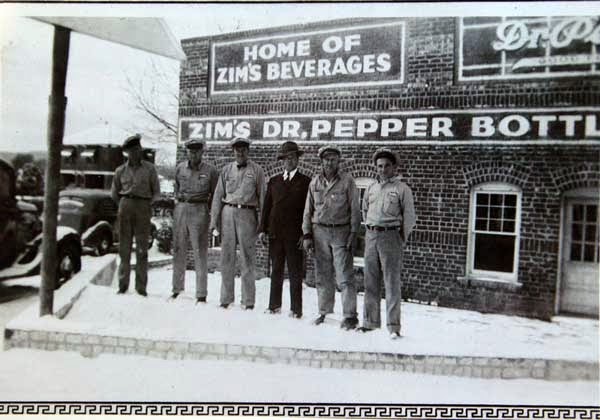
Zim's Bottling of Strawn
Showing posts with label Dodson Prairie. Show all posts
Showing posts with label Dodson Prairie. Show all posts
Monday, January 19, 2015

Thursday, December 19, 2013
Dodson Prairie Dances Tie Old Country to new
Dodson Prairie Dances
Tie Old Country to New
There’s a
scene in the movie “Titanic” about the fabled luxury ship’s fateful date with
destiny. The elderly woman in the film tells the story of her own voyage that
tragic night. She looks off across the waves many decades later, visions of a luxurious
whirling ballroom filled with dancing couples coming brightly back into view
inside her memory, inside her words. She makes us see it too. We are
transported.
I met with 95-years-young Lenora
Teichman Boyd last week. I like it when someone I’m interviewing says, “I can
only tell you what happened up until the 1940s.”

I’m wanting to learn about the monthly
Dodson Prairie dances, held about six miles west of Palo Pinto, the town. They
started just after 1910. Lenora is home from the hospital, from rehab after
back surgery to relieve constant pain. She’s sitting in a recliner, enjoying
the unseasonably warm December day. I pull up a chair.
“They had
the dances right out there.” She’s pointing out the window south and a little
east behind this house. The closest public building that direction is in Strawn
or maybe Mingus many miles away. But Lenora sees the old dance hall just
outside, about fifty yards away. She starts talking, teaching. She makes me see
it too.

Dodson Prairie really was in 1900 –
a prairie, I mean. There might be an occasional small stand of oaks out there,
she told me. Mostly one saw grass, as high as a horse’s belly. The flat prairie
is today covered in cedar and mesquite, flat earth loping west until the ground
erupts skyward into mountains, cleaved in two by Metcalf Gap. Lenora told me
that those early farmers would burn their fields back each year, to invite
fresh grass in the spring. The Comanche did the same, during their turn on this
land.
Dodson Prairie was and is a German
settlement. Folks worked hard, mostly farming, raising stock. Lenora’s Teichmann
Family arrived in 1900 from the Schulenberg-Weimar area (before that, from Germany in
1868, landing at Galveston ).
They’ve been hard at it in Palo
Pinto County
Once a
month area families gave a dance, a get together. There was a public wagon road
when this all got started, leading in from the west. That road is gone, though Teichmann Road
remains. Lenora keeps talking.

It’s a black dark Saturday night on
the Texas
prairie. Coal oil lamps paint pale orange light onto the dusty ground outside
Dutch Hall’s double doors. Saddled horses and mules are tied outside. The creak
of wagons pulled by teams approach from the west, puncturing the stark silence
of this bone cold December. Kids hop out and meet their friends, promise moms
they’ll stay close, then run off to play. “There was a bed in one corner of the
hall,” Lenora told me, “where babies could sleep.”
Dutch Hall was a tall community
building made of overlapping frame lumber. It might’ve been 30 by 50 feet,
though lonely brown foundation stones and a few wooden pilings are all that
remain. Dutch Hall was used for dances, lodge meetings, and other community
get-togethers. Night school for adults happened here. People came from all over
for those Dodson Prairie dances – from Thurber, Mingus, Gordon, Palo Pinto, even
the country across the Gap west toward Caddo.
We start to hear painfully brittle
sounds inside the wood-heated hall – trumpets, sousaphones, a bass drum, and fiddle
strings all looking inside the growing cacophony for a key they can all agree
on. Finally, the band starts playing and the silent prairie comes to life with the
joyous dancing, stomping and hand-clapping of hard-working farm families,
taking a break from their tough frontier.
Cap Foreman yells loud across the
heads of couples circling the floor. A square dance is called, couples circle
up, his loud voice centers all:
Meet your partner and meet her with a smile,
Once and a half, and go hog wild.
Treat ‘em all alike,
if it takes all night.
Married couples and still-shopping
young singles answer his call, with doe-see-does, and promenade rights. That
morning’s broken plow and the calf that ran away fade in importance to these
farmers and their wives.

Lenora’s father C. A. “Charlie”
Teichmann led the Dodson Prairie Band. He taught friends and relatives to play
brass instruments, and in one case a drum. At midnight , the wooden dance floor is cleared and large
tables are spread deep with fine native foods prepared by the Prairie’s
Germanic mothers and maidens. Families gather into Community here, from the
oldest great grandmothers to the youngest newborns, rock fences built to keep
in cattle, not to keep people out.
Dodson Prairie families were in
many cases only one generation removed from their European homelands. The Herman
Riebe family came here along with Joseph and Carl Teichmann, then the
Ankenbauers, Bergers, Beyers, Dreitners, Holubs, Kainer, Kaspers, Nowaks,
Popps, Schlinders, Telchiks, Thiels, and others.
One time “wild cowboys” interrupted the dance’s
fun after one too many snort from the bottle. Poor planning on their part became
apparent as lawmen were in attendance. The offenders were congratulated, then handcuffed
to oak trees outside until morning. As the years progressed, fiddles, guitars
and banjos replaced the brass-centric nature of Teichmann’s original Dodson
Prairie Band.
I asked Lenora about moonshine,
knowing it flowed liberally (I’m sorry, “freely”) to the south of here. “There
was no moonshine,” she tells me, and I believe her. “Well, there might have
been wine,” she finally admitted, these being upstanding Germans after all. I’d
been told elsewhere that no one partook inside. During breaks men might wander
outside for some light inebriation, I mean conversation. Many of these German
families had their own small vineyards at home, home grown mixed with wild
grapes from Lake Creek thickets down the hill. Do the math.
When the dances were over late on
star-speckled nights, Lenora’s family would walk through the dark about a
quarter mile to their home. Lenora remembers being carried. She couldn’t have
been more than three. Lenora remembers.

“Was
downtown Dodson Prairie right here back then?”
“No, it was
spread out. St. Boniface was to our south. The first schoolhouse to the south
of that, then the new schoolhouse was built north of the church. Over toward Highway
180 there was a cotton gin, west side of the road. Past that fell the store, the
post office inside. The Poseidon post office. And a filling station. The county
farm (poor farm) on the east, but that came later.”
The Teichman
Family (the second “N” dropped through the years) came from Austria and Germany to Galveston , then to central
Texas . They
must’ve scored down there, because they bought two full sections of land when
they reached this prairie. They paid between $2.50 and $4 an acre.
“Why did
they buy here?” I asked.
“Because it
was for sale,” Lenora answers.
It might have been because the
black soil at Dodson Prairie mirrors that found where the Teichmans farmed down
south, her son Charlie later tells me. Clearing these wide fields of rock, they
built stacked, drift rock fences by hand. The two fences I saw to the southeast
were two to three feet thick. A vintage photo shows another farther east rising
in height above a horse’s head.
Dances
moved to the “new” schoolhouse around 1950s. They occurred off and on there until
four or five years ago. The bands finally got too expensive.
When Lenora
was born in 1915 Woodrow Wilson was president. The Ranger oil boom was still
two years in the future. Dodson Prairie was a thriving, peopled settlement.
Back to
that German factor I mentioned earlier. Son Charlie and his friend Ann kindly loaded
me in their pickup to show me around the Prairie. I’d made a quick tour before,
not finding a lot. I wasn’t looking close enough.
Though
their early houses were mere box houses (no internal framing), both original
Teichman brother’s homes are still standing. From around 1900. One is being
lived in, standing in proud testimony to the hard labor and attention to
quality that these men and women nailed into place. The old school house, the
new school, several thick rock walls, the church, and several county poor farm
buildings are all standing. Those Germans built straight and true, though their
local population continues to wane.
Teichmann
and Schoolhouse Roads are two of the few roads in this area one can still
travel down and read many of the same family names that settled that land 100
years ago. This too, is changing. If you stand respectfully in a quiet spot out
Dodson Prairie way, I have to believe the old dance is still being held.
Couples twirl, long lost love still beating hard and true. Invisible dance
floors and midnight dance callers
invite the distant past into the prayed-for future. If you stand quietly. If
you believe.
Special thanks to Lenora Teichman Boyd,
Charlie Boyd, Ann Mixon and Gloria Holub. Jeff may be reached at jdclark3312@aol.com.
SUGGESTED CAPTIONS
PHOTO ONE . The
original Dodson Prairie Band members standing in front of Dutch Hall, circa.
1910.
PHOTO TWO. One of the two Dodson Prairie Homes of the
Teichmann brothers. This home was built in 1900, and is still lived in today.
Saturday, November 23, 2013
Dodson Prairie
Silent Night, Holy Night
Silent
night, holy night, all is calm, all is bright…
There’s a quiet serenity drifting across
the Dodson Prairie tonight, a peaceful blessing rising in my heart the farther
west I drive.

Dodson Prairie’s St. Boniface
Catholic Church will celebrate its 100th anniversary on its patron’s
day June 5, 2012 .
Masses were said in this stately building regularly until the fateful letter
from Bishop Delaney arrived in May 1997. Not enough people, it said. Better
move your flock south to Strawn. There were 20 parishioners attending St.
Boniface pretty steady back then.
I pull to the corner in front of
the church, slide my car lightly through its unlocked front gate. They’re
having Wednesday night rosary in ten minutes. I invited myself.
Friends greet friends and talk
outside – about who was in the hospital, about visiting grandkids, about last
week’s tragic death of a man they all know, about yesterday’s rain…thank God
for that, and about a fall off a pickup truck running board that resulted in
this new blasted walking cane. There are two canes in attendance this night,
joined by one rolling walker. The median age is high 70s, middle 80s. They are
casual in jeans and sweaters, work shirts. They close the door to the night wind
outside, once all are inside.

This church used to be filled from
front to back. Tonight these friends sit together in the back, sit in the last
three rows of hard wooden pews with room left over. There are twelve people, if
I counted correctly. This sanctuary has plank wooden floors, soaring seasoned
stained glass windows, potted poinsettias, a Christmas tree and life. Two
majestic white candles burn in the far distance, atop the front altar. Behind
that a red vigil candle flickers its soft light toward these parishioners in
invitation.
St. Boniface’s Church has always
been a mission church. They still have the occasional funeral, wedding, or
baptism out here. Weddings can fill this old building up, I’m told. The diocese
pays the insurance bill, but this community of friends pays for everything
else, pays with the labor of their own hands in many cases.
The petition part of tonight’s
service is unlike any I’ve ever heard. I like the way these people do their
petitions better. Petitions are prayers to God asking for the healing, care or
strengthening of people, the Church, or most anything suitable that comes to
mind. Most Catholic churches recite a formal litany of lines as they fire these
prayers off toward heaven.
This night, these older people are
in quiet conversation with their Lord and with each other. “We need to pray for
so and so, whose husband died last week,” they use only her first name since
they know who’s being prayed for personally. They all nod. They all pray. Another
says softly to the others, “She’ll be okay. She’s a strong woman.” One lady
prays that someone she knows can find work, talks about the hardship this
family faces each dinner time. I have a picture in my mind of a benevolent
grandfather God rocking beside his fireplace, listening, attentive, pen in hand
writing these folks’ prayers in His little book. My imagination doesn’t comply
with official omniscient dogma sometimes.
But that’s what I see. Their rosary
begins:
Hail
Mary, full of Grace, the Lord is with thee…

Weathered hands worn wrinkled and
tender through 70 and 80 and 95 years of life hold sparkling rosary beads
before them, the first bead pinched between two fingers as their circle prayer
begins.
Blessed
are thou among women…
These folks aren’t praying TO Mary,
as is often wrongly believed. It’s like when I need a big favor, I call someone
sitting close to the Decision Maker, someone who can get his attention – in
this case His mom. The youngest in the room is my age. This community of faith
hopes some young people will move out on the Prairie, one day soon.
The Gospel reading tonight is about
the man who hates his brother, a wasted reminder out here. The family names
seated around me read like a century-old roll call to the history of these
parts: Teichman, Holub, Bearden, Boyd, Nowak and others.

The service ends. There are
chocolate chip cookies by the back door. I talk to a few, cut up with a couple
more, get told about the day in 1943 when the school kids loaded up their stuff
and tromped from the old school up the hill to the new school. These folks are
those 1940s kids.
“How long are y’all going to keep
this going?” I ask, then wish I hadn’t.
“As long as we’re able,” one kindly
older woman replies. “We’re going to continue even if there are only two or
three of us.”
Where
two or three are gathered in His name…
As I leave through the gate I look
back at the small covey of cars parked around this still-so-holy church. I take
one last photograph, knowing that what I saw tonight will too soon pass from this
earth. The song remains. Sleep in
heavenly peace. Sleep in heavenly peace…
Subscribe to:
Posts (Atom)