
Everything Matters
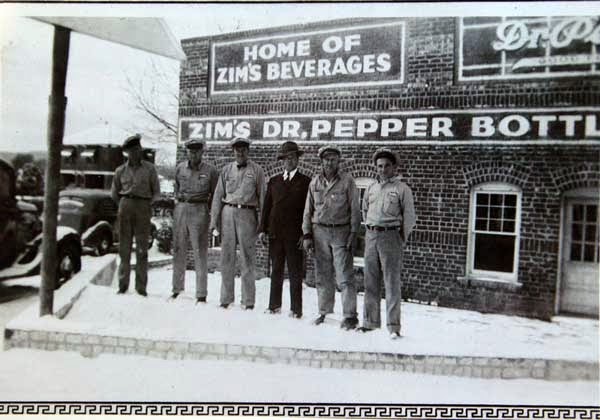
Zim's Bottling of Strawn
Showing posts with label Thurber. Show all posts
Showing posts with label Thurber. Show all posts
Wednesday, January 7, 2015

Sunday, January 4, 2015


Wednesday, December 24, 2014

Tuesday, June 3, 2014
Thurber's Ghost
Thurber’s Ghost
By Leo S. Bielinski, Ph. D
Many
cities have some sort of a ghost story. Thurber was called a “Ghost Town” after
it was abandoned in the early 1930’s. But “Ghost Town” is a misnomer, for there
have always been several residents living in Thurber. Some of these residents added
to the legend of a ghost seen in this “Ghost Town.” While the later residents
speak of a lady ghost seen and heard in downtown Thurber, the Thurber Ghost
seems to have originated in the Thurber Cemetery back about 1920.
Frank
Tolbert of the Dallas Morning News resurrected the ghost story in a May 15, 1983
story. At that time, the owner of the restaurant in Thurber was irritated
because three of his employees had just quit because they claimed that Thurber
had ghosts “in residence…Two of the employees were a married pair of Cuban
refugees, and the other was a 65-year-old maintenance man.” These employees
lived in apartments above the restaurant. The restaurant was in the bottom
floor of the old two-storied Thurber Drug Store.
Tolbert
also related that he had first heard of the ghost story in 1955 from Mrs. Eliza
Whitehead, one of the “old-timers” who had seen and heard a singing ghost. “I
been here 40 years…I was just walkin’ in downtown one
night and here come this pretty woman singin’ in some
funny way. Then she just went away right in front of my eyes.”
Thurber
had an opera house and Thurber, with its large opera-loving Italian population,
was a regular stop for touring opera companies. And Albert Whitehead, Eliza’s
husband, corroborated Eliza’s story. “You don’t catch me passin’
through town after dark.” The Whiteheads remained in Thurber as caretakers of
the remaining houses and buildings, particularly the “Guest House” (W. K.
Gordon’s Home), where company “Big Shots” stayed when they came to Thurber for
hunting and fishing.
Walter
Kostiha and his brother Frank claimed to have seen
the ghost. This was about 1925 when Thurber was beginning to shut down. The Kostihas lived near the old jail house, which was just
north of downtown Thurber.
Walter:
“I don’t care whether you believe me or not. I know what I saw, even if I was
about five or six years old. I was with my brother Frank behind the old grocery
store just about dark. We saw this woman in a white gown and she was singing or
saying something out loud. We took off running.”
The
Fort Worth Star Telegram (Oct 26, 1997) in a weekend Halloween edition did not
help matters when they wrote “The Thurber Cemetery is one of the biggest Texas historical
cemeteries. It is also one of the scariest places to be on a dark night. The
trees bend over the graves as if in mourning for the 700 (sic) or more children
buried there. The epidemics of scarlet fever and whooping cough…definitely left
their mark on this Texas Ghost Town.”
Raymond
Bridier had a plausible explanation for the origin of the Thurber Ghost. When
Raymond was about ten years old (say, around 1920), on moonlit nights a bunch
of kids would meet at the ball park, which at this time was on top of Grave
Yard Hill next to the cemetery. They would smoke cedar bark, play games like
“kick the can” or just talk.
One
night as they were going home, they noticed a lady in a white gown sitting on
the top step of the sty (steps over the fence) in the southeast corner of the
cemetery. She was crying or praying loudly, perhaps for a loved one she had
recently buried in the cemetery. The kids thought this behavior odd but this quickened
their pace toward home.
The
following night the same scene, but this time they took off running; something
had spooked them. Now, they were afraid to play in the ball park after dark.
But several weeks later courage returned and they went back up the hill. Nobody there. They smoked, played their games, but as they
exited the ball park and headed for home, she was there! She stood up on the
steps and started toward them! They panicked and went tearing down the hill.
They never went back to the ball park, and shortly thereafter, the ball park
was moved to the east side of Thurber.
After the ball park episode, which seemed a plausible
happening, all the alleged sightings have been in downtown Thurber. Some have
said the singing is caused by the wind whistling through the old buildings. But
Eliza Whitehead or Walter Kostiha
would never believe that because they saw her with their own eyes and heard
her.
The Thurber Cemetery Thurber
Cemetery
Friday, April 4, 2014
Thurber Hill, Ranger Hill
Bankhead Highway’s Thurber Hill
Begins and Ends Many Lives
By Jeff Clark
Roads have memories, just like
people.
Last week I retraced the abandoned Bankhead Highway as
it climbed steep Thurber Hill, just west of Highway 16 in Eastland County Loop 254 leaves Interstate 20. I’m parallel
and north of Interstate 20, its big hill still hassling heavily-laden trucks as
they head toward West Texas . Migrating west,
1930’s travelers received their first heaping spoonful of the bitter medicine up
ahead.

Thurber Hill rises 200 feet in a
little over a mile. Model T’s attempted this incline backwards, sucking every available
ounce of horsepower from their feeble engines. Folks were often driving rattle
trap old vehicles that were one strand of bailing wire away from disaster. Gas
tanks were rarely full. You didn’t stop until (not unless) you ran out of gas,
broke down, or Nature called.

Thurber Hill remains miserly with
her secrets. Elders remember the roar of the Thurber-bricked roadway beneath
thin tires, before Highway 80 asphalt replaced it. Like so much that’s happened
here, this high-pitched ascent seems so unnecessary. I wonder what possessed
planners to carve their road here and not along the more gently ascending Gone-to-California
wagon road a mile to our south.
During Ranger’s too-brief oil boom,
twenty horsepower Tin Lizzies had two speeds – low and high. Gravity-fed gas
tanks lurked beneath their driver’s seat in early models. Facing an uphill
climb with a half-empty tank, fuel couldn’t reach the engine. That sputtering
noise under your hood told riders that life was about to get exciting. The early Fords had three pedals (low, reverse and
brake). When the high speed clutch band became worn, the reverse pedal was used
to back up the hill.

Today, the road narrows quickly
from the bottom, the ground falling away to a deep gorge on the right. Tall hillside,
then boulders soar above one’s sightline to the left. High grass and trees
reach out to reclaim this black and white striped road. You can go forward. You
can roll backward. There ain’t no turning back.
Given the tightness of this road, 12
feet wide in places, and the dramatic stay-away-from-the-edge curves, surely Pacific-bound
Tin Lizzies loaded with their family’s worldly belongings were followed on foot
by their kin. Today, mesquites and cedar line the ledge once punctuated by
guard rails (more for show, if hit very hard). Trucks that couldn’t make the climb
backed down. If you blew a hydraulic brake line coming down, you’d need to go
home and replace your shorts.
This first climb is the steepest.
When a heavy truck had to stop under strain of its load or a wobbly car broke
down, there were no shoulders. No place to turn around. There’s no changing
direction – unless you can fly. Coming down you’d have to stand on friction brakes,
your Model T a little too anxious to achieve supersonic speed. This 1920s path
struggles to peel itself away from the edge.
The road whispers sadly, “it
happened here, back in 1941.”
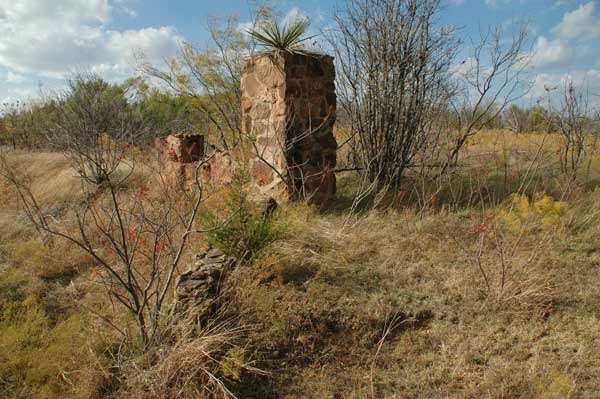
A stopped-in-the-road truck loaded
down with lumber blocked its lane, its broken axle not an easy fix. A nice car
stopped to help, pulling up beside. This is a blind corner, until the next car
coming along is almost upon you. Up at the top of Thurber Hill we see a second
truck begin its descent, full to the sideboards with happy workers heading to East Texas cotton fields.
When the lumber truck and the Good
Samaritan car come shockingly into sight, the farm workers’ truck driver knows
he has to stop. Pushing steel pedal hard to the floorboard, the doomed truck’s
brakes fail, its speed faster and faster falling down the runaway road toward
the star-crossed car and lumber truck. The careening truck’s driver aims heroically
for the space between the two vehicles, to avoid taking his passengers through
the rails and into mid-air.
Whatever horror this poor truck
driver imagines pales beside what happens next.
The big truck crashes full speed into
both lumber truck and car. Many were injured. Many needed help.

The Ervins stop to help, to take
the injured to Ranger’s hospital. The lumber truck driver lights flares to warn
off further catastrophe. People busy themselves helping the wounded. The call
goes in to Ranger – send help. Send everything you’ve got…
The Ranger Fire Department had a
siren mounted on top of their building that could be heard all over town. Its
wail announced fires, tornado warnings, world war black outs and other
emergencies. “Most of the young people who had access to cars would follow the fire
trucks to the scene,” Dorothy Elrod told me. Fire trucks, ambulances, and “all
of Ranger” left the little town, racing toward destiny.
They say the fire probably started
in the lumber, maybe a spark from the flares beneath its wheels. It might have
smoldered unnoticed in all the chaos. Two loaded Greyhound buses stopped behind
the accident. Their passengers piled off to get a better look. Cars from the
surrounding countryside pulled to a stop, blocking more of the road. Some say four
hundred souls watched as that lumber truck burst into flames.
The fire quickly spread, igniting a
saddle gas tank under the truck. A monstrous explosion erupted across the
panicked hillside, spewing burning gasoline across hundreds of onlookers like
high tide slamming into a seawall. James L. Ervin was blown off the cliff by
the blast. Faceless shapes ran in every direction across the hellish scene ablaze.
The few who’d remained in their cars were uninjured, reports later confirmed.
Whatever happened next, panic has
erased from the record. There wouldn’t have been enough firemen to go around. There’s
no water at the site. Time must have stopped, as shocked minds struggled to
take in the end-of-the-world tableau. The injured, the dead and dying were
taken to Ranger’s West Texas Hospital, whose rooms filled, whose hallway floors
were quickly littered with occupied mattresses. Others were taken to the City-County Hospital

Seven died that night. Thirty to
forty more are said to have perished later from burns or other injuries.
Several more were maimed for life. No one left unchanged.
“It was a very sad time since some
of our classmates were injured in the blast,” remembers Dorothy Elrod. Today
the road is eerily silent. “Nothing to see here,” this stretch seems to have learned
the hard way. A quick prayer, then back in the truck. I need to escape this
place.
Ironically, the paved road widens
to seventy feet not too much farther up the path, a place designed for ascending
cars and trucks to pull off and add water to overheating radiators, to let
descending car brakes cool. To marshal one’s courage for another attempt at the
summit.
Just up the hill on the north side
of the road, a long northern curve to the right is lined with two WPA-looking brown
stone gateways, marking the entrances to Scenic Point, a roadside park. People
could’ve walked here from the wide place in the road. There are at least three
barbeque pits built out of the same stone hiding in the brush. A rusted set of
bedsprings pulled up to one fire for warmth.
Once you enter the gateways, the
pavement stops. Vintage photos show this to be a scenic hillside for picnics. There’s
still a beautiful thigh-high rock wall lining the curving Bankhead out front.
Easter
sunrise services were held here. “I remember we were on high ground,” Dorothy
told me. “The scene looking east was breathtaking, especially when the sun
started rising. We had a sermon and sang gospel songs.”
Back in the
truck, the road finally reaches the crest of Thurber Hill. What takes a few
minutes on Interstate 20, takes much longer here. But this road’s not through
talking. As the pavement flattens, you notice concrete and brick ruins to the
south. This was the original hilltop gas station, before the complex moved west
to Ranger Hill when Highway 80 blew through. There’s a flat concrete slab
observation deck hanging off the hillside, from which you can see Thurber’s
Italian Hill many miles to the east.
Rejoining the interstate’s service
road up ahead, a cinder block building marks the location of Offield’s Truck
Stop and Café. Not too much farther and the real Ranger Hill awaits. Like so
much along this old highway, “what used to be” holds center stage.

Today I don’t much care what came
next – Highway 80 then I-20. Too much has been uncovered, too many wounds
unsealed. The gray asphalt reaches west finally toward Ranger, cutting a
slightly wider path through the cedar. Tens of thousands passed by this spot
heading toward, or away from something as our young nation reached adolescence.
A few souls never made it.
Interstate 20
caused the death of many Bankhead
Highway towns, I’m often told. But after today, I
think that’s a symptom, not a life sentence. I invite those folks to travel
Route 66, much less historically-important than the Bankhead brick and asphalt remnants
still snaking through their towns. Route 66 is raking in the cash.
Shorty Fox tells about when he and
Mutt Lee were traveling to Ranger in 1939. They’d been to Fort Worth to pick up lumber for a National
Youth Camp cabin or three, across from where the Ranger Library now sits. They
were driving a packed-full Chevy truck. It popped a spark plug, hitting the
inside of the hood like a snub nose bullet. The two men stopped, climbed out, scotched
the wheels with rocks, and made their repair (most of Shorty’s stories involve
duct tape or chewing gum, seems like). They got the truck running and started
up the hill.
I asked him about what he saw, as
they rode that old truck up the too-steep road. “Listen,” he told me, as
serious as he ever gets. “We’d just repaired a truck, we were loaded down with
lumber, and we were struggling straight up this big hill in first gear – a huge
drop off to the right. We were just happy to get to the top.”
I’ve always heard about the “big
hill” east of Ranger. Now I’ve driven it. I’ve listened to it speak. Thousands
of long-ago echoes can be heard, if this hillside road’s memory is to be
believed. I look back along the narrow road, its words softly speaking one last
time. “I was just happy to get to the top.”
Some
of this story occurs on private property, entered with permission. A full
recounting of the 1941 tragedy and its heroic aftermath may be read at www.angelfire.com/tx/rangerexes/1939a.htm
(used with permission). Special thanks to Barry Franklin, Ken Falls
Monday, February 24, 2014
The Louis White Drowning
Soda Pop Offer Tints
Louis White’s Memory
By Jeff Clark
“Life was cheap back then.”
Butter
Bridier is 85. He spent his first decade of life in coal mining Thurber. The
Bridiers lived in House 1269. That’s eight-year-old Butter in the photo telling
this story.
“One day Louis White knocked on our
front door. I didn’t even know his name.” Louis was 14. After knocking, Louis
stepped back off the Bridiers’ porch. He was black. Times were different.
“He wore no shirt or shoes, his hands
in his pockets.”
“Miss Polly Boo,” Louis said to Butter’s mom, “Charlie
said I could ride old Mary.” Charlie is Butter’s older brother.
“Are you sure Charlie said you
could ride his donkey?”

“Yes m’am. If he hadn’t, I wouldn’t
be here.”
Butter’s dad was French, his Polly
Boo nickname derived from “Parlez vous Francais. Louis gets the donkey bridled.
He dives halfway across her back so he can straddle her to ride. But when Louis
jumped, his pants slipped down around his ankles. “My mom laughed so hard snuff
ran down her face.”
Another time Butter and his mom
drove their A model Ford to Thurber’s service station for two gallons of gas. “That
was all you could afford, even at 15 cents a gallon.” Louis is there, leaning
against an iced soft drink cooler.
“Hey Louis.”
Louis looked at Butter, not lifting
up from the cooler box. “You want a soda pop?” he asked Butter.
“I don’t have any money.”
“I’ll buy you one. I got money.”
“You won’t pay for it.” Butter
doesn’t know if Louis had a nickel, dime or what. Grown people in Thurber didn’t
have 10 cents in their pockets back then.
“I don’t remember seeing Louis alive
after that.”
The White
family is living with Louis and Isabella Walters inside House 208, according to
the 1920 census. A 40-year-old “Louis” Walter and a four-month-old “Louis”
White. Father Ed White is 65 and wife Lucy’s 37. By 1930, Louis is 11, his
father 75, mom Lucy 49. They’re living in House 102, in “Colored Town
The census shows the most money any
of 50 names on the page possessed was $20 (all races). Ed and Lucy had “none”.
Though Thurber had no black school, Louis was able to read and write.
Thurber’s Little Lake still sits
just west of New York Hill. You could swim or fish there. There was a homemade
flat-bottom row boat anyone could use, made of 1 x 12’s, tar and pitch keeping water
out. Two boys about 16 joined Louis in the boat that day.
He could’ve fallen overboard
accidentally. His shipmates could’ve wanted to see if Louis really couldn’t swim.
Louis disappeared beneath the surface.
Johnny Elwood brought his metal
boat. He and Ted Botts went back and forth looking for Louis’ body with a
grappling hook. Fifteen to twenty people watched from shore.
“I came around our house the day of
the drowning. Diagonal across the street Miss Crane had a grandson Charles
Sanders, playing with a yo-yo. “Hey Butter, you know N___ Lewis drowned?” He
just kept yo-yo’ing. “I told momma and she hurried to Little Lake to see.”

When Louis was brought to shore, he
wore no shirt or shoes. A stretcher carried him up on the dam. He’d been in the
water over an hour. No effort was made to resuscitate.
“Dr. Baldridge was standing by
Louis’ feet. He said, ‘I pronounce him dead.” The crowd dispersed.
There wasn’t
an inquest, it doesn’t appear. The family cared, perhaps few others. “It was
hard to stay alive back then.” Louis was buried in an unmarked grave in Thurber Cemetery
Blacks had church below New York
Hill. Though all races mined together, there was little associating around
town.
There was a
black preacher once, preaching real loud. “I got scared and started crying,”
Butter told me. “They once passed the plate. One guy didn’t pay the plate any
mind as it went past. The preacher asked, “How ‘bout you sir? You got something
you can give to the Lord?”
“Yeah, I might give Him a dollar.”
“Very good, put it in the plate
there.”
“Well, if you don’t mind, I’ll give
it to Him when I see Him.”
Louis White
was willing to share a soda, Butter told me these 76 years later. “I always
remembered that.”
Louis’
mother Lucy died two months later to the day of a broken heart. We don’t know
if his then 79-year-old father had died or moved away. Lucy was getting up in
age, in bad health, poorly fed, facing the world’s worries without that
14-year-old boy’s smile to keep her going.
“Those were survival times. As bad
as it was, Louis offered to buy me a soda pop.”
When the restoration of Thurber Cemetery
After he retired, he talked to Flogene
Boston who lived on Park Row. She told him, yes, she went to Louis’ funeral.
His grave’s right there by the fence. The Bridiers found two plots that “fit”
her memory.
Butter and wife Faye gave Louis his
tombstone. Leo Bielinski gave Lucy hers.
“I can always remember that little
guy,” Butter told me, “leaning against the soda cooler. If I could put flowers
on only one grave at Thurber, it would be his.”
Lucy White’s headstone reads “A
Mother Grieves No More.”

Little Louis White drowned, after
teaching one important lesson.
“You want a
soda pop?”
SUGGESTED CAPTIONS
1. The story
teller, eight-year-old Butter Bridier in front of House 1269 in Thurber.
2. The
grappling hook used to find Louis White’s body in Little Lake.
3. Mother and
son’s headstones.
Wednesday, February 19, 2014
Latin Mass at Thurber
St. Barbara’s Church Walls Hear Echoes from
its Past
The Latin Mass in Thurber
By
Jeff Clark
It’s
black dark here in the long-deserted Thurber
Cemetery

I
won’t water this down. The presence of the Lord is tangibly inside this
forgotten place tonight, among and around these people. They are in communion
with Thurber’s departed fathers, mothers and children at rest beneath and
around us, their souls or their memories or their tragedies as present to me
this night as my own distant heartbeat – perhaps more so. Father Kenneth Novak’s
words waft skyward:
“Requiem
aeternam dona ei, Domine,
et
lux perpetua luceat ei.”
“Eternal rest, grant unto him, O Lord.
And let perpetual light, shine upon
him.”
This is a prayer
for the repose of this mining town’s lost, buried for eternity within these tombstone-speckled
nine acres, spreading like a flickering Easter candle into the darkness around
us. If there are ghosts within this place, tonight they welcome this throng to
their table.
The circled parish
quietly answers their shepherd: “Amen”.

The priest lifts
his strong voice into the night: “In the name of the Father, Son and Holy Ghost.”
Hands touch foreheads, heart, left then right across their chests. These new
friends to Thurber
Cemetery
I’m
beginning to wonder if there’s such a thing as chance encounter. Last week, my
friend Leo was tending to this cemetery, as he has for many years. Father Novak
of El Paso
shows up, completely at random Leo tells me later, a priest from the Pius X
Society.
The
Pius X Society is a conservative Catholic group that believes the Catholic Church
departed from its true path after Vatican II (1962-1965). Father Novak is
excited about Thurber’s story, Leo tells me. Wants to bring his parishioners
out here, hold a Tridentine Mass in Latin that dates back to 1570, inside Thurber’s
1892 St. Barbara’s church, resting peacefully at the foot of New York Hill. Leo
agrees.

I
was baptized into the Catholic Church when I was thirty-eight-years-old,
following a year much like this last one. Never baptized or saved or any of
that before one dark fateful Easter Vigil evening, back in the big city. I’ve
attended Masses all over the South – in pre-dawn Spanish at San Antonio’s San
Fernando Cathedral, at a sprawling Jesuit monastery beside the lumbering
Mississippi River, and with a couple of once-ordained friends nearing the end
of their own personal crises. I’ve never seen the Latin Mass performed, at
least not in person.
Friday
morning, I met Leo at St. Barbara’s. Father Novak’s flock began arriving soon
after. It was clear from the cardboard boxes, the number of altar boys, the
stream of cars pulling up outside this church that history was about to make
itself visible inside this little wooden church.
Weekly
Mass has not been said at St. Barbara’s in many, many years. This proud white building
originally sat below Graveyard Hill until it was moved to Mingus in the 1930s,
until it returned here to Thurber in 1995.

Father
Novak swept into the old church building, wearing a traditional black cassock.
He is a force, a sparking current of energy that can take the unprepared aback.
His exuberance would give my seven-year-old a run for her money. He shakes
Leo’s hand, then begins issuing orders – candles go here, reliquaries there – a
throng follow him down the wood plank floored aisle to make ready. His
followers love their charismatic leader. St. Barbara’s stirs to life.

Four
altar boys light the candles, six white tapers lining the space behind St.
Barbara’s front altar. Two statues are delicately lifted into place, atop empty
white perches where St. Barbara’s own sculpted saints once stood. The red Gospel
is placed lightly on the altar. The golden chalice moves into view. Men bow to
their Lord when stepping in front of the front altar, turn and bow again upon
leaving.
Father Novak is a
teaching priest, explaining to the assembled that because there’s no altar
stone in St. Barbara’s, that linens containing holy relics sealed within wax
will help consecrate their communion rite, that clean linens atop these will be
in place as tradition demands.
The Latin Mass is
celebrated with the priest facing away from the congregation. Father Novak’s
words were sometimes too quiet to hear, though God undoubtedly received the
prayers heading His way. One of the prayers was sung, the haunting Gregorian
chant rising to the ceiling like sweet-smelling incense. St. Barbara’s communion
rail has been put back in place, restoring authenticity to its pre-Vatican II
legacy.

The men led the
rosary before Mass began, gleaming beads in hands as confessions were received by
the priest in the confessional along St. Barbara’s back wall. Four ornate golden
reliquaries graced the altar. St. Barbara’s white wooden tabernacle against the
front wall is original. The tops of women’s heads are graced with delicate lace
veils. These worshippers in the Latin rite have traveled here from all over North Texas . The lights are on. The bathroom door is
unlocked. The floor is swept. This church, at least for today, is back in
business.
My
eyes were fixed forward, sitting in the back pew with Leo. Edging majestically into
the silence, the sound of St. Barbara’s original foot-pumped organ announced
the opening words of Mass.
“I haven’t heard that organ play in over 60 years,” Leo whispered to me. You
have to pump both your feet at the same time, while playing the keyboard to
make the thing sing – not a common skill in this post-modern age.
This organ was
heard by coal miners coming here for Mass over ninety years ago. Leo’s Big
Ciocia (Polish, “Big Aunt”) played this same organ. His mother Lottie sang in
the choir. Today the organ’s tone was again strong, was haunting in its beauty.
Leo was baptized in this building, married here, and served as an altar boy here.
Father
Novak preached of the history of this town – about the fleeting cities of man,
about the eternal City of God .
His masculine last words stayed with me: “Lord, we’re coming. We’re on our
way.”
I
believe him.
Toward
the end of Mass the church’s steeple bell began to peel, each strike carefully
timed to fit the choreography within Father Novak’s traditional liturgy. That long-silent
historic bell could be heard all the way north to Mingus back in the day – its
first toll to get dressed (church starts in 30 minutes), then to head for the
church (15 minutes left), and then to take a seat in your pew (five minutes til
kickoff).
I
sat there wondering if New York Hill Restaurant diners up the hill knew that the
St. Barbara’s bell they were hearing from their tables was singing its part this
last day of 2010 in a centuries-old celebration. That Thurber’s heart had come
back to life.

After
Mass ended, the worshippers left the church and climbed the steep Thurber-brick
steps to New York Hill’s scenic overlook, bringing to mind Christ’s last
sorrowful journey on this earth. A catfish dinner was served by New York Hill
Restaurant, being Friday and all. Leo gives a talk about Thurber, about
scanning for graves. The room warms to his stories.
The group
adjourned for a short tour of the museum down the hill, then drove across I-20
to the Thurber Cemetery
There
is a concept in Catholicism known as ecumenicalism – the simplified definition
explains that though there are important differences between the various
denominations, we should all reach out in fellowship and love one another as
Jesus did, as Jesus does. People of good will should join hands, the thinking
goes, no matter what the sign says on the front of their church building, on the
front of their cardboard box home beneath that lonely freeway bridge.
I
meet many new people each week. After “I live in Weatherford”, I often get
asked which church I attend. The answer is complicated, as I feel connected to
the Holy Roman Catholic Church (Mother Church versus some of her recent drivers),
the Church of Christ (special friends and ancestors), the Baptists (my two daughters
and grandparents), the Buddhists (Catholic friend Thomas Merton saw the same
bridge here, I believe), to the Native whispers I’ve begun to hear from this
part of Texas and to the many other “unseen churches” that I happen upon in
senior citizens’ homes around the state. God is not just an
inside-some-church-building deity. The gleaming megawatt cathedral of worship
these kind folks brought to life this night in Thurber Cemetery
These kind people
who I now consider friends remind me of the earliest Christians, holding their
assemblies below the streets in dark catacombs. They knew what they believed. Their parents or grandparents has seen Jesus in the flesh, had known the
sacrifice that their faith might extract from their too-fragile lives. Those catacomb
warriors joined these new friends worshipping in the dark last night – they
knew that One was more powerful than many. I respect these people’s return to their
tradition, their fidelity to what they know is right.
There
are no chance meetings. Let us leave it at that. May this New Year bring us
back to that knowledge. May we all see what God puts before us. And act. Amen.
The “lonely grave” mentioned above is that
of Barbara and John Lorenz, its perimeter “fenced” with vertical oil field
pipes. When first discovered, only the date “January 31, 1931 ” was visible. Research into
1931 church records restored their names to the roll call of this physical
place.
Sunday, January 12, 2014
Anthony Bascilli
Anthony Bascilli
What’s Next is Coming
Thurber
miner Anthony Bascilli’s rugged wooden cross has fallen to the ground at Thurber Cemetery

Bascilli
may have worked the mines as late as 1926. After that, he probably did odd jobs
around Thurber while the place was shutting down. He was Hungarian.
Anthony
Bascilli was a man who thought things through. Four mortared brick walls line
the six foot deep insides of his grave, from ground level to buried floor of casket.
Like an elevator shaft. These Thurber bricks were laid by Luigi “Gi Gi” Biondini
and his son Johnny. Bascilli’s casket was also made by Gi Gi. Mr. Bascilli
slept alive in the wooden coffin before being buried in it later. Eternity is a
long time. One wants to be comfortable.
Bascilli
instructed that two steel doors be placed over his casket with several feet of dirt
separating the two. This was carried out. He then wanted a key to the casket to
be dropped down a vent or air pipe to his casket. This pipe was also indeed installed
at his request. The key is available to him.
The
year 1927 is etched into the front of the wooden cross, though this is thought
to be the year of construction, not the later 1932 year of his death from
pneumonia at age 77 according to Church records. The large square piece of sheet
metal visible on the cross was to frame the photograph of Bascilli’s friend
Louis Piontek. A practical joke, one has to believe.
Gino
Solignanni says Bascilli sometimes got drunk and would walk down the Back Road
Ka-boom.
Bascilli
left directions that a new suit and new shoes be folded inside the foot of his
casket. When it was time to rise from his grave as the Bible promised, he
wanted to look good. With the doors and keys and brick-lined hole, the man
wanted a head start.
Anthony
Bascilli’s grave makes me smile when I walk past. He believed certain things a
little outside the norm and he had the courage to act. Visibly, out loud, the
hell with what people might think. More importantly, it appears the man kept
his sense of humor in a time when life was hard.
And
getting harder by the day.
He
was waiting for something. Or someone. But he was ready to make the first three
moves. He wasn’t afraid to give the destiny he hoped for a little nudge to move
it along. Whether he was born like that or first circled around life or books
or whatever, I don’t know. But he got there by the end.
Words
from the past, for the future.
Tuesday, December 17, 2013
Visiting Grant Town Grandparents,
The 1930s Road from Seguin
(This story was written by Louis Scopel,
recalling childhood trips to Grant Town. Grant Town was a “suburb” of Thurber,
located just to the west, northwest. Many structures remain.)
“Travel from Seguin to Mingus was a trip attempted usually
not more than twice a year for reasons mentioned below. The distance was 245
miles on primarily on US 281, usually a highway in good condition. The trip
usually took from five to eight hours depending on stops etc. Most of our trips
were in a 1936 Plymouth
4 door. US 281, was wide enough for two cars and was pretty mundane on most
occasions. Plenty wide as you seldom met another vehicle every thirty minutes,
or at least, so it seemed. Once we left New
Braunfels , the next stop light was in Stephenville.
The 1936 Plymouth
diligently purred along with an under dash radio keeping dad aware of the
latest baseball scores.
We normally left when dad closed
down the poultry processing plant for the weekend and he took a quick bath – he
smelled better then. By then Mom had items packed and ready to go. Mom knew how
long these trips were as she packed plenty of provisions! There was the thermos
of coffee but containers of cookies, several cakes for Gi Gi and John Franks.
And there would be another bag of fruit and sandwiches. She seemed to believe
we might get stranded somewhere sometime. Anyway we would soon be purring along
after leaving civilization in New
Braunfels or so it seemed with our head lights piercing
the darkness. In later years I compared them to two candles!
When traveling in colder weather
our heating system worked great—three of us in the front seat with a blanket
amply dusted with crumbs, tucked across our laps. On one trip, as we approached
Marble Falls Marble
Falls
So we continued and as luck would
have it, there was a Texaco station open, and the young man was accommodating
enough. Yes, they did have a part time mechanic but he had went home for the
week end, however, with a bit of prodding he agreed to come in and look at the
Plymouth’s charging system. We agreed this was better than on the side of the
highway – we had food and a rest room. After arriving, the mechanic determined
it was the generator but questioned where do you locate one at this time of the
night on a weekend? Amazingly our mechanic located one, left and came back with
it under his arm. In short order the generator was ‘ginning’ again and the
lights were comparable to two candles once more.
Our trusty Plymouth would usually
rattle across the cattle guard in Grant Town between 10 and midnight waking everyone and
announcing our arrival – and time to eat and catch up on news. If my aunt Pauline was there, there would be
dishes and bowls of fudge and divinity etc.
{When Thurber shut down many people moved
out to Grant Town. "My mother and grandparents came to Thurber from Noted historian Leo Bielinski has written about Grant Town, and shares:
“Jimmy Grant opened a saloon just outside the city limits
of the Texas & Pacific Coal and Oil Company-owned Thurber. His saloon was
frequented by miners who could talk freely about unionization without fear of
company intimidation. Some immigrant Thurber miners moved out of Thurber to
Grant Town to own homes and small businesses. The area became known as Grant's Town,
shortened to Grant Town.”
"Today it is part of Mingus, but the locals still
refer to it as Grant Town. During Prohibition, there was bootlegging in Grant
Town, and after the repeal of Prohibition in 1933, several honky tonks opened
up.”
"Johnny Biondini, Louis Scopel's uncle, summed
up the family's move from Thurber to Grant Town after the coal mines shut down
in Thurber: 'In Thurber we had all the modern conveniences like running water,
gas heat and electricity. But when we moved to Grant Town, just a quarter mile
away, we had to adjust to coal oil lamps, well water and wood stoves. There are
just a few left who lived in Grant Town before WWII."
“Thurber had a barbed wire fence around it to keep
Thurberites buying in the company store. Jimmy Grant's saloon was just outside
this fence. The immigrant Italians made up a fourth of Thurber's population,
but the company store did not stock the different salamis, cheeses, olive oils
etc. (which the Italians wanted). So in addition to Grant's saloon, there were
several Italians who set up small combination grocery store/saloons in Grant's
Town, just outside of the barbed wire fence to cater to the Italians on Thurber's
nearby Italian Hill: Sealfi, Ronchetti, Mezzano, Corona, Castaldo and Raffaele
[and others].”
"There were several prominent bootleggers in
Grant Town during the Prohibition era. Not just Italians, but all nationalities
were involved in bootlegging. When the mines began shutting down in the 1920s,
bootlegging was a way of surviving and had none of the Chicago style gangsterism. There was little
stigma if you bootlegged. The nearby Ranger Oil Boom was profitable for the
bootleggers."
Subscribe to:
Posts (Atom)