Everything Matters

Everything Matters
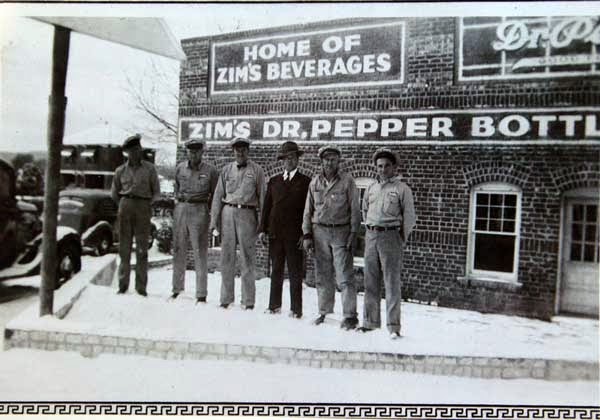
Zim's Bottling of Strawn

Sunday, January 12, 2014

Anthony Bascilli

Anthony Bascilli
What’s Next is Coming

Thurber miner Anthony Bascilli’s rugged wooden cross has fallen to the ground at Thurber Cemetery, a victim of old age. It stood over six feet, one of the more notable landmarks on Graveyard Hill. By the time you read this, God-willing, it will have been repaired. It will again be standing.

Bascilli may have worked the mines as late as 1926. After that, he probably did odd jobs around Thurber while the place was shutting down. He was Hungarian.
Anthony Bascilli was a man who thought things through. Four mortared brick walls line the six foot deep insides of his grave, from ground level to buried floor of casket. Like an elevator shaft. These Thurber bricks were laid by Luigi “Gi Gi” Biondini and his son Johnny. Bascilli’s casket was also made by Gi Gi. Mr. Bascilli slept alive in the wooden coffin before being buried in it later. Eternity is a long time. One wants to be comfortable.
Bascilli instructed that two steel doors be placed over his casket with several feet of dirt separating the two. This was carried out. He then wanted a key to the casket to be dropped down a vent or air pipe to his casket. This pipe was also indeed installed at his request. The key is available to him.
The year 1927 is etched into the front of the wooden cross, though this is thought to be the year of construction, not the later 1932 year of his death from pneumonia at age 77 according to Church records. The large square piece of sheet metal visible on the cross was to frame the photograph of Bascilli’s friend Louis Piontek. A practical joke, one has to believe.
Gino Solignanni says Bascilli sometimes got drunk and would walk down the Back Road to Thurber (going north to 108 out of Thurber, first road east) and every couple hundred yards set off a half stick of dynamite. There couldn’t have been more than two or three blasts. There’s only about a half mile stretch where no houses then were.
Ka-boom.
Palo Pinto County backroads guard many stories of strange burial practices – phone lines to coffins, glass-topped see-into caskets and some other richer stories best not told in polite society. Though life was said to be cheap back then, apparently what happened next was very much on these folks’ minds.
Bascilli left directions that a new suit and new shoes be folded inside the foot of his casket. When it was time to rise from his grave as the Bible promised, he wanted to look good. With the doors and keys and brick-lined hole, the man wanted a head start.
Anthony Bascilli’s grave makes me smile when I walk past. He believed certain things a little outside the norm and he had the courage to act. Visibly, out loud, the hell with what people might think. More importantly, it appears the man kept his sense of humor in a time when life was hard.
And getting harder by the day.
He was waiting for something. Or someone. But he was ready to make the first three moves. He wasn’t afraid to give the destiny he hoped for a little nudge to move it along. Whether he was born like that or first circled around life or books or whatever, I don’t know. But he got there by the end.

Words from the past, for the future.

Thursday, January 9, 2014

Caddo, Texas

Loop 252
Caddo, Texas

I’ve been bouncing across a too-rough-for-little-cars gravel road for over an hour, its rocks sharpened daggers, listening for the inevitable flat tire. I’m deposited on the southern shore of Highway 180, on the southern edge of Caddo. Caddo the town, in Stephens County. If Texas & Pacific Oil’s Hohhertz Camp was behind me on that silent sojourn, I didn’t see it. It didn’t flag me down.

I have an hour to kill, my next appointment not til 3. I drive around Caddo.

Lots was here.

Little today.

This 1870s Anglo settlement is said to be on the site of a Caddo Indian camp. When the oil boom hit around 1916, the population swelled to over 1,000. Some say more.

I spy an old wooden tabernacle being reclaimed by the woods. Like always, I stop to hear what it has to say. Its shadows hide several hundred yards away from the freshly-painted Caddo church. I’m not sure if the church is open or closed. The tabernacle is closed. Is in its final moments.

The Caddo Cemetery to the north is immaculate, ironic among the left-without-saying-goodbye of this town. Or fitting, carefully maintaining what’s already gone, at least on this earth.

Loop 252 cuts through Caddo, two digits shy of an ever-diminishing second chance. The old bridge betrays Bankhead heritage, bricks probably sleeping beneath this asphalt.

Highway 80 bypasses where downtown Caddo used to be. Or still is, I get confused. This road gets some traffic, but no one’s moving out there to set up shop. No one gets it.

Traffic.

Second chances.

Even the proud Caddo Mercantile at the westbound Y junction of Loop and Bypass is closed, is for sale, after many bites at the apple.

Buildings here were once nailed together hastily in wood plank. Tents were pitched. Tomorrow would take care of itself.

There are a few nice homes sprinkled still – less than ten. Scattered mobile homes, well, doing what mobile homes tend to. These streets, the few nature’s not reclaimed, host once proud structures that have fallen to their knees, then given up their fight to the ground into which they rot.

Others should’ve been bulldozed, before this decay gained momentum. I have to believe someone said something. Once.

Whatever happened or failed to happen, few are here to see the result this day. Folks like me swing through, attracted to the poignant ghost stories digital photos can unspool onto our computers.

The post office is open, its lone employee parked out front.

Most driveways are empty. Folks at work. Others never coming home.

Cars whiz past as I pull back onto Highway 80. Traffic turns to the state park to the north. To Ranger going south. There was a time this traffic could’ve stoked some commerce, some jobs. But like the proud Caddo Native people, oil moved on. People moved away. Those left behind failed to adjust. Failed their future.


We are one quiet chapter from the end. It’s time to go.

Monday, January 6, 2014

The Prayer

I sat in the pew behind them, a quiet couple, he balding, she well-made up, hair coiffed, both dressed nice, many decades between them.

The sermon was about new beginnings, this the first Sunday of the year.

Let go of the past. Act in faith. Move forward.

Move on.

The winter wind strengthened outside the little country church. Cold, so cold, the sub-freezing January morning rankled the lonely heart left behind. Sit in a sanctuary. Come inside for a moment. Try to leave the Cold Alone outside.

During the rambling homily the preacher said, “Everyone needs someone,” a toss toward God or friends, family, perhaps one’s exiled self, I suppose.

Everyone needs someone.

The crisply-dressed nice older woman touched wrinkled fingertips to her husband’s tweed suit coat, touched him gently, just them, just then, she thankful for the man who’d sit beside her in church. Fingertips her silent I love you. A delicate silver diamond antique wedding ring shone back at me, twinkled a midnight lighthouse from the row just in front.

This once-was rural county has been a hard place from the very beginning, a confusing place, how some treat others. The preacher prayed, slowly, “Lord, help us begin anew. Lord, let us have a fresh start.”
Lord, hear this man’s prayer.

“I feel moved to pray one more time,” he said, after another song. It brought him back on stage. Eyes down, the congregation heard his question, “If there’s anyone who would like to let something go, get past it, raise your hand. I won’t address you or draw you out, but I want to pray for you.” Several hands went up, judging by his solemn “Thank you,” then “Yes, thank you, sir”. “Thank you too.”

I saw the weathered hand go up, just for a glimmer second, then come quickly down, this man’s wife who loves him as best friend, her life’s mate.

That’s how it looked to me.

What past misty chapter could she have to let go of? They prayed hard, the husband looking down at his bittersweet wife, eyes full of sadness or love or wanting to take whatever burden it was from her.
It hit me at the time. It hits me now, the day-to-day miracles that God plants in this desert to find, if we will but look.

This county was settled by husbands and wives – least those are the historical stories that echo ‘round  my quiet now. Sanches, Mansker, Flannigan, et al.

That husband and that wife were what needed to be seen this morning – a prayer placed where it needed to be.

Blessings accrue to those who never give up. Perfect, no, rocky sometimes, but together faithful to whatever they two set out to do. Whatever comes.

Act in faith.

Don’t lose your nerve. Three.

“Remember not the events of the past, the things of long ago consider not;
See, I am doing something new!
Now it springs forth, do you not perceive it?

In the desert I make a way, in the wasteland, rivers.” Isaiah 43: 19

Saturday, January 4, 2014

Buggy Horse Story

Buggy Horse Story
I Hope to Meet Him Soon 

Snippets slide past my boat nearly every day. Too many to chase after.

So call this a breadcrumb. Maybe the answer will come following up this trail one day.

This happened before 1906, maybe in late 1800s. Up along Hohertz Road, between Strawn and Necessity. I’m pretty sure it’s true.

A lady wanted to catch her buggy horse so she could go to town. It was running with the neighbor’s horse, playing, carrying on as horses will. The lady was in a hurry. Or not used to waiting. She pulled out a shotgun, shot the neighbor’s horse dead.

She had places to be.

The lady hitched her now friendless horse to the buggy and went on her way. I’m sure her horse knew better than to do that again.

Later that day, the lady’s neighbor returned home and found his horse dead. He figured out what must’ve happened. This neighbor man marched out into the woods, found the impatient lady’s husband in the field dressing hogs. I like to think he was happy, out there alone, not bothering anybody.

Her husband was a man who wasn’t lucky.

The aggrieved neighbor shot her husband dead. The man didn’t know his wife had even done that. He didn’t know what she had done. Cost him his life, it did.

This dead husband man is buried out on that hillside still, I’m told, behind a cable fence, overgrown with weeds and mesquite.

At least it’s over.

I hope to meet him, soon.

Friday, January 3, 2014

Dr. Jackson Evans Brings 1872 Medicine to Eastland County

Dr. Jackson Evans brings 1872
medicine to Eastland County

            We left the pavement seven miles ago. The time machine dial rolls backwards – 2008, 1941, 1917, stopping at 1872. We’re bouncing, twisting and turning through Eastland County’s vast Palo Pinto Mountains. Rutted roads turn to dim trails, then finally to expectant footsteps. My guides this day are good people. They made a pact with the landowner on my behalf to preserve the secrecy of Evans Cemetery’s location. Let me save you some time. There is one publicly-available set of directions, but they’re wrong. Bad wrong. Really.

Jackson Evans was the first physician to permanently settle in Eastland County. He was recruited by the citizens of the Palo Pinto District in 1872, which then included Eastland County. Their next nearest doctor was in Stephenville.
I try to imagine what this rough country looked like back then. Take away the mesquites, most of the cedar. The Evans came to this ridge March 10, 1872, after a short stay at the Allen Fort, a mile down the hill from here. Why did they pick this hidden mountaintop? Comanches would terrorize these hills for three more years.
We reach the final clearing, surrounded by cedar and majestic oak. The original arch-topped iron fence surrounds the Evans Family’s final resting place, maybe forty feet square.

Bessie Hill, the Evans older daughter, died first in 1894. Her grave is the center anchor to this cemetery, covered with knee high crepe myrtles. This plot was overgrown for many years, but the invading trees and brush (and rattlesnakes) have been cleared. Good people.
Dr. Evans reports that 1870s Eastland County “was a paradise for hunters, when I came here – cougar, bear, deer, and turkey in abundance. I killed all I needed for family use, while out visiting the sick. One day, just one mile from where I now live, a party of men (of which I was a member) killed four bear, while another party in hearing of us killed two more. Many jokes were perpetrated on Eastland County in those days,” continues Dr. Evans. “I heard a traveler, who was passing along the road near my house, say, ‘I would not have this county and one dollar’. We little thought then how valuable this shinery was.”

Jackson Evans was sent to school at the University in Oxford, Mississippi to study for the ministry by a childless aunt. He apparently didn’t feel God’s ‘calling’, switching to medicine. He finished up at Tulane in New Orleans. Dr. Evans tended the sick and wounded during the War of Northern Aggression (Civil War).
Mrs. George Langston’s “History of Eastland County, Texas” reports that one of Dr. Evans’ first calls in Eastland County was to a very sick woman. She’d been stricken with fever for three weeks, outside a doctor’s care. “It is to Dr. Evans’ credit that she was soon convalescent,” Langston writes. “The territory covered by this first doctor reminds one of the extent of the pioneer ‘circuit rider.’ From the North Fork of Palo Pinto Creek to Desdemona, and from Barton’s Creek in Erath County to the limits of civilization in Eastland were the bounds of his calls.”
He covered a huge swath of wilderness on horseback, then by buckboard driven by his daughter Alice. His saddlebags were fitted to hold glass vials of medicine. Dirt poor settlers might pay Dr. Evans in chickens or pigs, or not at all. A small fortune in uncollected fees remained on the books when he died thirty years later.
The time machine has been kind to these woods. The trees were thinner back then, more brush, taller grass, more “shinery”. Some sounds stuck with this land – wild hogs, fawns running through the thickets, rattlesnakes. Today, thankfully, no Comanche war cries.

Dr. Evans wife Maria presents an even bigger mystery. She married Jackson in 1863 at her father’s plantation in Sumpter Hill, Alabama. She is the grand daughter of Revolutionary War Generals Pickens and Anderson. Jackson met Maria while she was teaching at a girl’s seminary established by her father in Meridian, Mississippi. Maria was raised on another plantation in Pendleton, South Carolina and was well-educated. Plantation life did not follow Maria to this savage corner of Texas.
The second Evans daughter, Alice, wrote that “mother was often left alone with us three small children, often at night and through the long days, but she was always so cheerful and brave, we never knew that danger might be lurking near…Her life here, reminds one of the missionary in a far country, as she cared for all who came and sought the Doctor's care and in her Christian faith and integrity, had an uplifting influence on all with whom she came in contact.”
The old wagon road to their house left the main road between Blair’s Fort (later Desdemona) and North Fork (later Strawn), tracing the slope of a creek as it climbed over a hundred feet in elevation to their corral.
We retrace our steps. Across a small meadow, a stacked rock chimney peeks out of the dense brush, the crown of the original Evans log cabin, over twenty-five feet in the air. Cabin logs lie rotting in the brush.
Dr. Evans grasped the sacrifices his family made. “My three children were then very small, but I had often to leave them and their mother alone when there was danger of Indians. We stopped near a cow-ranch for protection – as there was no town in the county – and we are still at our old stand with all the practice I can do.”
Dr. Evans’ land holdings exceeded 2,000 acres at one point. The family raised cattle and horses. “They planted one of the first orchards in the county, and Maria dried peaches, apricots, and apples for use during the winter,” a granddaughter tells us. “Deer, turkey, bear and an occasional piece of buffalo meat brought by a passing hunter were diet staples. Such luxury items as coffee, sugar and wheat flour were scarce because supplies had to be hauled from Waco or Fort Worth. My grandmother recalls that her father received a box of medicines from Stephenville which arrived before Christmas with some red stick candy and a note saying ‘for the children, from Dr. West’.”
Mrs. Evans raised the children, nursed her husband’s patients, ran the kitchen, and educated her children. She later taught at the first school located at the Allen Fort.
Alice breaks the code on her mom. “As the wife of a pioneer physician, it was not an easy life…the sick would often come and stay for days. No one was ever turned away.”
            It’s time to leave. There’s a light wind in the trees. The smell of cedar. There are no sirens, car horns, pump jacks or airplanes. We are standing in true wilderness, at the front door of a family that helped birth Eastland County. Dr. and Mrs. Evans were partners, both born in 1837, both passing in 1908. The word “hero” gets thrown around a lot by historians. These folks are. I’m glad they are out here, in this wild country, today much as they found it. May this family’s hallowed cemetery, and the fabled land they once roamed, forever rest in peace.
            This story is excerpted from the book “Tabernacle – The Back Road to Alameda and Cheaney,” by Jeff Clark (774 pgs plus notes, $24.95 + postage, jdclark3312@aol.com). Special thanks to Alice Evans Allen, Ed Allcorn, Kenneth and Jean Underhill, Lynn Nicholson, Shirley Cawyer, Virginia Allen Pickrell, Mitch Fincher, Mrs. George Langston’s 1904 “History of Eastland County, Texas”, the red “Gateway to the West” Eastland County History, Rosalie Daniel, Ann Clark, Annagrace Fincher, Septima Anderson Fincher, Wanda Frasier and the landowners that provided access to this important site.

SUGGESTED CAPTIONS
1.                  Dr. Jackson Evans, first doctor in Eastland County.
2.                  Evans Homestead chimney peaking through the brush.
3.                  The Evans Cemetery.
4.                  Dr. and Mrs. Evans headstone, both born in 1837, both passing in 1908.


Wednesday, January 1, 2014

Miss Walton

“My time isn’t worth very much,” the older voice had warned me on the phone. I’m driving west this morning to visit ninety-one-year-old Minnie Walton. Miss Walton graduated Alameda High School April 28, 1933. She lives at Mineral Well’s Crazy Water Hotel, built in 1927. The hotel gets its name from a local woman, crazy they say, who drank from Water Well Three beneath where the building is now and was healed. Eighty-one years later, the Crazy Water’s brick shell houses a glorified rest home. 

I pull into Mineral Wells a little early. The once resort hotel soars six stories into unending sky. I haven’t planned for this, my fear of heights and all. I walk into the expansive, once-palatial lobby. Dusty paneled walls and gilt chandeliers grace a wide stairway up to the promenade. Young Judy Garland, Tom Mix, Gen. John J. Pershing, D. W. Griffith, Bob Wills and one bank robbing couple using made up names strode these marble floors, signed in at the now-vacant registration desk against that far wall over there. Prohibition booze fueled midnight flappers dancing the Charleston to big band orchestras atop the glass-walled rooftop high above us, broadcast by radio all over the South. Today the lobby is dark, two clumps of old people sitting here and over by the piano on past-its-prime cast off furniture.
Breakfast was served at eight, about an hour ago. Whoever came down to eat is nowhere to be seen now. I meet a nice man. Call Miss Walton on the house phone, he suggests, seeing that I’m lost. Minnie answers on the second ring--Room 438, the fourth floor, great, the elevator. Twin doors open. The elevator is cruelly slow, enjoying itself – wobbly, unsure. Days pass while it totters one floor at a time--uncertain. The tomblike, weathered box mercifully opens, releasing me onto the fourth floor at last.  There are no paintings, no pictures in this monotonous hallway of painted concrete walls.
Minnie pokes her head out from an opening four doors to my right.  “I’m down here.”  Her crowded room might be ten by twelve, one small window on the far wall, drapes tightly shut. Her bed boasts an intricate, brightly-colored patchwork quilt. A breathing machine the size of a console TV waits on the floor beside the bed. The room is clean, but there’s clutter everywhere. This woman’s life possessions have followed her here.
She asks me to sit down, in either her wheelchair or a five-wheeled stenographer’s roll around, pillows in the seats of each. Minnie is a small woman, frail. She takes short, shallow labored breaths. She has painstakingly arranged old photos all over the top of her bed. We begin our visit.
Minnie’s mind is sharp, precise, though she forgets names sometimes. She thinks she has Alzheimer’s, but she’s too alert. Her memories unspool like newsreels. She confirms that her doctor thinks she’s fine as well, but you can tell the Alzheimer ghost is on her mind.
Miss Walton attended first grade at the Alameda School, then grades two through seven at Cheaney’s school up the dirt road. Minnie remembers the wood frame Cheaney School as a one room building, a movable partition wall separating the space into two classrooms. Mr. Stephens or Stephenson was her teacher. The Alameda Trustees successfully talked Minnie’s momma into letting this bright young girl return to Alameda in the eighth grade, sweetened by the promise of a bus ride. I glance at the oxygen machine on the floor behind her.
Minnie never married. I don’t bring it up. I don’t know it for 100% true while we talk, but that’s the direction her family names lead me – still a Walton, her maiden name.  It appears she merged into her brother’s family at some point as she traveled through life. He’s gone now. His daughter lives south of town.
Minnie could hear Alameda School’s first bell from their house across the dirt road, the Tucker place to their east, Ollie Pilgrim’s store to the south. That black Liberty Bell-like alarum stood high on a steel pole, pulled by a knotted rope by farm kid hands from the ground. Miss Walton remembers with a smile when the Alameda and Cheaney schools became one. Jagged feelings were raw with some about the consolidation, certain folks suspecting that Cheaney joining Alameda would leech identity from Cheaney, the community. 
Both school buildings were moved from opposite ends of each settlement, slamming together like bookends on the new midpoint campus. The Cheaney structure
came to a stop on the northern “Cheaney” end of the schoolyard. Alameda’s building was planted on the southern, “Alameda” side of its new neighbor.
Times were hard, she told me. Students could buy six school photos of themselves for twenty-five cents. She and her siblings did without. That money could buy food. The large class photo of the entire school cost one dollar, but in 1933 it too was out of the question for a family struggling from one day to the next. Minnie borrowed a friend’s all-school photo after she was grown, which she had copied. Her delicate fingers hold the treasure. She passes it across for me to take a look.
Miss Walton grew up in a log house, bigger than a cabin, later expanded with plank rooms on two sides. A third plank room, an attached second building, was added later. The log house survived into the 1940s. The boys slept in a loft above the main room. Drinking water was drawn from their cistern, a rock-lined hole in the ground into which rain water flowed from gutters nailed to the house. Later a clear water well was dug northwest of their home. Wells were a little unusual in that sandy country back then.  That fresh well water flowed into a trough built to pass under the Walton’s fence facing the New Alameda Road (now FM 571) so neighbors and passersby could partake.
Minnie’s grandfather George Washington Love (1858-1922) moved to the Cheaney Community from East Texas, following some of his children who had already migrated to Eastland County. Three Love boys ended up marrying three Tucker girls from the Tucker farm next door. Joe Tucker was her grandpa’s favorite son-in-law. Joe seemed to help with everything, including digging that well. Miss Walton’s parents
were William “Willie” Everett Walton and Martha Margaret “Mattie” Love Walton. William and Mattie married at the Love home in 1915. 
Minnie Walton was ten months old when her daddy tragically died of pneumonia in 1918. She never knew him. Her mother was left with two babies and one on the way.  Minnie’s sister Josie died in 1932, also of pneumonia.
Miss Walton’s grandmother started having health problems about this time – falling and getting hurt. She’d been taking strychnine pills hoping to get better, a common practice back then. Minnie’s grandmother severely burned herself with a pot of hot coffee after one fall. Minnie’s granddad had a long talk with her mom Mattie one day – with her husband dead, and his wife unable to be left alone, their family was in a fix, he told her. They patched two limping households together and made it work.
The Waltons farmed peanuts like most of the community. Although times were tough and they had no money, Minnie said they never went hungry. The family worked a vegetable garden, had eggs, milk, and hogs. Minnie later moved with her mom to Ranger, working at the Ranger Peanut Mill, then a shirt factory owned by O. K. and Myvan Gray. Minnie followed that shirt factory to Brownwood in 1950, later working for Brownwood Manufacturing Company, retiring in 1982.
Miss Walton went to school with a girl named Minnie Bell Browning (her mother was a Cheaney), who she believes was an only child. Minnie Bell wanted a pair of gold fish for one of her teenage birthdays, Miss Walton remembers. The big day arrived.  Minnie Bell’s wish arrived in a big round glass fish bowl. She took meticulous
care of those fish and they grew and grew. They finally got so big that the family decided to put them outside in the water trough.
The gold fish went to having babies. It got to where there were more and more fish. So Minnie’s dad built a great big fish pond on the back side of their place. He also built a fence around the pond, with a gate.
Miss Walton paused, looked down at her hands, remembering. Years went by and her friend Minnie Bell’s fish prospered. But the little girl grew up, married a boy from up the road, Obie Elrod, and moved away to make a life. One Mothers Day, Minnie Bell returned home to celebrate with all her childhood family – parents, brothers, sisters, nieces, and nephews. 
Minnie Bell had one small son, Burnice “Dale” Elrod – fifteen months old, her first born. The older children played and cut up that warm spring day as the grown ups visited up at the house. One of the kids’ stops on that carefree afternoon was the gold fish pond.  But as the big kids moved on to their next adventure, they left the gate protecting the gold fish pond standing open. Fifteen-month-old Dale managed to toddle in, climbed to the top of the tank, and looked down into the bubbling water. Imagine the delight in the young boy’s eyes, seeing shapes of gold and orange dart back and forth in the wonderland beneath him. The little boy fell in. No one was close by. He drowned. Miss Walton and I sat silently, for more than a moment.
Even now it’s a hard story for her to tell. Her friend from school, a young loving first-time mom, returning to her childhood home on Mother’s Day, her only child,
dead, pulled from the gold fish pond she wished for, she loved as a little girl. Her little boy was laid to rest May 15, 1934 in Desdemona’s Howard Cemetery.
Miss Walton cherishes Alameda’s good times and the great friends she enjoyed as a girl there. We talk about her current life as I wind up to leave. I thank her for her time. She takes a Kleenex in her hand, and repeats “my time isn’t worth much anymore”. The hotel sponsors activities and little outings, she tells me, but it hurts her to ride in a car for very long. She pretty well stays here, in this little room, going downstairs three times a day for meals. She can visit with other residents whenever she wants, she assures me. I remember the cold, uninviting hallway – the silence.
When I arrived she had asked me to close the door--the bright sun hurt her eyes. Standing to leave, shaking her gentle hand, I pull the wooden opening closed behind me, glad of having met her. I stand alone in the sterile hallway, looking at the outside of her many-times-painted door resting in its frame. I cross myself, Father, Son and Holy Spirit--do it without thinking, like swatting a fly from your face. A blessing or a petition, I’m still not sure, but involuntary nonetheless.        
Jana drives back to the Crazy Water the next morning with my jabbering four-year-old Savannah, returning photos Minnie let me copy. I ask Jana some follow ups for Minnie about the pictures. Also, woman to woman, to delicately explore, if the chance presents itself -- about kids, about husbands.
            “Minnie was quite vague when I asked about children and marriage,” Jana tells me that night, after our own children are asleep. “She told me her childhood nickname
was Monk. She got a kick out of Savannah, gave her a sucker. I asked if she had any children of her own. She said no. Said she never married. I said Oh. She shared that she just never found the right one. She seemed reluctant to talk about it. Kind of sad, like there was something she’d missed, but moved on in the conversation without a second thought. I didn’t press it further.”
            It’s been a year since I last saw Minnie. I still call her with obscure questions, her memory better than most. Minnie’s ridden up and down that rickety elevator over 2,100 times since her own wooden door closed to me that day. 
            It’s almost five, on the clock by this computer, on the clock in Minnie’s room.  She’ll stand, maybe put on a sweater. She’ll head down the hall, push the prehistoric Down button, and wait. She’ll ride to the lobby, walk into the dining room. What will they serve? Will the dining room be loud or somber? Will she push into a table full of friends to gossip, or sit alone in a corner, eyes down? When dinner’s over, that elevator will carry her back to her room, will carry her home.