Everything Matters

Everything Matters
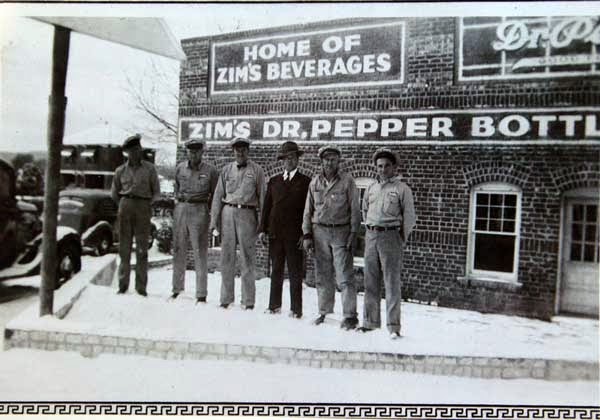
Zim's Bottling of Strawn

Monday, July 7, 2014

Rising Star...Beauty is Down There


I've been passing these old cars in Rising Star for several years now, never having the time to stop and take their portrait. Not too long ago I also passed an old house, maybe it was a school house, between Ranger and Bullock. It had fallen to its knees, then to the ground, all in one night it appeared. Whatever was there was lost, visually, unless some heir or ancestor steps forward.

So I stopped and paid these cars my compliment, Lady Nikon at the ready. I wonder, as I always do, what lives they'd lived - what families owned them, what women were driven to the hospital in labor in these cars, what soldiers were ferried home from the war in the now-rotten front seat, what hard workin jobs paid for them, mostly in cash (no GMAC back then).

These cars are monuments. Witnesses or rather participants in lives, perhaps in loves we will never know about. So there they are. There is beauty in Rising Star. Next stop, Cross Plains...write it down. 3.

Monday, June 30, 2014

A Call Goes Out...Merriman Cemetery Vandalized

I get a call from a reader this afternoon...


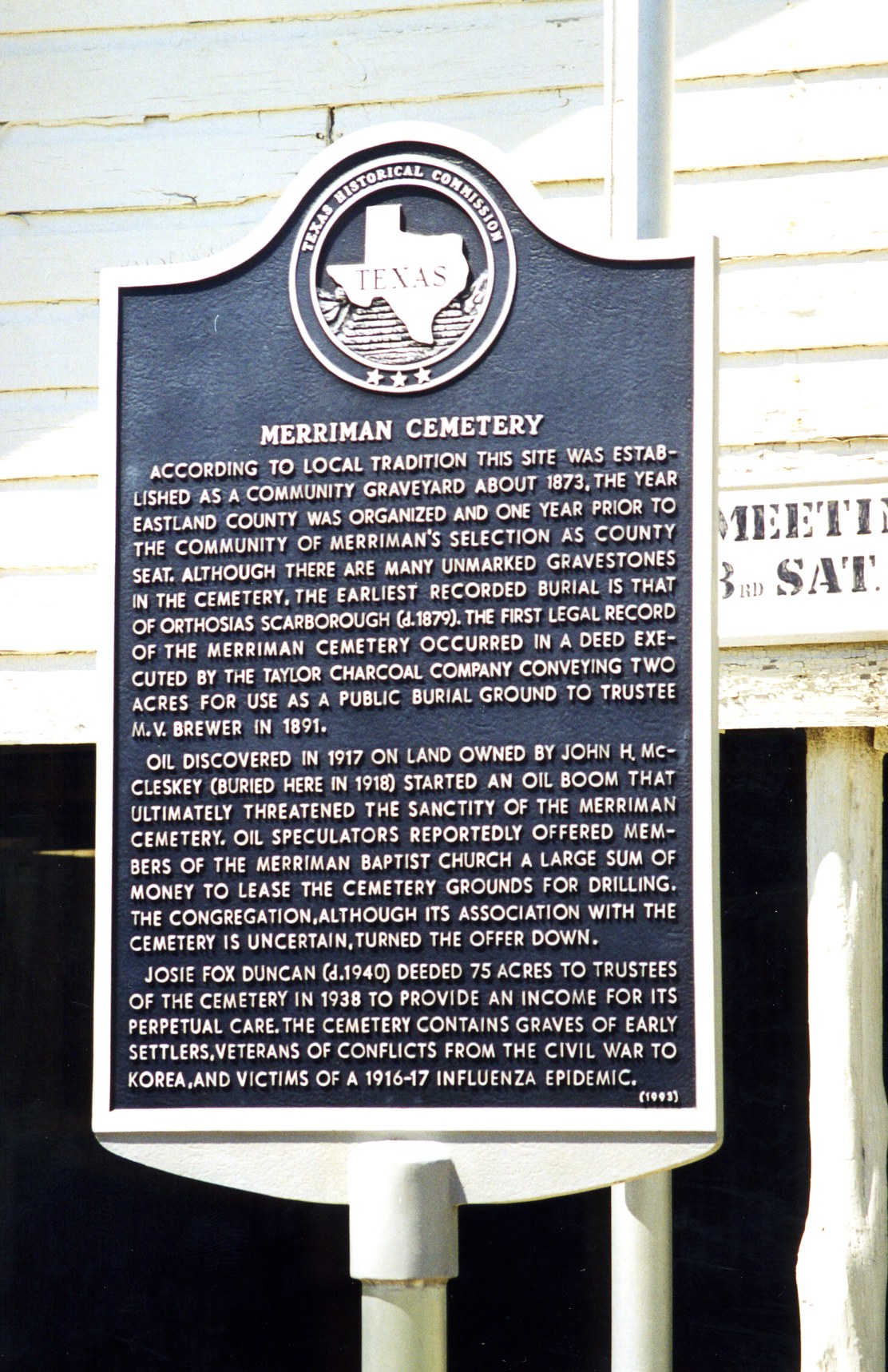
The historic Merriman Cemetery in the hard-to-see-now Eastland County, Texas community of Merriman has been vandalized - gravestones turned over, some chipped, some broken beyond repair.


Famous and infamous names from the Ranger oil boom, from the wild country down there before McCleskey and Gordon and others from out of town turned things upside down lie in repose down there.

The Merriman is a well-kept, much-loved cemetery.

It has been attacked.

Harmed.

Violated.


I didn't count the stones that were damaged or turned over. Monuments to people's parents, grandparents, great-grandparents. Folks who worked hard.

Folks who deserve better.

Estimates for even rudimentary repair reach $10,000.


Merriman, the community, was the first county seat of Eastland County. It was a crossroads, a way station on the road from Blair's Fort to Fort Griffin. It had the then world-famous church congregation that turned aside $100,000 during the boom to allow an oil company to drill in the cemetery.

Thunderous nonsense, back then. An affront to the dignity of their dearly departed.

An affront.

Lightning has struck twice.

Or 40 times. It would've taken lots of time, lots of physical strength to push those headstones to the ground.

In the dark.

When no one was looking.

Save these folks, looking down from heaven.


If you'd like to help, please mail a check to the Eastland County Museum, P.O. Box 1546, Eastland, TX 76448. Please notate on your check "For the Merriman Cemetery". Funds collected will be paid directly to a monument company to restore what can be restored.

A dark ripple has upset the tranquility of the place.


Many Eastland County families have ties to the place. As does America, for whom these folks helped tame a wilderness, then win a World War.


+

Tuesday, June 10, 2014

Cheaney Store Burglar Apprehended by Armed Posse


Cheaney Store Burglar
Apprehended By Armed Posse
By Jeff Clark

D. W. "Slim" Blackwell was on the way home late that night. He had just dropped off his girlfriend at her parents' home near the Will Love place, out east of the Cheaney Community. Slim was smiling, knowing that someday he would marry that DeShazo girl and they would make a happy home together.

Slim lived on the west side of Cheaney, out near the old Tom Jones place. It would be a ten minute ride home, but give him time to relive their evening courting in his mind. As Slim neared the center of town, he rode around the sprawling giant oak tree that sat in the middle of the crossroads in front of the Blackwell family store. His road home passed within mere feet of the old wood store's west side. A single hand-operated gas pump stood in front on the south side, its glass globe high atop showing how much fuel had been pumped.

Slim had been in that store on the intersection's northeast corner many times. 'Gotten iced-down bottles of pop out of the red Coca-Cola box just inside the door. Even at noontime, his eyes always had to adjust to the dark interior, being only two small windows for light. Slim had walked the store's squeaky plank floors passing shelves stocked with the day-to-day groceries these farming families might need.

That night, something caught Slim's eye. He saw the back door on the west side open just a crack. Was it good eyesight or was there light sneaking through the opening? We don't know. Times were hard in the 1930s, but stealing from Slim's family wasn't going to be tolerated.

The young man hightailed it to Jesse Blackwell's place to raise the alarm - awakening father Jesse, his son J. B. and young Bud, who all grabbed shotguns. On the way back they grabbed Joe Blackwell from his place just up the road, then Charlie Boswell who lived across the gravel path from the now endangered store.

Scouting around as quietly as they could, the men found the getaway car hidden just north up the road a piece. The night was dark, but the posse was able to see enough to move into position. The bad guy would not get away.

They didn't know if there was one man inside, or two or more. Finding only one car, they knew that at worst it was going to be an even fight. They would at least have the element of surprise. It might be enough.

These were the days before electricity and telephones had reached the Cheaney Community. They could not call for more men. They could not call the sheriff.

The men decided that the miscreant was not going to get away. Like today, there were three roads leading away for escape. They decided to split up into three groups of two and hide up each road a ways for interception. Quietly they moved into position. The trap was set.

As luck would have it, Joe Blackwell and young Bud Blackwell got the station to the south, on the road through Alameda toward Gorman. Large oak trees flanked the dirt road on both sides. Their neighbors' along this dark gravel path had gone to bed many hours before. This late at night, complete silence hung in the air.

A dark figure finally came out of the store, his arms full of plunder. Stepping into the cool night, he had no idea what lay ahead. He walked north up to the trees and got into the car. It sputtered to life. Rather than continue north toward the most obvious ambush, he turned the rattling car around and headed south, right toward Joe and Bud. On a quiet night like that, they had to hear the poppin' engine coming. Straight for them.

Gaining speed, the man roared south down toward the Calvert place - toward Gorman, Desdemona, Alameda - the men didn't know. Stealing from the community's store, he couldn't be from around here. Manning the southern trap, away from where the car had been parked, Bud and Joe could not have known that they'd be fighting a single opponent. They steeled for whatever fight the Ford carried toward them.

We don't know if his headlights were on or if he drove under cover of darkness. Still, the old Ford's engine would have announced the approach. The two men stepped into the roadway, blocking his path. Waving loaded shotguns, they flagged the car down.

The escaping Ford rolled to a stop. The man knew that he had been caught. Full of adrenalin the men must surely have been relieved to be facing only one opponent. Joe and Bud checked in the back of the car and found his loot - groceries and other staples stolen from the store. The sheepish man could not know what would happen next.

Young Bud wanted to go hard on him. No one was going to steal from his dad Jesse and get away with it. "Let him go," Joe Blackwell probably said. "Times are hard and he is just stealin' to feed his family." While stealing wasn't to be condoned, the man was obviously desperate. Probably even embarrassed. He might have been forced to the deed by a houseful of hungry children. It wasn't right, but at least it could be understood. They should go easy on him, Joe said.

Joe appeared to have talked Bud into a little tolerance as they dug some more around the back of the man's car, shotguns still at the ready. Finally, as they neared the floorboards they discovered that the man had also stolen the wash off Joe's wife's clothesline. Joe found his own blue overalls in the back of the man's car. Pulling his overalls out of the car, Joe looked right at the man, anger growing across his face. The man's prayer for leniency would not be answered.

The men from the other two blockades converged on the man's car. After a spirited discussion to decide this man's fate, one of the men was elected to go for the sheriff. The night ended with the loot recovered and the man in the hands of the law. It was a sensation at the time, and a testimony to hard times and to rural justice. That store was founded by the Cheaney family, for whom the community was named. It served its neighbors faithfully for many years. That store would later close, the victim of Jesse Blackwell's generosity and a difficult economic time for families all around. But that night, in Cheaney, Texas - the community's store was saved.

Tuesday, June 3, 2014

Thurber's Ghost

Thurber’s Ghost
By Leo S. Bielinski, Ph. D
Many cities have some sort of a ghost story. Thurber was called a “Ghost Town” after it was abandoned in the early 1930’s. But “Ghost Town” is a misnomer, for there have always been several residents living in Thurber. Some of these residents added to the legend of a ghost seen in this “Ghost Town.” While the later residents speak of a lady ghost seen and heard in downtown Thurber, the Thurber Ghost seems to have originated in the Thurber Cemetery back about 1920.
Frank Tolbert of the Dallas Morning News resurrected the ghost story in a May 15, 1983 story. At that time, the owner of the restaurant in Thurber was irritated because three of his employees had just quit because they claimed that Thurber had ghosts “in residence…Two of the employees were a married pair of Cuban refugees, and the other was a 65-year-old maintenance man.” These employees lived in apartments above the restaurant. The restaurant was in the bottom floor of the old two-storied Thurber Drug Store.
Tolbert also related that he had first heard of the ghost story in 1955 from Mrs. Eliza Whitehead, one of the “old-timers” who had seen and heard a singing ghost. “I been here 40 years…I was just walkin’ in downtown one night and here come this pretty woman singin’ in some funny way. Then she just went away right in front of my eyes.”
Thurber had an opera house and Thurber, with its large opera-loving Italian population, was a regular stop for touring opera companies. And Albert Whitehead, Eliza’s husband, corroborated Eliza’s story. “You don’t catch me passin’ through town after dark.” The Whiteheads remained in Thurber as caretakers of the remaining houses and buildings, particularly the “Guest House” (W. K. Gordon’s Home), where company “Big Shots” stayed when they came to Thurber for hunting and fishing.
Walter Kostiha and his brother Frank claimed to have seen the ghost. This was about 1925 when Thurber was beginning to shut down. The Kostihas lived near the old jail house, which was just north of downtown Thurber.
Walter: “I don’t care whether you believe me or not. I know what I saw, even if I was about five or six years old. I was with my brother Frank behind the old grocery store just about dark. We saw this woman in a white gown and she was singing or saying something out loud. We took off running.”
The Fort Worth Star Telegram (Oct 26, 1997) in a weekend Halloween edition did not help matters when they wrote “The Thurber Cemetery is one of the biggest Texas historical cemeteries. It is also one of the scariest places to be on a dark night. The trees bend over the graves as if in mourning for the 700 (sic) or more children buried there. The epidemics of scarlet fever and whooping cough…definitely left their mark on this Texas Ghost Town.”
Raymond Bridier had a plausible explanation for the origin of the Thurber Ghost. When Raymond was about ten years old (say, around 1920), on moonlit nights a bunch of kids would meet at the ball park, which at this time was on top of Grave Yard Hill next to the cemetery. They would smoke cedar bark, play games like “kick the can” or just talk.
One night as they were going home, they noticed a lady in a white gown sitting on the top step of the sty (steps over the fence) in the southeast corner of the cemetery. She was crying or praying loudly, perhaps for a loved one she had recently buried in the cemetery. The kids thought this behavior odd but this quickened their pace toward home.
The following night the same scene, but this time they took off running; something had spooked them. Now, they were afraid to play in the ball park after dark. But several weeks later courage returned and they went back up the hill. Nobody there. They smoked, played their games, but as they exited the ball park and headed for home, she was there! She stood up on the steps and started toward them! They panicked and went tearing down the hill. They never went back to the ball park, and shortly thereafter, the ball park was moved to the east side of Thurber.
After the ball park episode, which seemed a plausible happening, all the alleged sightings have been in downtown Thurber. Some have said the singing is caused by the wind whistling through the old buildings. But Eliza Whitehead or Walter Kostiha would never believe that because they saw her with their own eyes and heard her.

The Thurber Cemetery was savagely vandalized recently. Decades of work were destroyed in a single evening. The Thurber Cemetery Restoration Project relies on donations of time or financial help. Contributions may be made to the Thurber Cemetery Association, Box 115, Mingus, Texas 76463.

Thursday, May 15, 2014

It’s Important to Ask Questions
By Jeff Clark

It’s important to ask questions.

Up front.

To know your next partner before you head down a troubled road.

I should’ve asked Barry about his affection for gravity.

About whether he felt fear.

Too late now.


I’ve been trying to get permission for some time to follow the railroad right-of-way northeast from Ranger down the steep grade to Strawn. They’re replacing the old cross ties through this part of the world with concrete cross ties. The first rail worker we saw gave us the go ahead, just stay away from the tracks.


This is rough Wiles Canyon country. This transcontinental train track first came climbing this steep grade in the early 1880s.

It’s been hanging on tight to these hillsides with white-knuckled fingertips ever since. If you want to see the original wooden trestle, it’s on the top of page 14 in Alfred Rogers’ wonderful “Images of America – Ranger” book.


Still, the T & P Railroad story is old news. We’re here to search for U.S. 1, the dirt “highway” that climbed this canyon disguised as an old wagon road. This U. S. 1 route was abandoned before 1921, perhaps earlier than 1919. This was before the Bankhead Highway that several in our network remember.

Two crossings under the railroad are the only “for sure” landmarks we can locate, to make sure we unwind this forgotten story from an unshakable We’re Sure It’s True core.

I met Barry Franklin on the Ranger end of this gauntlet. I should’ve grasped my predicament when my new friend rolls up with a death-defying, high-powered Jeep, custom designed to thwart the most basic laws of physics (gravity, up belongs on top of down, impact…you get the picture).
The T & P Railroad built its high wooden trestle across the Russell Creek Gorge, the one that carved deep Wiles Canyon. Another new friend showed me the site from the bottom of the canyon several weeks ago. Though the trestle has been filled in with rock, the height remains unchanged.


Read: People with a (logical) fear (concern) of (unspeakably) high (cursed) places (nightmares) should (forget it) content themselves (turn back) with Google Earth (get over it and move on).


Barry promised to drive slowly. He smiled when he said it. My brain believed him.
We saw the remains of the Sinclair Oilfield Camp through a high game fence to the south. We saw remnants of old electric lines with glass insulators still intact. We saw shattered rail road ties and broken-to-pieces poles that my imagination believes carried telegraph lines and perhaps the nefarious Jay Gould himself.

It coulda happened.


No camera can do justice to the view down the canyon, the snake-winding tracks lowering gracefully toward the Strawn side of its journey. If there were a 500 foot tall flagpole at Mary’s CafĂ©, I coulda seen it from the top. I took several photos looking down the canyon, but the immensity of this Big Country horizon defied my Nikon buddy its victory. Think Grand Canyon, smaller, greener, friendlier.


We motored down a path next to the right of way. We stopped in an abandoned rock quarry. We approached the site of the trestle and stopped. I wanted to check it out on foot. Barry politely turned off his anxious Big Jeep Monster and allowed me to disembark. Allowed me to search along the ground for courage.

This is me looking down. Straight down. No longer in the Jeep.

I will blur the rest of the story. Let the photos speak for themselves. I walked the most narrow stretch of our journey. If my friend laughed, he did it outside my presence. We drove straight up a couple of times. We felt gravity grab hold of Mr. Jeep and roll “up or down?” around in its mischievous hand like an white ivory dice. We didn’t roll over. Almost doesn’t count, Barry told me.

I met a tiger. I saw an Indian head. I got clues I’m not ready to announce. I stared straight down several trillion feet and remembered what immigrant workers must have seen when they cut this path through what was then and what is now still very much a slash of wilderness.


I saw an old road bed. Or maybe nothing. That’s the beauty of trips like this.

We’re coming back, heading toward Ranger. We’re almost back to the pickup and flat ground. Barry says in a calm steady voice, “You know, I never feel fear.”

I’m looking for my seatbelt release. For how far down til impact if I jump.

He says, “Nothing weird, just I’m not wired like that.” Barry’s done motocross and four-wheeling at their most competitive national levels. “Fear just never hits me.”

He answered the question I failed to ask.

Answered it honestly. Wished more people were like him.

Obviously I made it back. Hopefully it’s clear how much I appreciate this man taking me past the place I would’ve stopped to get the story.
Much of the time I prefer to walk on these adventures alone. It’s hard to hear what the land wants to say otherwise. Still, there are a few people who get it.

It was nice to approach an unknown place with someone at my side. Not a fear thing, as much as a perspective thing. Sometimes old roads, aren’t.

The route of U. S. 1 is known, at least in a broad sense. I believe by summer, given the good graces of some shiny now-locked gates up and down this chiseled terrain, that this man’s Jeep will drive that old path once again.

Strapped in tight, my last stop a liquid lunch in Mingus, I hope to tag along for that longed-for fateful journey. That day, we’ll listen to what this land has t

Tuesday, May 6, 2014

The Tree Grows Bigger

Yesterday I met the buyer and the seller of a little house I know. They’d never met before. This house, the one we’re talking about here, had been the first family’s home for many decades, both parents now gone, to heaven I’d bet, their town, no fault of these folks, now as terminal as any Stage 4 patient nearing their bitter quiet end.


The woman, the seller, kind, a daughter to their family told of her mom and dad. I’m not sure how the talk began, began to roll. But it did, it started, as it does, between people of good hearts, this buyer and this seller of this house in this place on this day I didn’t see coming. Her parents had owned and run a store, back when this place was a proper town.

Back when success could be seen out my office window.

The man, the buyer now, a boy in the story from way on back, remembered eating lunch, called Dinner in these parts, at her family’s store. Lunch there cost 35 cents. A drink was a dime. Her dad was a nice man, this then-boy recalled. Nice to the boy, this man recalled today.

I smiled as their memories met, circled, shook hands. Though these two people had never met, I meant. I mean.

I’m quite sure of that.

This woman had cared for her father near the end – he couldn’t be left alone. She remembered sitting at their kitchen table, looking out with him at the huge tree in their back yard.

I’ve seen that tree. See it now. Sun hits it from the far off western sky.

Her dad would look up at the tree. “That tree’s getting pretty big,” he’d tell her.

And it was. He knew.

And it was.

She loved her dad. Loves him still. But you knew that, already.

I had to hear the story.

They’d talk a little longer, the little girl now grown and her dad, about this and then about that. Five minutes or so later he’d say to her, as if for the first time, “That tree’s getting pretty big.”

And it was.

And it is.

Still, behind this house, getting bigger, like he said. Filling her memory and the thread of a life lived inside this hallowed place. Their home. The room where we three stood grew silent, listening to her words, one sip. 

Then another.

Her words.

Her life.

The woman’s parents took care of her, as parents do sometimes. Raised her. Gave her what she needed. Loved her. She smiled, her little girl eyes glistening brightly at their gift.

Today in this bittersweet time of finally selling the family home, she remembered.

I’d told her several weeks ago that this buyer was a good man, that he would take care of this house in a way that most in this town would not.

I believe that. Know that, really, as people know things without being taught.

He then told her the story of his mom. This buyer, this man, talking to this seller, this woman. It seemed the most natural thing. I think his mom passed away a year or so ago, but I’m not sure.

She too could not live alone, his mom, near the end, so he took care of her. He wouldn’t dream of putting his mother in a nursing home.

It strikes me hard this cold May morning, writing this down, telling you this, the phrase putting someone in a rest home. Like taking a dog to the vet to have them put down.

This man and his mom watched old John Wayne movies together, talked together, though at the end she couldn’t talk, his mom, except with her eyes. I bet they were beautiful, her eyes. Her son and his momma.
He remembered, this man telling his story, two regrets, which yesterday I heard – nothings, slips that his mom didn’t even hear. She’s in heaven now.

Write that down, I tell myself.

He loved her. Did the right thing for her. A hero, this man to me, certainly to his mom, may she rest in peace. The house, he the new owner, is lucky, again, good people, one family to another.

The tree alive, getting bigger.

The daughter, this woman, placing her family’s home into new hands. “Yesterday, I went over to the house,” she said. “So empty it was. So much harder than I thought it would be.”

So much harder than I thought it would be.

They shook hands at the end. She gave him a set of house keys, two garage door openers. “The openers need batteries, but should work just fine.”

I could tell you more, the stories they exchanged, two families forty years before, living inside a house inside a town whose heartbeat was steady, back then.

I thought about it later that night. My pen so unsure.

The words stopped. As they did. As they do.

As they always do.

The busy lives, the slowing as we age, then the end – the days, the years, the rambling adventures – the people we leave behind. That we are left behind by.

Remember the Alamo.

Thank God for His blessings, the majesty of folks doing what they do each day. May He forgive life’s mistakes, or at least let them come into a softer focus, be handed on as lessons, or dare we ask, disappear.

God’s word is there to see, ironically, if we but listen. 3.