Everything Matters

Everything Matters
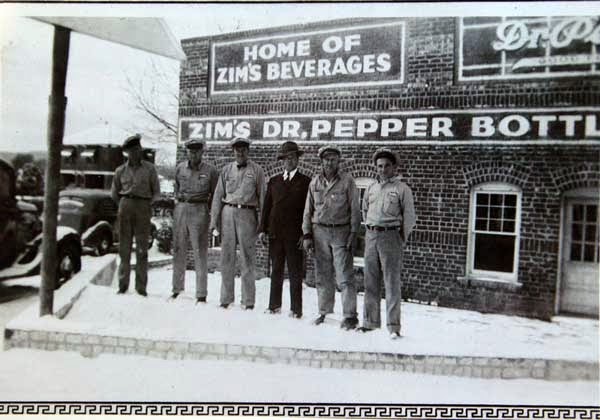
Zim's Bottling of Strawn

Monday, November 10, 2014

The Baby Died, Was Lost, Forgotten, Then Remembered, Taken Back By the Family…Loved, In Heaven and on Earth…You Gotta Read This Slowly, Like Walking, Remembering

We got there as quick as we could. Cold, rainy then windy, then a taste of light sleet coming in from the north. We’re standing alone, five of us, in a pasture not-enough-miles away from Ranger Camp Valley, from Rattlesnake Mountain’s old wagon trail that led us here.

That ended here.

Forever.

Strangers or family or it doesn’t really matter stand together under a tall swaying sprawling regal pecan tree, bigger around than five full grown men where its trunk meets the too-cold Eastland County sanded black dirt. Leaves fall flutter float into the sad sand muted muddy soil.

The posted letter we received back east was scrawled but specific. That letter kept secret more than it told. “Little Luther’s sick, not good, not good at all. The doctor, he rode two days and one night, out from over near to the Stephensville road.” Doc Evans, or another. We don’t remember. Can’t remember. Not from here. Listen and wait but can’t call the man’s name, riding hard as his horse would travel across that far long ago.

God bless him, whoever he was.

“Please to come to our aid. Our neighbors’ children too sick for them to help. Church closed till whatever this is passes from our community. Fear lives here, sleeping in our cabins, though sleep escapes all but a few. Please to the Lord save our little baby, so sick, crying, come quick, sad we are, our little boy, nothing to do but pray, though Lord forgive me, that didn’t work for the Blackwell’s babe, one place south, one place west. They lost him just before dawn, yesterday morning.”

The letter trails off to nothing, but gets posted. It takes too long, a century till we’re all gathered around the place. Uncomfortable. After all that late frontier family must of gone through, riding down, circling round, trying to figure it all out, what else could we have done? Will they be there when we arrive?

The day before we rode out for Texas, a second scribbled note joined the first. One line, scratched hard into the tattered scrap of paper:

“Little Luther’s gone.”

No signature.

The longest letter I’ve ever read.

This Texas frontier’s scattered with hundreds maybe thousands of lost and forgotten graves. Stories that led into stories that birthed later tales that nurtured and struggled and survived and finally became people or places you yourself probably know about. But we that still walk these woods, pass these places every day, not knowing, not hearing the triumphs and tragedies that came before. Healing us, the silence, or God knows we couldn’t take much more.

Baby Luther Davenport was born then shortly died back in 1901, his family’s log cabin or box-framed home yards from a towering now-invisible native Texas pecan that shades where his family laid their baby to his final rest. One still-here man’s grandmother told Luther’s tale within this man’s hearing when he was a boy, decades ago, and that boy, now that man, never forgot. Though I guess it was Luther’s parents’ tale just as much, back then.

We five, more than five, did indeed go looking for Luther, found him, the family gone, he too quiet but still out there. We did get a posse rounded up and out there finally in person and in spirit, marked his grave, thought deeply of Luther, of the lives of our hard-wrought Texas ancestors lived. We left quietly a little richer, Luther having been born and died beneath this sprawling witness hard-shell pecan. His short story so powerful, so emblematic of where Texas came from.

Leonard and Florence had seven more kids, several of which made it to adulthood then parenthood then into lives out past that brave pecan and out beyond that hard rocky place in that family’s trail to their future. They left their shaking signature in Eastland County, beneath that lonely pecan tree. Then moved north. By the time we finally got to the pasture, they were gone, the old house was gone, the cistern or well or tank or however they got their water was gone. The wind blew, the pecan swayed. Only Luther’s story remained.

Winter clouds gathered.

Luther’s daddy was 33 when the baby died. Luther’s momma 26 when their boy succumbed to the Spanish influenza or smallpox or pneumonia or one from the hundred other diseased predators out running hunting through the woods back then. Leonard and Florence stayed together, but had to have left behind more than most can believe or retrieve from their own life’s story.

All we know for sure is that Luther’s gone. And we’re still here. Though that too is a mystery.

There’s beautiful new carved granite marking Luther’s story now, beneath his pecan, that carved rock the same rich red-pink color as gilds our Texan’s state capital farther south down Austin way. I hope he likes it.

We remember Luther. And hardship. And Texas. How we got here. Pray that we all get past it. This country is still hard. Pray and hope that our children will get to their Promised Land, someday, somehow, walking tall across this hallowed state and hard work and memory and whatever lies beyond.

Luther Davenport
Eastland County, Texas
1901-1901 
+

Wednesday, July 16, 2014

Monuments to our south


A new friend led me down an invisible path into the woods below a hill, below a plateau, to see what, I didn't yet know. In those woods, to the south of here, I'll leave it at that, we pushed through these woods, then brush, then finally this old cistern sprang into view.

"I knew you'd want to see this," he said. I like a friend like that.

His two dogs thankfully scouted for snakes. Rattlesnakes, coral snakes, we don't care.

We hate snakes.

The hand-laid rock work was pristine, the capstone finely hewn, of the kind before the turn of the century, maybe the 1860s or 1870s, based on the craft I saw, based upon where it was found.

Context...Perspective's oh-so-desirable second cousin.

Looking down the hole one finds the expanding bell-shaped cavity below we've found in Eastland County, to lessen evaporation. The man-dug cavern below the small-opened capstone would've held a lot of water. In a year like the last several, one has to wonder what this pioneer family would've done. No rain, no water for the cistern, nothing for the kids to drink. Ground water wasn't here or wasn't shallow enough to hand dig, but in either case, no rain, no water collected into the cistern.

If my dates are close, there would've been no stock tanks. The nearby seasonal creek wouldn't have run. A tough life on the rolling scrubbed-hard hills might have become untenable. These stacked rocks tell us incomplete stories.

Perhaps they are remains.

Perhaps instead, they are ruins.


There's a line of foundation stones running north along the ground, rough and uneven like kicked-in brown-yellow teeth, running away from this cistern. The roof of a now-gone log or box-frame cabin or shed or barn sluiced water into this cistern.

Or that was the plan.

There's a caved in rock-walled cellar, again well-built, a rusting beat-up, bangled-all-to-hell headboard lays puzzlingly fallow against the cellar's north wall. A barrel stave rests quietly under foot. One senses an outburst, a frustration that sent this iron-headboard carrier of procreation and frontier lust high into the air, damn-it-all, coming to rest in this rock-lined hole in the ground, built to store vegetables and protect from storms.

Perhaps that very lack of storms did that man's family in. Or caused 'em to hitch up, and move on.


This place would've looked down on a fairly flat rolling fine fertile piece of land that could've grazed their stock, could've provided a little warning should the Penetekah get too curious. 

If my guessed dates are right.

Those Natives called a bayou not too far from here home, the People did. You start to wonder about the soaring levels of faith these folks had, unbelievable now, add in smallpox and snakebites and getting a small cut that turns into infection that turns into death. Our generation whines about opportunity. About getting "what is mine". Waiting for some unearned check in the mail.

No honor.

This homestead on this day in these woods is not sympathetic.

May God bless these souls, wherever they hopefully got off to, whatever hardworking heirs they hopefully birthed into a future prosperity. May those that are left behind be thankful.

May those that are left behind learn. And find work. And be grateful.


Monday, July 7, 2014

Rising Star...Beauty is Down There


I've been passing these old cars in Rising Star for several years now, never having the time to stop and take their portrait. Not too long ago I also passed an old house, maybe it was a school house, between Ranger and Bullock. It had fallen to its knees, then to the ground, all in one night it appeared. Whatever was there was lost, visually, unless some heir or ancestor steps forward.

So I stopped and paid these cars my compliment, Lady Nikon at the ready. I wonder, as I always do, what lives they'd lived - what families owned them, what women were driven to the hospital in labor in these cars, what soldiers were ferried home from the war in the now-rotten front seat, what hard workin jobs paid for them, mostly in cash (no GMAC back then).

These cars are monuments. Witnesses or rather participants in lives, perhaps in loves we will never know about. So there they are. There is beauty in Rising Star. Next stop, Cross Plains...write it down. 3.

Monday, June 30, 2014

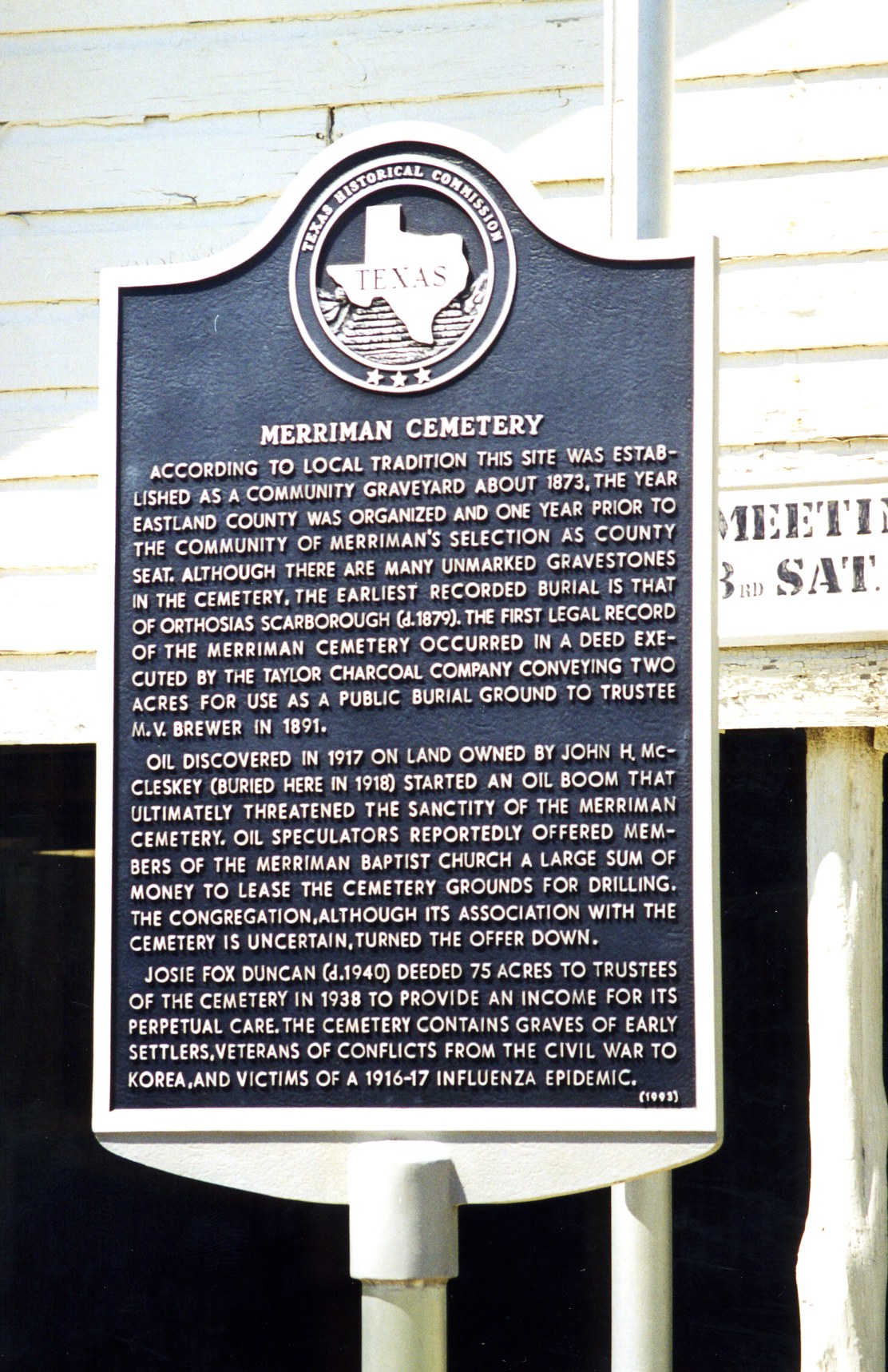
A Call Goes Out...Merriman Cemetery Vandalized

I get a call from a reader this afternoon...


The historic Merriman Cemetery in the hard-to-see-now Eastland County, Texas community of Merriman has been vandalized - gravestones turned over, some chipped, some broken beyond repair.


Famous and infamous names from the Ranger oil boom, from the wild country down there before McCleskey and Gordon and others from out of town turned things upside down lie in repose down there.

The Merriman is a well-kept, much-loved cemetery.

It has been attacked.

Harmed.

Violated.


I didn't count the stones that were damaged or turned over. Monuments to people's parents, grandparents, great-grandparents. Folks who worked hard.

Folks who deserve better.

Estimates for even rudimentary repair reach $10,000.


Merriman, the community, was the first county seat of Eastland County. It was a crossroads, a way station on the road from Blair's Fort to Fort Griffin. It had the then world-famous church congregation that turned aside $100,000 during the boom to allow an oil company to drill in the cemetery.

Thunderous nonsense, back then. An affront to the dignity of their dearly departed.

An affront.

Lightning has struck twice.

Or 40 times. It would've taken lots of time, lots of physical strength to push those headstones to the ground.

In the dark.

When no one was looking.

Save these folks, looking down from heaven.


If you'd like to help, please mail a check to the Eastland County Museum, P.O. Box 1546, Eastland, TX 76448. Please notate on your check "For the Merriman Cemetery". Funds collected will be paid directly to a monument company to restore what can be restored.

A dark ripple has upset the tranquility of the place.


Many Eastland County families have ties to the place. As does America, for whom these folks helped tame a wilderness, then win a World War.


+

Tuesday, June 10, 2014

Cheaney Store Burglar Apprehended by Armed Posse


Cheaney Store Burglar
Apprehended By Armed Posse
By Jeff Clark

D. W. "Slim" Blackwell was on the way home late that night. He had just dropped off his girlfriend at her parents' home near the Will Love place, out east of the Cheaney Community. Slim was smiling, knowing that someday he would marry that DeShazo girl and they would make a happy home together.

Slim lived on the west side of Cheaney, out near the old Tom Jones place. It would be a ten minute ride home, but give him time to relive their evening courting in his mind. As Slim neared the center of town, he rode around the sprawling giant oak tree that sat in the middle of the crossroads in front of the Blackwell family store. His road home passed within mere feet of the old wood store's west side. A single hand-operated gas pump stood in front on the south side, its glass globe high atop showing how much fuel had been pumped.

Slim had been in that store on the intersection's northeast corner many times. 'Gotten iced-down bottles of pop out of the red Coca-Cola box just inside the door. Even at noontime, his eyes always had to adjust to the dark interior, being only two small windows for light. Slim had walked the store's squeaky plank floors passing shelves stocked with the day-to-day groceries these farming families might need.

That night, something caught Slim's eye. He saw the back door on the west side open just a crack. Was it good eyesight or was there light sneaking through the opening? We don't know. Times were hard in the 1930s, but stealing from Slim's family wasn't going to be tolerated.

The young man hightailed it to Jesse Blackwell's place to raise the alarm - awakening father Jesse, his son J. B. and young Bud, who all grabbed shotguns. On the way back they grabbed Joe Blackwell from his place just up the road, then Charlie Boswell who lived across the gravel path from the now endangered store.

Scouting around as quietly as they could, the men found the getaway car hidden just north up the road a piece. The night was dark, but the posse was able to see enough to move into position. The bad guy would not get away.

They didn't know if there was one man inside, or two or more. Finding only one car, they knew that at worst it was going to be an even fight. They would at least have the element of surprise. It might be enough.

These were the days before electricity and telephones had reached the Cheaney Community. They could not call for more men. They could not call the sheriff.

The men decided that the miscreant was not going to get away. Like today, there were three roads leading away for escape. They decided to split up into three groups of two and hide up each road a ways for interception. Quietly they moved into position. The trap was set.

As luck would have it, Joe Blackwell and young Bud Blackwell got the station to the south, on the road through Alameda toward Gorman. Large oak trees flanked the dirt road on both sides. Their neighbors' along this dark gravel path had gone to bed many hours before. This late at night, complete silence hung in the air.

A dark figure finally came out of the store, his arms full of plunder. Stepping into the cool night, he had no idea what lay ahead. He walked north up to the trees and got into the car. It sputtered to life. Rather than continue north toward the most obvious ambush, he turned the rattling car around and headed south, right toward Joe and Bud. On a quiet night like that, they had to hear the poppin' engine coming. Straight for them.

Gaining speed, the man roared south down toward the Calvert place - toward Gorman, Desdemona, Alameda - the men didn't know. Stealing from the community's store, he couldn't be from around here. Manning the southern trap, away from where the car had been parked, Bud and Joe could not have known that they'd be fighting a single opponent. They steeled for whatever fight the Ford carried toward them.

We don't know if his headlights were on or if he drove under cover of darkness. Still, the old Ford's engine would have announced the approach. The two men stepped into the roadway, blocking his path. Waving loaded shotguns, they flagged the car down.

The escaping Ford rolled to a stop. The man knew that he had been caught. Full of adrenalin the men must surely have been relieved to be facing only one opponent. Joe and Bud checked in the back of the car and found his loot - groceries and other staples stolen from the store. The sheepish man could not know what would happen next.

Young Bud wanted to go hard on him. No one was going to steal from his dad Jesse and get away with it. "Let him go," Joe Blackwell probably said. "Times are hard and he is just stealin' to feed his family." While stealing wasn't to be condoned, the man was obviously desperate. Probably even embarrassed. He might have been forced to the deed by a houseful of hungry children. It wasn't right, but at least it could be understood. They should go easy on him, Joe said.

Joe appeared to have talked Bud into a little tolerance as they dug some more around the back of the man's car, shotguns still at the ready. Finally, as they neared the floorboards they discovered that the man had also stolen the wash off Joe's wife's clothesline. Joe found his own blue overalls in the back of the man's car. Pulling his overalls out of the car, Joe looked right at the man, anger growing across his face. The man's prayer for leniency would not be answered.

The men from the other two blockades converged on the man's car. After a spirited discussion to decide this man's fate, one of the men was elected to go for the sheriff. The night ended with the loot recovered and the man in the hands of the law. It was a sensation at the time, and a testimony to hard times and to rural justice. That store was founded by the Cheaney family, for whom the community was named. It served its neighbors faithfully for many years. That store would later close, the victim of Jesse Blackwell's generosity and a difficult economic time for families all around. But that night, in Cheaney, Texas - the community's store was saved.

Tuesday, June 3, 2014

Thurber's Ghost

Thurber’s Ghost
By Leo S. Bielinski, Ph. D
Many cities have some sort of a ghost story. Thurber was called a “Ghost Town” after it was abandoned in the early 1930’s. But “Ghost Town” is a misnomer, for there have always been several residents living in Thurber. Some of these residents added to the legend of a ghost seen in this “Ghost Town.” While the later residents speak of a lady ghost seen and heard in downtown Thurber, the Thurber Ghost seems to have originated in the Thurber Cemetery back about 1920.
Frank Tolbert of the Dallas Morning News resurrected the ghost story in a May 15, 1983 story. At that time, the owner of the restaurant in Thurber was irritated because three of his employees had just quit because they claimed that Thurber had ghosts “in residence…Two of the employees were a married pair of Cuban refugees, and the other was a 65-year-old maintenance man.” These employees lived in apartments above the restaurant. The restaurant was in the bottom floor of the old two-storied Thurber Drug Store.
Tolbert also related that he had first heard of the ghost story in 1955 from Mrs. Eliza Whitehead, one of the “old-timers” who had seen and heard a singing ghost. “I been here 40 years…I was just walkin’ in downtown one night and here come this pretty woman singin’ in some funny way. Then she just went away right in front of my eyes.”
Thurber had an opera house and Thurber, with its large opera-loving Italian population, was a regular stop for touring opera companies. And Albert Whitehead, Eliza’s husband, corroborated Eliza’s story. “You don’t catch me passin’ through town after dark.” The Whiteheads remained in Thurber as caretakers of the remaining houses and buildings, particularly the “Guest House” (W. K. Gordon’s Home), where company “Big Shots” stayed when they came to Thurber for hunting and fishing.
Walter Kostiha and his brother Frank claimed to have seen the ghost. This was about 1925 when Thurber was beginning to shut down. The Kostihas lived near the old jail house, which was just north of downtown Thurber.
Walter: “I don’t care whether you believe me or not. I know what I saw, even if I was about five or six years old. I was with my brother Frank behind the old grocery store just about dark. We saw this woman in a white gown and she was singing or saying something out loud. We took off running.”
The Fort Worth Star Telegram (Oct 26, 1997) in a weekend Halloween edition did not help matters when they wrote “The Thurber Cemetery is one of the biggest Texas historical cemeteries. It is also one of the scariest places to be on a dark night. The trees bend over the graves as if in mourning for the 700 (sic) or more children buried there. The epidemics of scarlet fever and whooping cough…definitely left their mark on this Texas Ghost Town.”
Raymond Bridier had a plausible explanation for the origin of the Thurber Ghost. When Raymond was about ten years old (say, around 1920), on moonlit nights a bunch of kids would meet at the ball park, which at this time was on top of Grave Yard Hill next to the cemetery. They would smoke cedar bark, play games like “kick the can” or just talk.
One night as they were going home, they noticed a lady in a white gown sitting on the top step of the sty (steps over the fence) in the southeast corner of the cemetery. She was crying or praying loudly, perhaps for a loved one she had recently buried in the cemetery. The kids thought this behavior odd but this quickened their pace toward home.
The following night the same scene, but this time they took off running; something had spooked them. Now, they were afraid to play in the ball park after dark. But several weeks later courage returned and they went back up the hill. Nobody there. They smoked, played their games, but as they exited the ball park and headed for home, she was there! She stood up on the steps and started toward them! They panicked and went tearing down the hill. They never went back to the ball park, and shortly thereafter, the ball park was moved to the east side of Thurber.
After the ball park episode, which seemed a plausible happening, all the alleged sightings have been in downtown Thurber. Some have said the singing is caused by the wind whistling through the old buildings. But Eliza Whitehead or Walter Kostiha would never believe that because they saw her with their own eyes and heard her.

The Thurber Cemetery was savagely vandalized recently. Decades of work were destroyed in a single evening. The Thurber Cemetery Restoration Project relies on donations of time or financial help. Contributions may be made to the Thurber Cemetery Association, Box 115, Mingus, Texas 76463.