Everything Matters

Everything Matters
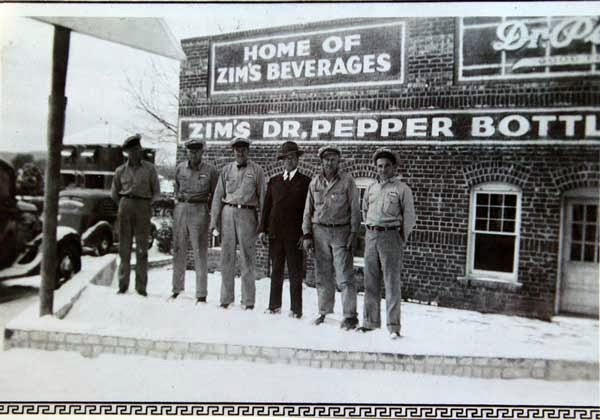
Zim's Bottling of Strawn

Sunday, February 9, 2014

Gordon Cotton Gins

Gordon Cotton Gins
Profited From Perfect Storm

By Jeff Clark

“Times were hard for the family,” Dovie Gailey Hunt wrote of her childhood, “so dad raised cotton. When the first bale was sold, we all went into Gordon on the cotton in a wagon. I remember that long ride.” The Gaileys were traveling from the Harding Place at Simms Valley in Erath County, five miles south of Gordon in Palo Pinto County.
“We did not take our Model T Ford with us whenever we (went) to Gordon. Then when we got there, we sold the cotton and Dad took me to see the cotton ginned, etc. Now he had money to buy gasoline, so he went and got our car so we would have a way to go to town instead of all riding in the wagon.”
            Five Gordon cotton gins once served several counties. These included the Wilbar Brothers, Huffaker, Terry and two others. Over 19,000 bales were ginned in Gordon one year, according to an unconfirmed report.
            “I remember getting up early one morning in the late 1920s and traveling with Dad to the Terry Gin,” R. N. “Skeeter” Pierce said. The Pierce Place was at Lake Creek, about nine miles north-northwest of Gordon. The mule-powered trip took an hour.
            Farmers knew to get in line at the Terry Gin early. “Some farmers who lived several miles from the gin would drive in at night, catch a few hours sleep in their cotton and be first in line to get their cotton ginned,” Pierce said. “This allowed them plenty of time to sell their cotton to local merchants, shop a bit and get home by dark.”
            Skeeter was then four-years-old. “My dad insisted on showing me just how the gin worked. The cleaned cotton was compressed, then wrapped in burlap and steel bands. We picked up the finished bale and carried it to the wagon yard where most cotton was stored until shipment by rail.” The cotton platforms and cattle yards were located west of Gordon’s train depot.
            Cotton delivered, the Pierces bought groceries at Oden Mercantile and then a large block of ice before heading back to Lake Creek. “Dad carefully wrapped the ice in an old quilt and covered it with a wagon sheet (canvas cloth),” Pierce said. “I knew we would have homemade ice cream the next day and iced tea.”
            Gordon was blessed to have four creeks running through its cotton ginning trade area. Palo Pinto Creek flowed a little over a mile to the north, Lake Creek eight miles north of that, Barton Creek a mile and a half east of Gordon and Sunday Creek still farther east and south. These rich creek valleys were then fertile. “My mother said as a kid she picked cotton near Barton Creek that was so tall a youngster couldn’t reach the top of the cotton stalk,” Pierce said.
            Farm families were large back then, each able-bodied member helping out with the harvest. “Stories were told of young men who could pick four to five hundred pounds of cotton in a day,” Pierce said. “That day was usually dawn till dusk.”
            Jim Rice, John Oden, John Harlin and Eaton-Blewett Mercantile bought cotton, “but most of the cotton money went to pay off the yearly debt the farmer owed the businesses,” Pierce said.
All the cotton that farmers wrestled into town wasn’t immediately ginned. Some was stored un-ginned in big barns, processed later when prices rose. Farmers raised oats to feed their mules and horses, and a lot of wheat, but cotton was their core cash crop.
            The Pierces raised 15 acres in cotton on their place. Skeeter’s older brother Red Pierce told of their dad sitting down on the bed with tears in his eyes after a hail storm wiped out their crop, saying “Well, I’ll have to ask John Oden to carry us another year.” Meaning the Pierces would charge everything for another full year, Skeeter added.
Boom years, cotton was like gold. Bales could sell as high as 50 cents a pound in the late teens and 1920s. “Two or three bales could buy a Model T Ford,” Skeeter Pierce remembered.
The boll weevil killed cotton production in these parts in the 1920s. The last gin, the Terry Gin was shut down and finally scrapped in the early 1930s. Today cotton gins in Gordon, Texas are a distant memory to a small handful who still remember.
       
The late Dovie Gailey Hunt took a few minutes and wrote down memories from her life. Because she made that time, less than we spend watching one TV movie, we have special insight into our history. Special thanks to Dovie Gailey Hunt, R.N. “Skeeter” Pierce, Shanon Hunt, J. B. Harlin and the amazing Gordon Community Library & Museum (once again). 


Tuesday, February 4, 2014

Gladys Seay

{Below please find the Tabernacle chapter about Gladys Seay, about the day we met maybe four years ago, about the day we talked together in Ranger. She was kind to me, patient. Her family lived for a time down the sandy road from my Weekes family, mostly people I’ve never met in real life. Gladys answered all of my questions. Helped me try to understand a time I’d never visited, never imagined. Gladys passed away earlier today. I pulled this out to re-read, and heard her voice again. Her memories made me smile, and my heart break. I share her words from that day again in the hopes that you will hear her voice as well.  JDC}

History. It's a word that conjures up memories...of tests in high school we're not prepared for, of boring afternoons at some relative's house when we're kids. We get older. Make a little history of our own. Then wonder, how did we get here? What came before?
Tuesday was a day that cannot be successfully explained to a child. I've tried. Mine roll their eyes politely, as I did when I was their age. I'm writing it down though. Photographing it. Tasking myself – did I ask all the questions that kids'll want answers for someday?


I visited with Gladys Seay and her daughter Viola Boyer that Tuesday morning in Ranger. Gladys is Cheaney’s oldest living former resident at 99-years-young, born April 15, 1909. A sharper mind and a clearer memory I have not yet encountered. 
Gladys remembers Cheaney as a close-knit farming community, of hard times, sad times, and mostly of joy. It was a strange feeling, talking to a woman who actually knew the people whose stories I've been searching for – relatives, friends of hers in the community. She knew Cheaney’s historical protagonists first hand, went to church with them, sat next to them in school – they were crystal clear in her mind's eye. Because of her, I too could see them. The day was a blessing.
Gladys is the daughter of John Anderson Seay. Anderson worked a farm just east of Cheaney, along the western rim of Cook Canyon. Anderson was born 1880. Gladys lost her mom in Oklahoma, February 7, 1918 when Gladys was seven. “I regret that I never did have a mother to love for very long.”
Ironically, Gladys’ mother Pearl Jane Heaton also lost her own mom (Amanda Jane Trosper Heaton) at the age of five in 1892. Mrs. Heaton did not survive a mastectomy, performed on the kitchen table. Gladys’ father Anderson lost his own mother when he was three. Two generations of motherless daughters left behind, one raised by a motherless father.
Gladys’ dad Anderson moved the family to Texas in 1919, next year after his wife’s death. Anderson never remarried, devoting himself to raising the children and farming. He was active in the Alameda and Cheaney school boards. Gladys remembers, “As a child, I collected small stones, playing with them in the sand, pretending they were farm animals. I continued collecting stones, but quit playing in the sand.”
While Gladys was still young, Anderson’s aunt Alice Smith from Stephenville moved in. She brought along with her sixteen-year-old daughter Eula. They cared for the Seay household in exchange for room and board. Alice and Eula were also actually paid to help chop the Seays’ cotton. The gin in Ranger paid in cash, from which they got a percentage.
Gladys described the Cheaney Community throwing huge picnics and “having Christmas” down in the Cook Canyon on the Allen Ranch, near a large pond. Everyone in the community attended. It was a fun time – a break from the hard work of farming and hardscrabble life of just getting by. Gladys drove her daddy’s team pulling the cultivator through the fields, picked cotton (a 100-pound sack one day, she said), and performed whatever farm labors the day called for. Gladys was baptized in 1928 at a branch just north of Kokomo by our Brother Frank Skaggs.


Gladys remembers as a young girl being sent on horseback to the Strickler Store in Cheaney to get supplies for her dad. Her dad was an industrious worker and didn’t have time to leave the farm himself very often. Gladys remembered the store’s porch being high enough that she could slide off the horse as a small girl and onto the porch without having to dismount. The Stricklers would tie the groceries, supplies or tobacco in a feed sack over the back of the saddleless horse, then the little girl would slide back on the mare and ride home. When the family’s plow needed to be carried to Strickler’s blacksmith shop to be sharpened, Gladys did that as well. One of Anderson’s favorite sayings was “I doggies”. He was quite a man.
Gladys named some of the teachers at the Cheaney School-Mrs. Mary Wheeler, Chris Tucker and Miss Scott. Gladys listed some of the families who had places near the Seays-the Howards, Snells, Griffiths, Bartons, Weekes, and Blackwells. She remembers her daddy driving a horse-drawn scoop to dig out a tank on the Allen Place near the Cook Cemetery. Gladys described a childhood that was hard, but a family that was as happy as it could be.
Gladys was the oldest of five children, though only she and her brother Doc lived to adulthood. John Wesley “Doc” Seay was named Doc by his uncle Tommy Seay. When Doc was a boy, he hurt his ankle falling out of a wagon that was going too fast. Uncle Tommy had a horse named Doc that was similarly afflicted, so he called the boy “Doc” as well. The name stuck.
Doc ended up making a name for himself as a preacher. He surrendered to preach at the Sweet Home Baptist Church, which at that time met at the Alameda School. Sweet Home eventually rebuilt atop the foundation of the old Cheaney School, across the road from the Cheaney Church of Christ. Gladys remembers Brother Willie Skaggs riding to the church in a buggy to preach or to hold meetings. She remembers the Baptist and the Church of Christ congregations meeting every other week, as there were not enough ministers of each denomination to go around. The community attended whichever house of worship was meeting that Sunday, regardless of their professed denomination.
Gladys married Sam Seay, whose family lived to the west of Cheaney, December 21, 1925. Sam and Gladys were not related prior to marriage, though it must have been convenient not having to learn a new last name (Sam’s patriarchal name is actually SEE). Sam was born in 1901, the sixth child of John William and Francis Farr Seay. His parents married in 1889 at the Alameda Church.
One time Sam and Gladys traveled to Weinert, Texas to pick cotton for much-needed cash. Sam’s horses were always well trained and knew some amazing tricks. One time, Sam was riding his horse Babe home from calling on Gladys before they were married (he lived in Kokomo, a distance of 12 miles). When Sam was accosted by two men intent on robbing him, Babe took a bite out of one of the men, allowing Sam to escape.
Sam went to work for Humble Oil Co during the oil boom in Cisco. He also worked in the oil fields of Ranger, Eastland and Cisco. Sam and his brother Albert helped build the Cisco dam in 1920. Sam and Gladys had five children, all born at home.
Before Sam married Gladys, his family lived in the old Duffer split log cabin for a time near the Leon River. Sam’s dad went to work for A.L. (“Doc”) Duffer. His principal job was running a legal distillery that Mr. Duffer’s father John Duffer had built on the property.
The Sam Seays went to work for Dr. A. K. “Doc” Wier in June 1934 and lived for a time in a house on his ranch. Doc Wier bought the land from Doc Duffer. Gladys remembers there not being fences built along the Leon River until around 1934. The river used to flood and be a mile across in some places. Houses floating down the river are clear in Gladys’ memory. One of Gladys’ favorite sayings is “a little ole storm no bigger than your hat came up”.
Their first house on the Wier Ranch was originally a building used to store hay. When the Seays prepared to move in, the building had no windows, doors, electricity, running water, or inside toilet. The building was later clad with native stone. Oil lamps were used for light. Meals were cooked on a wood cook stove. Gladys never learned to drive a car, though she can milk a cow, pluck a chicken, raise a fine garden and of course, run a household (as a child, and as a woman).

Gladys and Sam’s kids received one new pair of shoes and one new outfit each year. Other than remembering the loss of her mom, a smile never left Gladys’ face the day we visited. I forgot to ask what her dreams were, as a girl growing up. I suspect her journey was not what she expected, though I hope she ended up with the life she hoped for. “We can not know what the Lord has in store for us,” she said.  I have to believe He is pleased in her result.

Sunday, February 2, 2014

Three

I'm in the bookstore, near the center, near the back. What's New. Trade paperback. A song comes on the intercom, the radio softly in the background, the one Say Something, I'm Giving Up on You. We hate the song. Me. And her. We change the channel unless we're on the long ever-darkening road back west toward the desert. I'm sorry that I couldn't get to you. I try to block it out, picking up another $20 book that will be $7 three months from now. I breathe hum not quite sing I don't know the low tone almost silently escapes my throat when I hear it... ...the same sound, words, the same funereal rift from one row over, Fiction. And Literature. Hardbacks. A tear at one eye's corner, another soul broken irrevocably apart ten feet away behind the next stack. And I'll, I'll swallow my pride. You're the one that I love. And I'm saying Goodbye. I don't dare look up. Behind me, to the left, the music section, Classical if memory serves, Say something, I'm giving up on you. A female keen so Gregorian in its haunted lift toward heaven, or upward from darkest hell, its plaintive clawing despair grabbing. Growing. I wonder if their daytime minds are locked wide open to a parade of happy images from deep within the vault - joyous roadtrips, embraces and Brookshire's and churches and walks and talks and looking at our emerald lake together and that still, sad unpredictable moon. I wonder if they, are broken. If repair, seems unthinkable. I wonder if they have a reason to live, beyond saving their children the despair that ending their sadness and confusion would bring them. I hope to myself that they do have children out there somewhere. Say something, I'm giving up on you. I hear their voices, three together, three alone, within forty feet in a store in southwest Fort Worth. A primitive, cloying nighttime Celtic fugue. Giving up on a love who abandoned a creative life, or maybe, I catch sight of the hardback young woman, maybe giving up on life itself. Not moving on, as I'd first heard her lyric, but checking out. All or nothing. I had all I needed, before. I'm giving up on YOU. But they aren't. The song's a lie, at least in this bookstore before the cold icy storm sets in. It's not time to move on, and that door behind us, with sunshine leaking around its edges, is nailed shut. From the outside. How could they have felt it all so completely? How could their Other have not? "Thanks for being nice to me." An almost palpable sob, silent, sharp, a punch to the gut washes over that corner of the brightly-lit store. I'm not going to make it, it says. The lyrics end. The book I'm holding, $16.95 plus tax, is ruined. I'll have to buy it now. Ruined. Readable, every word. A story I can't seem to put down. A best seller, it turns out. Fiction. A lie. Three.

Friday, January 31, 2014

The Gailey Ghost

The Gailey Ghost
By Jeff Clark

What is it about standing in a cemetery that invites talk of ghosts?
            So I meet this guy atop Thurber’s Graveyard Hill. A friend of a friend mentions that this man knows about some ghost nearby. Before you puff up into your “there ain’t no such things as ghosts”, let me remind you I’ve been to college, go there still from time to time. Don’t be too judgmental about the science of Otherworldly Spirits. If you’ve never felt the spirit of some unseen person, your life has been, well, different from mine. I’m just the reporter.
Ask the question.
Write down the answer.

This man tells me his story.
            The tale happened at a nearby home with a documented past. Who lived in the place is known. I figured that with enough clues, we could figure out who the ghost was (through deduction and creative license, not by “asking the ghost its name” like I saw on TV the other night).
I’m not up for talking to ghosts.
Though I’m not above listening.

            This house was the J.W. Gailey home when it was built in 1903. It survived that century and a little bit in family hands, then not. Eventually the house was lived in by ranch hands or by friends on the eve of deer hunts.

            So one night, a visiting prospective deer hunter is sleeping.
By himself.
In this house.
Today, as was true when this home was nailed and mortared together, the place sits off by itself.
Remote.
Except for wild game (read: I hope you’re a good shot) and marauding Comanche warriors (read: I hope you’re a damn good shot), little has changed in this rough outpost over the last 200 years.
            During his sleep, something made the visitor wake up. He listened, hearing the soft cla-pomp, cla-pomp, cla-pomp of cowboy boots as they walked slowly across the wood plank breezeway outside his room. The boots sauntered through the center of the breezeway to the back side and stopped.
Looked out across the land.
            After a short time, the boots shuffled, turned, walked slowly the other way, this time stopping outside this visiting man’s door. Silence from outside. Silence from inside, ‘less you count the full-throttle heart beat thrumming inside our lonely visitor’s chest.
            The boots turned, descended the steps to the yard and walked off into the woods.  The man inside the cabin didn’t see anyone outside, looking through the window pane. He looked across the door yard toward the other vacant home. A light was on inside. Some of those lights were on timers, so he figured they’d come on by themselves.
            The deer hunter figured he was over-tired, that he imagined the whole thing and went back to sleep. This all happened round about midnight.
            Out of nowhere, the man sat up wide awake at 2 a.m. A feeling, a cold chill or that primeval knowing that grave danger has your name on it woke him, his instinct lit full voltage, delivering total alertness to our friend alone in those woods.
            This time he heard the boots come again up the steps, but they didn’t cross the breezeway. They walked up to the outside of his door and stopped. The visitor reached down, picked up his pistol and as we say in Texas, braced himself squarely into the firing position, his gun aimed at the unwelcome visitor on the other side of his door.

Hours later, the sun came up.
            The man questioned the ranch manager about overnight visitors when he showed up next morning. There had been none. The visitor mentioned the light that came on in the big house next door. The manager checked. The light he mentioned was off, unplugged in fact. Not connected to a timer.

            There were a series of other unexplainable occurrences down the hill from here, maybe 300 feet or so. Though I take ghost stories with ten grains of salt, I’m not prepared to defend their truth or falsity.
I’m only the writer.
I ask the questions.

I mentioned this all happened in the J.W. Gailey home. It had a cistern in the kitchen, cutting edge for its time, gutters around the house funneling rain water into its belly. There’s an open air breezeway separating one set of rooms on the left from others on the right, a dogtrot design. “The room on the left side was the boys’ room, then likely J. W.’s bedroom,” Shanon Hunt told me. This room was later used as a birthing room from which new Gaileys entered the world. Shanon is historian and keeper of Gailey tradition, long ago local communities and other magical tales up and down Tudor Road (spelled correctly “Tuder”).
When all this came up I asked Shanon about folks who might’ve met unquiet deaths out there. I watch TV. I know how this ghost thing works.
He solemnly slid the name J.W. Gailey across the table as a suspect.

John William Gailey was born in Aiken, Bell County, Texas in 1861 to Asahel "Asa" Lomax Gailey and Permelia Jane Tuder. His father served in the Civil War and did not "officially" return to Texas after being captured. J.W.'s mother Permelia moved with her parents and siblings from Bell County to Eastland County about 1872. J.W. had two full blood siblings, Jane Jemima Gailey Harding and Asa Nelson Gailey, one half sister Starrett Annie Smith Lee through his mother and two more half siblings Lola and Lester from his father, both born in Chicago.
J.W. married Mary Ann Ada Bigham in 1880 and together had nine children. Mary died in 1904. He married Leora Jones ten years later, fathering two more children, J.W. Jr. and Asa Lee Gailey (both boys).
“J.W. Gailey was known as a kind and respectable man,” Shanon told me. “He was primarily raised by his mother and Tuder uncles. His family relocated to Eastland County when he was around 12. His mother died when he was around 18. He married Mary Bigham soon after. In the years that followed, the two began having children every two or so years, beginning with Nora. He made his home on a part of the original Tuder land on the far eastern border of Eastland County.”
During these years, J.W. gained local prominence as a cattle man. He would eventually join a locally-famous partnership with Mr. Fulfer and Mr. Ivey. The men became known as the Three Bills. They supplied beef to Thurber and surrounding areas for many years. During this time, Gailey began accumulating a good deal of ranch land in northeastern Eastland County. By 1904 his property reached from the road south of Thurber to the road south of Strawn (about eight miles wide, east to west).
Around this time he and his family were constructing a new home south of Thurber. That’s this home we’re talking about. Before the house was completed his wife Mary died of pneumonia, leaving her husband with nine children (including one infant). The family would stick together and continue for another ten years, until J.W. married Leora Jones.
I ask about death. About the ghost.
“J.W. Gailey is the most logical candidate,” Shanon told me. Gailey’s son Loddy inherited that portion of the land in 1927. J.W.'s will stated that the land could not be divided until five years after his death. Loddy and his wife Cari lived out there until her death in the 1940s, when he decided to move into Strawn. Loddy was known to have a sixth sense and was known to some in the family for having remarkable cures for certain ailments. He was known to some as cantankerous, especially in his later Strawn years.
“J.W. Gailey was known as a very stern business-like man to his family,” Shanon wrote. “He was born into a fairly poor situation, with the family moving to Eastland County prior to county government being established. He never knew his father (who never returned from the Civil War), but lived and started a new life.”

J.W. was a man of deep faith. “His wife, children, brother and uncles were all very active in the family church,” Shanon shared. “However, there is no indication that J.W. was ever present at the church and he was certainly never a member. Being that it was a small church and very descriptive records were kept it strengthens the case that he did not attend. It’s hard for me to believe that he was a lost soul. His actions in life (business and family) were very much Christ-like.”

The Tragic Accident.
J.W. Gailey had a horse roll over on him in 1917 or 1918 out there on that place, ultimately causing his untimely death. It was very unsettling to the family. Unsettling to hear about now. He contracted tuberculosis or already had it, and the two-fisted health stomp on his system was just too much.
Mr. Gailey relocated to San Angelo, seeking drier climate. Death circled J.W. three more years, then declared his time was up. J.W. Gailey’s body died in San Angelo.

“I don’t think he liked the idea of moving away from the great ranch he’d worked feverously to obtain,” Shanon said. “Not to mention how beautiful his ranch was compared to the barren flat lands of San Angelo. If he had a ghost, there’s no doubt in my mind it would be looming on that ranch and around that house.”
No other Gaileys died on the place, as far as Shanon knows. J.W.’s first wife Mary died in the area, but at the old house about a mile to the west.
Here’s what I think.
J.W. Gailey was awake that night not too long ago, the patriarch walking across the dogtrot breezeway, checking out who was asleep in his beloved home. We heard his cowboy boots. We know he stopped at the back of the house, looked out across his land, took in all that he had worked so hard for, took it all into his soul that quiet moonlit night. Whether he felt peace or sadness, or like most of us, a little of both is unknown. Land is a mystical force in Texas. We are but passing across its surface, always leaving something of ourselves behind.
Always leaving something behind.

See more information about J. W. Gailey and his family at http://www.gaileyhistory.com/jw.asp. Special thanks to Johnny Caudle, Shanon Hunt and J. W. Gailey, may he rest in peace.


Sunday, January 26, 2014

Fairbanks

Sometimes you search through the woods, then turning the last of many corners, pushing through dense limbs of oak or cedar, you walk onto the stage setting of a life that happened long ago.


Like you're suddenly in a darkened theater, waiting for the curtain to go up on whatever Shakespearean tragedy you've stumbled into. The longer ago the curtain rose, the fewer clues await you upon this stage. Stacked rock walls, rising upward past the knee, covering maybe a quarter acre, maybe stacked rock corrals like old man Milsaps over toward Oak Crossing's of the Brazos.


Not naturally occurring. We're sure of that. Then long nails, more than a few rounded heads, rusted once-molten hammered fingers that held rotting timbers no longer visible here, perhaps carried off by prairie fires. Rusted nails, laying in the too fine loam, brown with regret.


There's a rise just behind, a vantage point it would seem, off toward the towering mountain where a man could put a cabin, but I see no signs. Walking back, more pictures, I find colored glass, "W I" on its head, part of a word or a company name like Mason from back east. Two letters you might puzzle over, before we lose our light.

There's a break in the old fence line, depressions, treads, a path wagon-wide that leads out to a road, forced there by the pincers of the canyon, leading north toward the pass, south to cross Palo Pinto Creek.

A man lived here, I was told, two wives, one at a time, dying, both, don't know why, buried up there on that mountain, side by side, up there in those woods.


Life was harder then, or at least more to the point. Stacked rock walls, light fading to the west behind the tall ridge, growing dark.

More walking is needed.

Friday, January 24, 2014

Frank Sanchez and Calvin Vernor

Frank Sanches Comes Home
Then Leaves Again
            When I finally reached the Nueces River Valley, the man I was seeking was already dead. This valley is deeper than the Leon, up north. But the mysterious waters of the Nueces, carving shallow bends and then deep water holes strikes me as sister to the sometimes ferocious lion river snaking beneath Alameda Cemetery’s shadows.
Frank’s trail had gone cold, many months before, far to the north in that Eastland County echo. Blind luck even called me to this place…connected me with another mythic Alameda-like community.
Frank left behind a wife and five children.
My found friend’s humble earthen grave has been desecrated, on purpose – malice and aforethought. Like the Wicked Witch of the West, a sturdy house has landed atop my hero’s final resting place. He’s underneath that structure’s weight. Frank’s painstakingly-carved brown rock tombstone’s been stolen, used to prop open a door like some trash rock from the field, then taken into Travis County exile as some stranger’s trite souvenir.
Texas history isn’t supposed to end like this.
This Cheaney Community pioneer’s grave is unmarked.
If you don’t count the house.
Another man along my trail south told me, not even a week ago: “There are only two types of people in this world, those who build and those who destroy. It has always been like that. It will always BE like that.”
That man was right.
I talk to my deceased friend today, to the man buried beneath the house. Frank was and is the thick bottom trunk to a sprawling family tree stretching across America. “People that care are working on your behalf, Frank. Folks-up-in-Years can extract justice from the Destroyers.”
Graves never answer, in my experience.
I keep talking. “I need to know what happened here.”
Stories from within those graves can speak, however, if you listen long enough.
Frank Sanches somehow makes my seventy-two cent black writing pen begin to talk. What you’ll read below is a true story, told by a circle of people who have mostly never met. All Texans of good will, and all the folks with ties to the Leon River Valley connect to this Frank’s story.

If you stand under the late-1800’s wooden Tabernacle at Alameda Cemetery long enough, I believe that any man or woman who’s ever walked or galloped past, living or dead, will again ride up and start talking. Start telling stories. Crazy talk, I know.
But it keeps happening.
            I’m sitting at my desk working, checking emails. I receive a note from a lady who claims to be a long-lost descendent of Frank Sanches. He’s the man that folks in Eastland County hold out as the first permanent Anglo settler. Believe it or not, Frank Sanches/Sanchez was a fairly common name back in the mid-1800s. So this lady and I go back and forth with identifying questions.
I come to know it is our Frank Sanches.
            The one whose two lost log cabins sat alone and unguarded on the east side of Jim Neal Creek in northern Cheaney.
            Only a few hearthstone rocks remain today.
            Frank’s tangled story scattered like dust, thrown into a cold autumn wind, as the Tabernacle book left my hand. I knew he’d been there. I knew he’d left. I could walk to where the man’s log cabin once stood. Like so many calling to me from that distant fog, I surmised why he’d taken his family and abandoned ship (angry Comanches, lots and lots of angry Comanches sweeping down their inherited raiding trail along the Old Alameda Road. Not far outside Frank’s oaken front door).
As the book went to press, what happened next was a mystery.
            This is what I wrote about Frank in The Tabernacle:     
“Frank Sanches and Jim Neal are the first Anglo men known to have settled in Eastland County. Several explorers passed through first, but Frank and his step-son-in-law Jim Neal were the first that constructed cabins, settled in to earn a living and tried to make a go of it. They arrived in 1856. Their two log cabins and at least one large corral, were about a mile and a half up Jim Neal Creek from the Leon River.
The Sanches and Neal log cabins stood empty when the census taker rode by in 1860. After the Indians left that country in the 1870s, the Cheaney Community would spring to life just southeast of Frank Sanches’ first brave toehold.
Francisco (“Frank”) Sanches was a Creole from New Orleans, born between 1802-1808 in Louisiana, probably of Canary Islander/Spanish descent (he probably had coal black hair, a good thing in the Leon River Valley). His wife was named Jerusha Tidwell. He landed in Texas in 1835, the year before the Alamo fell, (entrance certificate No. 472), and lived in Nacogdoches County for a few years. Frank began to follow the ever-moving frontier west shortly thereafter.
By the late 1840’s, Frank Sanches was living in Navarro County. About 1849, Walker County’s John Stubblefield {related to the later Coffer/Stubblefields of the Leon River Valley?} employed Sanches to run cattle on the open range off Pecan Creek, near present Bynum in Hill County. Frank then moved to Parker County, pre-empting 160 acres on a creek above the Brazos, now known as Sanchez Creek. From this base, he ran cattle in Parker, Palo Pinto and Erath Counties, as was the practice back then.
            As the frontier pushed westward, Sanches saw an opportunity to relocate his cattle operation farther west into less crowded territory. He chose a site in the Leon River Valley, in present day Eastland County. His homeplace along the Jim Neal Creek was many miles from the next family of settlers, far to the east.
            Sanches scouted a cattle trail that came to be known as the Sanches Cattle Trail across Erath County, passing Davidson Springs at the Davidson Ranch near Tanner, then Rattlesnake Mountain, in present Eastland County. The Sanches Cattle Trail ran south to below Jameson Peak, northwest to Mansker Lake, north to Merriman, then west to McGough Springs. In Eastland County, it passed the old settlement of Central (northwest of modern-day Cisco), then headed to the end of the trail in Abilene, Texas. At this point, it connected to the much higher traffic Western Trail going north.
            The Stephenville - Fort Griffin Road largely followed this trail much later. The Sanches Trail was later used by immigrants and government freighting contractors who supplied the troops at Fort Griffin and other West Texas military posts. This trail is
believed to follow one of the original Indian Trails (based upon archeological findings along its path), and eventually became the Old Alameda Road.
 The Sanches cattle grazed far up and down the Colony Creek Valley, the Leon River Valley and out into the grasslands extending far beyond both. It is hard to imagine that Sanches didn’t have Indian trouble, being so isolated within their historic hunting grounds, and near one of their major transits. A brother of Frank is said to have spoken an Indian dialect, but if Frank shared that skill, that life-saving detail is lost to history.
By 1860, Frank Sanches and James Neal uprooted again to McLennan County. Not long after that, the family moved to Edwards County, settling near a spring (now known as Sanches Spring) near the Nueces River, in the area of modern Barksdale. In 1867, a man named Hill who was traveling in that country found Frank Sanches dead, an arrow still lodged through his lifeless body.
            Frank Sanches’ story while he lived in Eastland County is largely conjecture. Based upon circumstantial evidence, Sanches grazed his cattle in the wild over thousands of acres, much as Fuller Milsap did to the east in Palo Pinto County. The only recorded corroborating story of Sanches’ Eastland County exploits, by Kenny in “A Comprehensive History of Texas”, reports that in 1858 the Comanches came across a man named Peter Johnson and his eight-year-old son Ike, driving a wagon loaded with flour and meal in Bosque County.
The Indians killed the father and took the little boy captive. They left the settlements with a lot of stolen horses and cattle. When the Indians were fifty miles
away, they took the boy’s clothes and turned him loose in the wilderness, thinking he’d die of exposure/frostbite or be eaten by wolves. The account says that little Ike found some cows, staying with them for heat and sustenance until he was discovered.
            Mrs. Langston, in her History of Eastland County tells us:
Frank Sanches was out hunting stock and stood and watched numerous droves passing down to the Leon River for water, hoping to find some of his stray two-year-olds. Imagine his surprise as the last yearling was nearing him, and he was about to turn and retrace his steps homeward, to see a small boy’s head bobbing up just behind the calf. On the child’s approach, he found that it was a white boy who had been captured by the Indians. He had escaped and was following the stock, hoping to reach the settlements. Mr. Sanches cared for the little boy and returned him to his people.”
Other sources list parties other than Sanches as responsible for finding and repatriating Ike Johnson.
            Sanches and Neal left Eastland County no more than three years after their arrival. Given their homestead’s location near an ancient Indian highway, their isolation, and their large inventory of cattle, one has to believe that something bad happened out there in those woods, once, maybe several times, that made them want to leave. Whether or not lives were lost, whether children died of disease or worse, remains a mystery. Perhaps a silent dread that such tragedy was imminent drove them away.
Whether Sanches was still living along Jim Neal Creek in 1859 to meet Henry Mansker (settling to his south at Mansker Lake) or John Flanagan (to his north near present day Merriman in 1858), we will never know. If he did, his advice would have been interesting to hear. Frank Sanches and Jim Neal voted with their feet, and left this country, never to return.”
This is what Frank Sanches wanted us to know, after that book’s journey was finally closed. Frank was long gone when Uncle Henry Mansker and Mr. John Flanagan made it to our Leon River Valley. It’s unclear to me how so much of his Eastland County story survives, as only two empty log cabins and a broken down corral testified to his having ever been there.
The nice woman from the email puts me in touch with her daddy, Calvin Vernor of Camp Wood, Texas. Camp Wood is almost 250 miles to the south, near Leakey, not too far from Uvalde. Vernor is the great grandson of Frank. Calvin is thankfully also a historian. Living so far away, we’ve had to shake hands, and drink coffee over cell phones and thick envelopes through the mail.
Calvin Vernor is 79-years-old, and works hard every day. In addition to his normal projects, he’s on the “restore the old Spanish mission committee”. He knows the history of the Nueces River Canyon. Kind of a local historian storyteller. He’s a nice man. I enjoyed our visit.
Frank was the first Anglo settler living in the Upper Nueces country. The man had a knack for being first to a place, seems like. He arrived before the army got there to protect local settlers. He ended up living there about ten years before being murdered in cold blood. Their first homestead was above the Sanches Springs, in what is now Barksdale. Again, pulling out a map, you’ll be struck by the echo of his place, just above a major river/creek intersection, like say Jim Neal Creek two miles before hitting the Leon River.
The army got there in 1857 (this is a well-documented date), so Frank probably arrived in the Nueces country about 1856. The army reports his being there when they rode up. There were several beautiful springs there then, that he carved his initials into. There was a cave at Wallace Mountain, a cave near the top, where Frank created a beautiful carving into the hard stone containing his name, and a large, ornate Masonic emblem.
Another man explored out that way around 1921 and chiseled Frank’s work out of the wall to bring back to town. When he got the old carving free of the wall, it was too heavy to carry. He went back a couple of weeks later, he said, and Frank’s artistic mark on the earth was gone.
I think about all the carvings into the moss-covered stone up on Button Top, a prominent rock mountain pug nose above the Leon, where stray Alameda kids skipped school. The place is littered with old initials, carved into the stone. I remember something else and smile. One of Frank’s sons, living not a mile to the north of Button Top was nicknamed “Button”.
There are no photographs or drawings remaining of Frank or his wife Jerusha that Calvin knows of. Frank was a good man, a hard working man, Calvin tells me. He used his Bible often. There were no churches down there, back then.
If you look at photographs of the Nueces River Valley where Frank moved to after Cheaney, you’re quickly hit by its resemblance to the Leon River, over against the tall cliffs and hills rising from its seasonal waters, just to the west of Mansker Lake.
            You also find out in a hurry that their valley was also a favorite stomping ground for Native Americans of many Nations – Lipan Apaches, Comanches, et al. Flint points, shell beads, pottery and many other artifacts testify that Native peoples used the Water-Game-Protected Valley trifecta of the Nueces Valley as their Eden, just as our Leon River Valley Natives did around Mansker Lake and tributaries leading past it.
Franciscan friars built an unsuccessful Spanish Mission, San Lorenzo de la Santa Cruz in 1762 at Camp Wood. It was abandoned. Later in 1857, the U.S. Army carved an army post near the old mission’s fallen ruins, using the friar’s original spring for drinking water. Today the small town of Camp Wood in Real County boasts about 800 folks, a five store strip mall, a drug store with a soda foundation (“serving great floats”, their website says) and a movie theater (with three movies a week).
The Camp Wood army post was tasked to protect the vital San Antonio – El Paso Road from Indian attacks. Camp Wood was abandoned by the army for a time in 1857, then brought back to life until 1860 by John Bell Hood, of Hood’s Texas Brigade fame. Union troops later fled the place en masse trying to make a break back to the North in the spring of 1861. Confederate forces moved into their abandoned digs and set up shop.
After the War of Northern Aggression (Civil War) concluded, army soldiers and Texas Rangers periodically used the camp, it was said.
            Bill Badger, writing for the American Military University about Camp Wood (“Camp Wood, Texas – A Military History, 1857 – 1861”) tells us that Frank and Jerusha moved up the Nueces River Canyon to be closer to the army.
The army reports that the Frank Sanches Family were the first permanent settlers in the Upper Nueces Canyon…being there when the army arrived. Frank raised maybe 200-300 head of cattle. Their original place was three miles upstream from the army camp.
Calvin knows of no visible remains of their first homestead.
Frank built his family a cedar picket house (straight cedars, sharp arrow-like points in the air, driven vertically into the ground). I wonder if his Cheaney home was a picket house too, much like the oak picket Blair’s Fort, built a few years later to his southeast in Desdemona. Calvin tells me that Sanches Springs in Barksdale, Texas still runs, but not full-out like it used to. There’s a swale under the farm-to-market road, running east to west from Hamilton Hollar toward Frank’s homestead that always made me believe a non-vanished spring fed its erosion, before the time of wells, runaway mesquite trees and stock tanks.
Frank originally moved to Nacogdoches from a village outside New Orleans. His parents got off ship at New Orleans after arriving from the Canary Islands about 1790. Frank was born in a settlement near New Orleans about 1814. On July 22, 1835, he entered the Republic of Texas with his friend Andrew Rojas. His entry certificate says he was a citizen, a man of very good moral habits, industrious, a lover of the constitution and the laws of that country (Texas), a Christian, and unmarried without a family.
Frank married Jerusha Tidwell on Feb 13, 1844 (a widow with two children). Jerusha is a Hebrew name, meaning “wife”. Their marriage license was also issued by the Republic of Texas (I have copy) in Nacogdoches.
The 1850 census shows Frank and his wife Jerusha having two children together, and that they lived next to Frank’s friend Andrew Rojas in Navarro County. Son Joel Mack (nicknamed “Button”) was born in 1851. Also in 1851, Frank had a cattle ranch on Pecan Creek in Hill County, north of the present town of Bynum. A daughter they named Winnie was born there. Winnie later married W. R. Webb. That’s how Calvin ties to Frank and Jerusha.
Frank then ran cattle on the open range farther north and was taxed for a 160 acre place in Parker County (southwest of Weatherford) on a creek named Sanchez (spelled with a “z”). I pass a green TxDot sign taunting “Sanchez Creek Estates” every time I go west down Weatherford’s Ranger Highway toward Alameda, Cheaney and beauty.
Calvin tells me that Frank’s bride Jerusha (pronounced Ja-roo-sa) was a doctor for the army. A soldier’s diary from the camp backs him up. Calvin doesn’t know how she got her medical training, but she was definitely considered a healing frontier doctor for that country. Perhaps her Cherokee mother or her French father taught her the medical skills she possessed. She is known to have used native plants in her practice, giving credence to Native training by her Cherokee Nation mom. The Army hired her officially as their doctor at the camp. Calvin told me that she removed lots of arrowheads from local settlers during their time down there.
I copied this from the “1491 Days in the Confederate Army”, by W.W. Heartsill:
”June 10th (1861): At 4 o’clk this morning F. M. Marshall was violently attacked with an Apoletic (sic) Fit, and in thirty minutes in spite of medical aid he expired. This last unexpected death of one of our number, in addition to the one we heard of yesterday and the victim to day is (unreadable)…messengers of the other’s death, has cast a gloom over our Camp such as was never witnessed before; so soon, in less than two months, two of our number are ushered into Eternity. At 6 o’clk Marshall is buried with Military honors, beneath the wide spread boughs of a large live oak, not far distant from Camp.”
Remember that oak tree.
Calvin tells me, “When the North and South got to fighting, the army left and suggested that the Sanches’s leave too. But they didn’t. The Army left in 1861. Calvin is said to have told his departing Army neighbors, ‘I’m staying, y’all come back soon’.
Calvin shares that Frank and Jerusha got along great with the Lipan Apaches coming up the canyons from Mexico, though the Indians stole horses and cattle from other area settlers. Perhaps Jerusha provided medical help to the Lipan, he wonders. Perhaps the family’s black hair kept them safe, I wonder, remembering blond-haired savagery closer to home. The Lipan Apaches and the Comanche Nation were then sworn Plains enemies.
The Comanches frequently attacked Frank while he was out working his stock. He always managed to get away into the trees where arrows are less effective, and escape to home and safety. Frank lived six more years after the Army left before the law of averages caught up with him.
Calvin speaks to me through a static-filled cell phone, more quietly this time, that when Frank didn’t come in from working cattle that night, Mrs. Sanches got some men and went looking for him. They found him fallen over dead with several arrows in him, just above where the town of Vance is now, twelve miles above Camp Wood. That was September 1867.
“At the time Frank was killed by the Indians, there was hardly anybody here at all except him, his wife and five kids and maybe a few other settlers,” Vernor said.
I think about the long now-secret trails Frank and Jerusha traveled during their love together, sad that their longing to live together until old age reward never came to pass.
They took Frank’s body home, traveling in fear of another sweeping Comanche attack, I’m sure. They rode down the lonely Upper Nueces Valley, passing beneath the shadows of Bullhead Mountain, Hog Pen Mountain, Turkey Peak and Meridian Mountain to their home.
Frank was buried under that same sprawling oak tree in the Camp Wood Army Post Cemetery with a good stone marker Frank had carved himself, with a beautiful chiseled border. He was real good with a hammer. Mrs. Sanchez had his name cut into the stone after he died. Frank was a 32nd level Mason, another echo back to the Mansker Lake Community. The Masonic emblem is said to be visible yet on Frank’s tombstone-in-exile, in some house in Austin, Texas.
There came a time much later when the area around the town of Camp Wood started developing: about half the new folks were good people, about half were said to be outlaws.
Another echo.
Some guy wanted to build his new house in 1927 on the Camp Wood Army Post Cemetery spot where Frank and Army soldiers and I’m sure other pioneers are buried, so he did. That construction desecrated between 12 and 25 graves, it is thought. The house is still standing, lived in I am told by a Church of Christ minister.
Unlike the heroes and heroines of Alameda, Cook, Gregg and so many other Leon River Valley cemeteries, Frank was not able to rest in peace. The headstone that marked Frank’s grave in the Camp Wood Army Post Cemetery for over 140 years vanished.
Frank left blank a space for the specifics of his demise, to be inserted later. I have a photo of the stone. It would take your breath away, as it is a moss-covered brother to the brown rocks that litter Alameda’s lonely hillside. It shows that Masonic emblem, carved by Frank’s industrious hand.
            Frank’s tombstone was used as a back door stop from 1927 to when the property was sold in 1945, when it was moved to the front of the house until 2005, then ended up in Austin as a souvenir.
The F. M. Marshall I told you about was the first burial at that cemetery. The cemetery has been there since 1861 (a twin to Alameda, as there could be unmarked Alameda graves dating back as early as 1859, based upon our settlement timeline, or Natives likely before that.)
The Camp Wood Army Post Cemetery graves were interred farther apart than cemeteries of modern times, he told me. A Captain Cunningham was one of those buried there. “I know the location of the Captain’s grave as was told to myself when I was young and an old timer was old,” Calvin told a reported once.
The house sitting astride those fallen Texans was recently remodeled and added on to. This is some long-ago heresy against our past.
In October 1867, Frank’s widowed wife Jerusha filed to have his estate administered (I have a copy). The Letters of Administration list 16 cattle brands as his (like the multiple cattle brands of Schmick and Mansker stock at Alameda).
Frank was Jerusha’s third husband. Jerusha means wife. All three of her men had been killed by Indians.
I ask Calvin about Jim Neal, Frank’s step-son-in-law for whom one of our creeks is named. He recognized the Neal surname. Thought Jim Neal was a prior son to Jerusha, before she married Frank. The Neals grew up in that Upper Nueces Canyon, also, he told me. Jim Neal’s son was murdered, but I didn’t get the details. The Neals have descendants in Arizona today.
Frank left behind a loving wife and family – three boys and two girls who were industrious like their parents. Jerusha was still a medical doctor who walked for miles to deliver a baby or treat the sick. She passed away in 1884 from “cancer of the face”, at 75 years of age, buried with a marked tombstone in the Vance Cemetery as its earliest resident. Her cancer is thought to have been brought on by all those years in the sun, walking to cure her neighbors’ ills.
The State of Texas has erected a historical marker to her at Barksdale.
The three Sanches sons continued to ranch and did some irrigated farming (Frank never farmed). After a time, the only remaining child in the canyon was the youngest daughter, Winnie, who married W.R. Webb.
There are thought to be more than 1,000 descendents of Frank Sanches walking in this world. The majority are in West Texas and Arizona. “The children changed their name from Sanches to Little before 1900,” Vernor said. “Other descendents are Webb, Hicks, Handley, Vernor and some others.” Little means the same as Sanches in Spanish, I was told, but it also seems to come from the Latin “santus”…holy.
I wish you could see Mr. Vernor’s notes to me, scrawled on photocopies from newspapers and books, on index cards, on stray pieces of paper – not pretty, but the message was passed and received…a treasure chest about a great man named Frank Sanches, who in my mind, is today at last closer to home.
His hand-carved tombstone still needs to come home, however.
And the house atop his hallowed remains needs to be carefully removed.
This afternoon it will soar to near 100 degrees, at the lonely Alameda Cemetery Tabernacle. This part of one man’s tale is over, for now. Frank Sanches rides away…
------------------------------------------------------------
This story was roughed out to get the facts down, not for publication (at least until Frank’s final resting place plot line has been completed, and until proper citation can be undertaken). Based upon the Army records, it will now be possible to more accurately reconcile the dates of Frank’s life, which are currently all over the map. Many thanks to Trisha Mayes; Mr. Calvin Vernor; the Uvalde Leader News; “The Images”, a book by Wanda Handley; the Real County historical website; www.campwood.com/history.htm; the County of Nacgodoches, Texas; Bill Badger, writing for the American Military University about Camp Wood (“Camp Wood, Texas – A Military History, 1857 – 1861”); “1491 Days in the Confederate Army,” by W.W. Heartsill; Allen Stovall, “Headwaters of Neuces River”, a book; and the City of Camp Wood.

Thursday, January 23, 2014

An Angel Named Nellie

An Angel Named Nellie,
The Joe Delgado Story
By Jeff Clark

            Everyone knew the Mount Marion Mine was over 400 feet deep. Miners brought tons of coal out of that forbidding shaft over many decades. By 1935 it had been abandoned. The tipple, the machines and most nearby buildings had been removed. What remained was a big open hole in the ground.
        Strawn was suffering through the Great Depression. Margarita Delgado was a section leader for the Texas & Pacific Railroad, lifting his hand-powered push cart on and off the rails with his six-man Mexican crew, just west of the Bankhead Hotel each day. Those men traveled the rails, making repairs, replacing cross ties. Mexicans were tolerated, but not equal in Strawn back then.
        Wife Carmilla Delgado was an orphan, might’ve had Indian blood. She and Margarita had nine daughters and five sons. Carmilla rose before the rest of her family and was often the last to go to sleep. Her kids showed up to school in clean clothes every day, formal bleached white shirts starched and pressed. “You could eat off her floors, they were so clean,” a neighbor remembered.

        The Delgados lived off what is now Mesquite Street in a two room shack. Their cellar and a renovated chicken coop added to meager living space. “We were dirt poor,” Phillip Delgado shared. But they were never hungry, his sister told me. They grew beans, potatoes and many other vegetables. They had eggs and milk. The Mount Marion Mine sat 200 yards from the Delgado home.
        Strawn Merchandise supplied many residents’ needs. They offered “cradle to grave” service – food, clothing, tools and when the time came, a funeral parlor out back. Once a week, trash and discards were hauled from the Merchandise to the Mount Marion Mine. Backed up, and dumped down the hole.
        I should add that many of the families in that southwestern part of town were immigrants – Mexican mostly, one black family. When the Merchandise truck would finish dumping its garbage into the mine’s hole, kids would search the ground around the opening for wood, food, for something they might use to make life better. One boy found a wrist watch, a pair of nylon stockings.
        Brothers Frank and Joe Delgado walked toward the Mount Marion Mine that Saturday. Frank was a big, outgoing 12-year-old boy. Joe was 14, though not nearly as tall. This day they were hunting wood, fuel for heat and cooking. The Merchandise had built a three wire fence around the hole. Corrugated tin on the ground covered gullies where erosion had caved off the sides.
        The brothers looked down the black hole. It was dark. Bottomless, in their imaginations. Before they knew what was happening, the piece of tin little Joe was standing on gave way, arms flailing, screaming in terror, he vanished into the yawning earth-hungry abyss.
        His brother Frank too quickly heard stone cold silence. The Mount Marion Mine would become his older brother’s tomb, unless someone saved him.
        No one was around. Frank took off running to get his mom. He got halfway home, got scared about what his daddy would do when he found out. Frank turned around and ran back to the mine. Then he ran back toward the house. Then back toward the mine.
        Finally, Frank made it home, telling his mother Carmilla. She flew to the cellar, grabbed a coil of bull rope, then the pair rushed back to the mine. By this time, a large crowd had gathered. No one could see Joe in the dark hole below.

Joe could be 20 feet down. He could have fallen 400 feet to the floor of the mine. Folks knew that black damp gases waited to snuff life from the unwary in the bottom of these old coal mines. No one volunteered to climb down after the little Mexican boy.
        Joe’s 15-year-old sister Nellie showed up. Looking around at the crowd, she sensed all was lost. Nellie looped the bull rope around her, then was lowered into the forlorn black dark mine shaft. Reaching the end of the 40 foot rope, she still hadn’t seen Joe in the darkness. The men pulled her back to the surface.
        Robb Hicks ran home, the only black man in town, retrieving a longer rope and a horse. He returned to the mine. Nellie again tied the rope around her and was lowered, this time finding Joe at 60 feet, his body resting precariously on trash atop the roof of an elevator “cage”. The cage was suspended by one rusting cable, swaying under Nellie’s weight. If the cage fell, Nellie and Joe would never be seen again.
        The crowd grew silent. They couldn’t see Joe. They couldn’t see Nellie.
After many painful minutes she cried out, “I found him! He’s alive!” Nellie slipped the rope around her silent brother. He could be dying, she knew hurrying, the only light on his dirty face coming from the opening far above.
        Hicks, Joe Cole, Joe Poydock and maybe others pulled the rope holding Joe slowly upward to safety. Moments later Nellie joined her brother at the surface. He lay as if dead, unconscious from the impact.
        An ambulance rushed Joe to the Strawn Hospital. Dr. Pedigo treated the boy, a cut on his right cheek, a broken arm. He lay unconscious for 48 hours.

        When father Margarita Delgado returned to town from work, he saw a huge crowd gathered around his house, many white faces among the group. Times were different for Mexican families back then. Margarita was a Mexican national, subject to deportation or skip-due-process legal judgment. He waited in some bushes until he could figure out what had happened.

        I talked to Joe Delgado Tuesday. He’ll be 90 in August. “The Good Lord took care of me that day,” he told me in his home, a different address than his parents but still mere blocks from the Mount Marion Mine. A lady from Strawn Merchandise is said to have sent Joe’s story off to “Ripley’s Believe It or Not” back then. The Strawn newspaper ran a one paragraph article, not mentioning Nellie or Robb Hicks.
        Joe returned to school the day he came to. He worked every Saturday to fully repay his hospital bill. Joe ended up graduating Strawn High School, serving his country during WWII and becoming a skilled furniture maker and welder.
        Nellie Delgado was not celebrated for her bravery that day, or ever, far as I know. Had she been Anglo, perhaps it might’ve been different. She graduated Strawn High School in 1939. Her family couldn’t afford to send her to college. She married a soldier, Mr. Purcell, had a baby and moved to El Paso, where she waited tables. They divorced. She remarried another soldier, Jack L. McGough, had two more children and lived out her quiet life knowing her little brother Joe was safe.
        Joe Delgado was born in 1921. His mind is sharp. His life has been full. Nellie died in 1986. She’s buried with husband Jack in the east end of Mount Marion Cemetery, her six-month-old son Charles Purcell interred beside her. Her parents are buried in this cemetery also, noble Americans who served the town of Strawn, and through their children, served their country.


        Mount Marion was named long ago for another sweet girl, this one taken from her parents by the croup at too young an age. Her parents never recovered from her loss. Did little Marion intercede for Joe Delgado that day in the mine that bears her name? His survival is unquestionably a miracle. His sister Nellie unquestionably his angel.
        Many heroic acts and historic episodes are recorded around this part of Texas. Nellie Veda Delgado McGough’s unsung saving act needs to be added to that proud parade of granite. Her brother is safe. Her story is told. The angel Nellie Delgado lives in heaven.
       
Special thanks to Butter Bridier, Paul Delgado, Phillip Delgado and the Delgado Family.